| |
Inventory updated: Sun, Aug 16, 2026 11:06 AM cst

Over 95pts Under $95
 Today at Flickinger Wines we are pleased to offer an array of excellent scoring 95pt wines that are all below $95. Treasures abound, happy hunting!! Today at Flickinger Wines we are pleased to offer an array of excellent scoring 95pt wines that are all below $95. Treasures abound, happy hunting!!
The following are the wines remaining from the offer sent on Wednesday, July 1, 2026. Please enter your desired quantities and click the 'Add' button.
| Producer |
Vint. |
Wine |
Price |
Qty |
Order |
| | Bordeaux Red |
| Ch. Duhart Milon |
2018 |
Pauillac  |
$90 |
1 |
|
| |
WA 94+ (5/2021): The 2018 Duhart-Milon is composed of 65% Cabernet Sauvignon and 35% Merlot. With 14% alcohol, it has a deep garnet-purple color and a seductively ripe, opulent nose of plum preserves, blackberry pie and chocolate-covered cherries with hints of spice cake, potpourri, sandalwood and eucalyptus oil. Medium-bodied, it is jam-packed with rich, spicy black fruit preserves, with floral accents and a velvety texture, finishing long and fragrant. So. Good.
VM 94 (3/2021): Just as it was from barrel, the 2018 Duhart-Milon is a real powerhouse. Black cherry, gravel, spice, espresso and savory herbs infuse the 2018 with notable depth and power. A brooding, virile wine, the Duhart-Milon packs a serious punch. I would give it a few years to soften. The 2018 has really come together since en primeur. In fact, the bottled wine bears little semblance to the en primeur sample, which is a very good thing. There is real density and weight here, with all of the natural richness of the year. (Drink between 2026-2043). Antonio Galloni.
JD 93 (3/2021): I was slightly disappointed in the 2018 Château Duhart-Milon, and while it's certainly a beautiful wine, it's not in the same league as the 2009, as I thought when tasting it from barrel. Nevertheless, it has impressive notes of red and black currants, new leather, tobacco leaf, and lead pencil shavings to go with a medium to full-bodied, beautifully balanced, elegant style on the palate. It has some up-front appeal, as the tannins are ripe and polished, yet it's going to improve over the coming 4-6 years or so and should hold nicely for 20 years or more. (Drink between 2025-2045). |
|
| Ch. Grand Puy Lacoste |
2019 |
Pauillac |
$72 |
3 |
|
| |
VM 95-97 (6/2020): The 2019 Grand Puy Lacoste is deep purple in colour. Initially the bouquet is tight and so I left my sample for 15-20 minutes to open. It rewards patience with a beguiling melange of pure blackberry, raspberry, crushed violet and pencil shavings, very focused and mineral-driven. The palate is medium-bodied with finely chiseled tannins. Compared to the robust, tannic GPL's of old, this is much more lithe and approachable, yet it still bears the DNA of this Pauillac estate. It might not possess the flair of other 2019 Left Banks, but that it is not what I seek from this estate. Classy and full of breeding - quintessential Pauillac.
JS 94-95 (6/2020): A firm, silky red with intense, chewy tannins, showing structure, beauty and intensity. Full-bodied, tight and chewy. Racy and focused GPL. Shows a more refined structure than the 2018, but serious. |
|
| Ch. La Serre |
2020 |
St. Emilion |
$63 |
1 |
|
| |
JD 94+ (3/2023): Including 15% Cabernet Franc, the Merlot-dominated 2020 Château La Serre comes from a 7-hectare vineyard of clay over limestone soils. It's another powerful, concentrated 2020 that has a load of fruit (black cherries, currants) as well as complex notes of loamy earth, spice box, and tobacco, with nicely integrated background oak. It has enough fruit and texture to offer pleasure today yet is going to evolve nicely for 20 years if well-stored. (Drink between 2025-2045).
VM 92 (2/2023): The 2020 La Serre is a brooding, potent Saint-Émilion. Blackberry jam, cloves, licorice, leather, incense, tobacco and gravel add to an impression of gravitas and virile intensity that builds as it opens gradually in the glass. There's real weight and substance here. (Drink between 2025-2035). Antonio Galloni. |
|
| Ch. Monbousquet |
2000 |
St. Emilion |
$90 |
4 |
|
| |
WA 95 (4/2003): From an unheralded terroir, this Monbousquet was made from extremely low yields of 28-30 hectoliters per hectare. Aged sur lie and bottled unfined and unfiltered, it exemplifies proprietor Perse's enormous efforts. Black and blue to the rim, this wine represents the essence of this terroir. Its saturated black/purple color is accompanied by extraordinary aromatics of sweet blackberries, chocolate, coffee, incense, new saddle leather, and vanilla. Remarkable intensity, lively acidity, and abundant tannin provide definition and grip. This is the most intense, muscular, and "biggest" Monbousquet made to date, and that is saying something considering the 1998 and 1999! So be prepared, it is remarkable wine. Anticipated maturity: 2005-2018.
VM 92 (6/2003): Bright ruby-red. Roasted currant and black cherry scents complicated by sexy oak. At once chewy and silky in the mouth, with complex, fresh flavors of plum, redcurrant, vanilla, coffee, smoky oak and woodsy underbrush. Finishes sweet and long, with thoroughly ripe tannins. This was bottled in February of this year after 28 months in barrel; it wasn't too long ago that this wine received barely 18 months of elevage. |
|
| | Bordeaux White |
| Ch. La Tour Blanche |
2009 |
Sauternes (375 ML) ex-Negociant |
$34.95 |
16 |
|
| |
JS 96 (5/2013): Impressive density of fruity here with caramel, dried lemons, apricots and honey. Full yet reserved and beautiful. Wonderful length. One of the Sauternes of the vintage. Better in 2016.
WA 93 (2/2013): The 2009 La Tour Blanche has a gorgeous, botrytis-rich bouquet with lemon thyme, honey and spice, with just a touch of alcoholic warmth denying it the clarity it deserves. The palate is crisp and taut on the entry with notes of apricot and white peach emerging with a few swirls of the glass. It offers a pleasing viscosity and volume in the mouth, although compared to its barrel showing, it appears to have tightened up more than I expected, possibly a sign that it is a wine in for the long haul. Drink 2017-2035. |
|
| Ch. Lafaurie Peyraguey |
2001 |
Sauternes |
$59 |
1 |
|
| |
JS 96 (2/2014): Wow. This has a seamless texture and wonderful depth of fruit with dried pineapple, pear and hints of honey. Full body, very sweet and dense. Superb. Sliced white truffles. Fantastic. Drink or hold.
VM 93 (7/2004): Pale yellow-gold. Orange peel, quince, honey and sexy oak tones of vanilla and spice. Chewy and powerful in the mouth, with highly concentrated flavors of creme caramel, honey and exotic spices. Finishes very long, honeyed and powerful, not to mention flamboyantly aromatic. Stephen Tanzer.
WA 92 (12/2014): The 2001 Lafaurie-Peyraguey has a very refined, elegant bouquet that demonstates more mineralite than the previous vintages: great tension here with marmalade, quince and dried honey scents. The palate is medium-bodied with a viscous opening. The acidity is nicely judged with touches of spice and nutmeg, although the finish is quite linear and does not quite deliver the panache of its peers. Still, this is drinking extremely well now and should continue to give pleasure over the next decade or so. |
|
|
2001 |
Sauternes Lightly Bin-Soiled Label |
$59 |
2 |
|
| |
JS 96 (2/2014): Wow. This has a seamless texture and wonderful depth of fruit with dried pineapple, pear and hints of honey. Full body, very sweet and dense. Superb. Sliced white truffles. Fantastic. Drink or hold.
VM 93 (7/2004): Pale yellow-gold. Orange peel, quince, honey and sexy oak tones of vanilla and spice. Chewy and powerful in the mouth, with highly concentrated flavors of creme caramel, honey and exotic spices. Finishes very long, honeyed and powerful, not to mention flamboyantly aromatic. Stephen Tanzer.
WA 92 (12/2014): The 2001 Lafaurie-Peyraguey has a very refined, elegant bouquet that demonstates more mineralite than the previous vintages: great tension here with marmalade, quince and dried honey scents. The palate is medium-bodied with a viscous opening. The acidity is nicely judged with touches of spice and nutmeg, although the finish is quite linear and does not quite deliver the panache of its peers. Still, this is drinking extremely well now and should continue to give pleasure over the next decade or so. |
|
| | Rhone Red |
| Dom. Coursodon |
2023 |
St. Joseph Rouge l’Olivaie Ex-Domaine |
$49.99 |
60 |
|
| |
JD 93-95 (5/2025): All Syrah, the 2023 Saint Joseph L'Olivaie brings another level of concentration, offering cassis, graphite, crushed stone, and classy oak on the nose. It has terrific purity, medium to full-bodied richness, ripe tannins, and a great finish. The overall balance and purity here are exceptional.
VM 90-92 (1/2025): Cedar, black cherry, wood smoke and pencil shaving introduce the 2023 Saint-Joseph L'Olivaie, a medium-bodied, deeply hued Northern Rhône Syrah. Touching the palate with elevated flavor concentration, the 2023 handles the oak well. I look forward to tasting the bottled version. Nicolas Greinacher. |
|
|
2023 |
St. Joseph Rouge Paradis St. Pierre Ex-Domaine |
$68.99 |
43 |
|
| |
JD 94-96 (5/2025): Lastly, the 2023 Saint Joseph Paradis Saint Pierre comes from old vines and offers a ruby/plum hue as well as a more mineral-laced, cooler style in its darker, blue fruits, violets, black pepper, and bouquet garni-like aromas and flavors. Concentrated, medium to full-bodied, ripe, and brilliantly textured, it's going to need short-term cellaring. This cuvée was partially destemmed and will spend 15 months in barrel.
VM 91-93 (1/2025): The 2023 Saint-Joseph Le Paradis Saint-Pierre emerges with elevated aromatic complexity, mingling orange rind, crushed flowers, red and black plum, iodine and graphite. Fleshy essences add another layer to the fray. Touching the palate with abundant flavor concentration, the 2023 is totally tasty, packing spot-on balance and remarkable intensity.Nicolas Greinacher. |
|
|
2023 |
St. Joseph Rouge Sensonne Ex-Domaine |
$57.99 |
40 |
|
| |
JD 93-95 (5/2025): The 2023 Saint Joseph La Sensonne is another gorgeous wine in the making. Offering lots of cassis, spice, dried flowers, and beautifully integrated oak, it hits the palate with medium to full-bodied richness, a layered, balanced mouthfeel, velvety tannins, and a great finish. All Syrah aging in 100% new oak, I love its overall balance, purity, and length.
VM 90-92 (1/2025): The 2023 Saint-Joseph La Sensonne is heavily marked by the oak-derived components at this early stage, unwinding intense hints of cedar, clove and even charred wood, mingling with black plum and spicy traits. Medium- to full-bodied and extroverted, the 2023 shouldn’t be touched prior to 2026. This is a bold, blockbuster-styled Saint-Joseph. Nicolas Greinacher. |
|
| Dom. de Beaurenard |
2001 |
Chateauneuf du Pape Cuvee Boisrenard |
$75 |
3 |
|
| |
WA 97 (2/2004): There have been a number of spectacular vintages of Domaine de Beaurenard’s luxury cuvee, Chateauneuf du Pape Cuvee Boisrenard, but the 2001 may be the finest they have ever produced. An inky/purple color is accompanied by aromas of creme de cassis, melted licorice, graphite, and a touch of barrique. The explosive bouquet is followed by an expansive, full-bodied, powerful wine with great purity, tremendous multilayered flavor intensity, and beautifully integrated wood, acidity, and tannin. It possesses structure, grip, and a finish that lasts well over a minute. Despite its enormous richness and presence (aromatically and on the palate), it requires 2-3 years of cellaring, and should keep for 15-18. It is a brilliant success!
VM 88-91 (2/2003): Good full ruby. Aromas of currant, tobacco and spicy oak. Sweet and suave in the middle palate, but less intensely flavored than the 2000. Tannins seem a bit gritty, even dry, perhaps from the wine's oak element. Finishes with a note of licorice. This may well be passing through an awkward stage of its evolution. |
|
|
2001 |
Chateauneuf du Pape Cuvee Boisrenard Lightly Scuffed Label |
$75 |
2 |
|
| |
WA 97 (2/2004): There have been a number of spectacular vintages of Domaine de Beaurenard’s luxury cuvee, Chateauneuf du Pape Cuvee Boisrenard, but the 2001 may be the finest they have ever produced. An inky/purple color is accompanied by aromas of creme de cassis, melted licorice, graphite, and a touch of barrique. The explosive bouquet is followed by an expansive, full-bodied, powerful wine with great purity, tremendous multilayered flavor intensity, and beautifully integrated wood, acidity, and tannin. It possesses structure, grip, and a finish that lasts well over a minute. Despite its enormous richness and presence (aromatically and on the palate), it requires 2-3 years of cellaring, and should keep for 15-18. It is a brilliant success!
VM 88-91 (2/2003): Good full ruby. Aromas of currant, tobacco and spicy oak. Sweet and suave in the middle palate, but less intensely flavored than the 2000. Tannins seem a bit gritty, even dry, perhaps from the wine's oak element. Finishes with a note of licorice. This may well be passing through an awkward stage of its evolution. |
|
| Dom. de la Vieille Julienne |
2019 |
Chateauneuf du Pape Les Trois Sources |
$65 |
3 |
|
| |
| JD 96+ (11/2021): More cassis, morello cherry, Asian spice, and a beautiful sense of minerality and loamy earth emerge from the 2019 Châteauneuf Du Pape Les Trois Sources, a full-bodied, concentrated blend of 60% Grenache, 15% each of Cinsault and Syrah, and the balance Mourvèdre. Coming all from the estate’s sandy soils in the northern part of the appellation, this incredibly concentrated, textured wine has perfect balance, building tannins, and a great finish. Give this beauty another 4-5 years in the cellar and drink it over the following two decades or more. |
|
| Dom. du Pegau |
2004 |
Chateauneuf du Pape Cuvee Reservee |
$95 |
8 |
|
| |
WA 95 (2/2014): One of the clear standouts in the vintage, the Feraud’s 2004 Chateauneuf du Pape Cuvee Reservee (which includes a splash of Grenache Blanc in the blend) offers both stunning aromatic complexity paired with a voluptuous, supple and downright sexy profile on the palate. Loaded with classic Pegau spice, tobacco leaf, saddle leather, cured meats and lavender aromas and flavors, this beauty has no hard edges, full-bodied richness and weight, and a seamless finish that keeps you coming back to the glass. A wine that hasn’t shut down since bottling, it should continue to evolve gracefully for another decade at least. This is one of those wines you don’t want to miss.
VM 93 (2/2007): Ruby-red. Spicy red fruits on the nose, complicated by tapenade, lavender and espresso. Very fresh and sweet, with energetic red and dark fruit flavors, suggestions of garrigue and supple tannins. Finishes deep and sappy, with a lingering cherry pit note clinging tenaciously. |
|
|
2019 |
Chateauneuf du Pape Cuvee Reservee |
$69 |
12 |
|
| |
JS 95 (2/2022): This youthful Chateauneuf has a very complex nose of graphite, raw meat and lilies. With aeration the black-cherry note steadily grows in intensity. Bold, leathery and earthy palate with fine tannins that build steadily on at the extremely long and straight mineral finish. Drinkable now, but best from 2024.
WA 95-97 (5/2022): The 2019 Châteauneuf du Pape Cuvée Réservée looks set to rival the best examples of this bottling. Made up of approximately 80% Grenache, with 6% Syrah, 4% Mourvèdre and smaller amounts of other permitted varieties, it's impressively complex on the nose, with scents of black cherries, blackberries and black olives, plus mysterious wafts of violets and garrigue. Full-bodied, rich and concentrated, it finishes long and velvety, a sure-fire bet for cellaring. |
|
| Dom. du Tunnel |
2019 |
Cornas Heavily Scuffed Label |
$60 |
2 |
|
| |
| JD 96 (2/2022): The 2019 Cornas is one hell of a base Cornas that should be snatched up by readers. Full-bodied, concentrated, and flawlessly balanced, with a texture like silk, it offers a kaleidoscope-like array of red and black fruits, tapenade, smoked game, black olive, and Asian spices. It’s a thrilling wine to enjoy over the coming two decades. |
|
| Dom. du Vieux Telegraphe |
2007 |
Chateauneuf du Pape La Crau |
$89 |
1 |
|
| |
WA 96+ (10/2009): The 2007 Vieux Telegraphe may be the greatest wine made at this property since the 2005 and 1998. Dense ruby/purple-tinged with an exquisite nose of salty sea breezes, licorice, ground pepper, jammy black cherries, black currants, figs, and plums, this is a full-bodied, rich, Provencal-styled offering with lots of sweet, ripe tannin. It is surprisingly accessible for a Vieux Telegraphe (this wine normally shuts down several years after bottling), but it should have great longevity (25+ years) given its power, full-bodied mouthfeel, and enormous length and richness. This is a brilliant effort from brothers Frederic and Daniel Brunier.
VM 93 (2/2010): Glass-staining ruby. Highly pungent bouquet offers black fruit compote, olive and floral qualities, along with a slightly high-toned quality that recedes with air. The palate-coating, deeply concentrated cassis and blackberry flavors display a slow-mounting spiciness. Pretty powerful for a wine from this estate, showing more heft and dark fruit character than usual. The finish is broad, velvety and impressively persistent. Long-time fans of this property's usually elegant style might not be over the moon for this wine's virility. |
|
| Dom. Duclaux |
2022 |
Cote Rotie Maison Rouge Ex-Domaine |
$74.99 |
38 |
|
| |
JD 96 (5/2025): Coming from a more granitic site in the southern part of the appellation, the deeper ruby/plum-hued 2022 Côte Rôtie Maison-Rouge offers up a stunningly pure, layered, medium to full-bodied style intermixed with ample red, blue, and black fruits, along with classic floral, gamey, and mint herb aromatics. Made from 100% Syrah and aged 20 months in 40% new French oak, it shows fine yet building tannins and a great finish. Drink bottles over the coming 10-15 years. Drink 2025-2040.
VM 91 (1/2025): Graphite, shy vanilla, cedar, black cherry and meaty subtleties introduce the 2022 Côte-Rôtie Maison-Rouge. Checking in at 13% alcohol, it easily outperforms the La Germine of the same vintage, offering more flavor concentration, length and refinement. The classic 2022 draws to a close with a juicy finish balanced by fresh acidity. (Drink between 2026-2032). Nicholas Greincaher. |
|
| Domaine les Goubert |
2020 |
Gigondas Cuvee Florence (1.5 L) ex-Domaine |
$89.99 |
21 |
|
| |
JD 94+ (3/2023): While the classic cuvée is brought up all in tank, the 2020 Gigondas Cuvée Florence spends over a year in barrels, and it always has a touch of oak in its aromatics in its youth, but this integrates nicely with just few years of bottle age. More closed aromatically, it has slightly darker fruits as well as notes of peppery garrigue, cedarwood, and spice. Nicely concentrated, medium to full-bodied, and structured, this is another great vintage for this estate. Give bottles 4-5 years if you can, and this will see its 20th birthday in fine form.
Decanter 94 (10/2021): Coffee bean and vanilla pod oak work well with the fruit. Full-bodied, there's a little herbal touch in the background, oregano and blackcurrant leaf. Grip and intensity on the palate, this is quite lean structurally, but there's some serious fruit here. Will take some time to come together, but should be complex. (Drink between 2026-2034) |
|
| Le Vieux Donjon |
2016 |
Chateauneuf du Pape |
$89 |
24 |
|
| |
JD 98 (8/2018): The 2016 Châteauneuf-du-Pape is unquestionably the greatest wine made from this estate to date and surpasses the 1998, 2007, and 2010. Checking in as a normal blend of 75% Grenache, 10% each of Syrah and Mourvèdre, and the balance Cinsault, it offers a heavenly bouquet of blackcurrants, ground pepper, new saddle leather, garrigue, and an assortment of exotic spices. Deep, full-bodied, incredibly concentrated, yet with the purity, elegance, and finesse that makes this vintage so special, it can be drunk any time over the coming two decades or more. Bravo!
VM 95 (7/2018): Vivid ruby-red. An exotically perfumed, expressive nose evokes ripe cherry and black raspberry, and cola, licorice and floral pastille notes add complexity. Shows impressive depth as well as energy on the palate, offering sweet dark fruit, lavender and spicecake flavors supported by a spine of juicy acidity. In a suave, graceful style for the vintage, showing outstanding clarity and a sexy floral nuance on the strikingly long finish, which features harmonious tannins and a sneaky mineral quality. Josh Raynolds. |
|
| M. Chapoutier |
2001 |
Chateauneuf du Pape Barbe Rac Scuffed Label |
$79 |
1 |
|
| |
| WA 95 (2/2004): The profound 2001 Chateauneuf du Pape Barbe Rac boasts a deep ruby/purple color as well as a nose of garrigue, licorice, kirsch liqueur, cassis, and new saddle leather. This superbly concentrated, full-bodied, multidimensional wine coats the palate with glycerin and sweet fruit. There is not a hard edge to be found, but wow, what intensity and length (the finish lasts for close to one minute). The 2001 should turn out to be a legendary effort capable of lasting 15-20 years. |
|
|
2001 |
Chateauneuf du Pape Barbe Rac Heavily Torn Label; Torn Label |
$79 |
1 |
|
| |
| WA 95 (2/2004): The profound 2001 Chateauneuf du Pape Barbe Rac boasts a deep ruby/purple color as well as a nose of garrigue, licorice, kirsch liqueur, cassis, and new saddle leather. This superbly concentrated, full-bodied, multidimensional wine coats the palate with glycerin and sweet fruit. There is not a hard edge to be found, but wow, what intensity and length (the finish lasts for close to one minute). The 2001 should turn out to be a legendary effort capable of lasting 15-20 years. |
|
| | Loire |
| Dom. Huet |
2019 |
Vouvray Le Haut Lieu Sec |
$55 |
4 |
|
| |
WA 95 (7/2020): The deep brown clay soils of the Haut-Lieu plateau provide the typical fruitiness and freshness wonderfully in Huet's 2019 Vouvray Le Haut-Lieu Sec. Ripe pear, tangerine and orange fruits with notes of lemon grass and green pimientos intertwined with very fine chalky and later tobacco notes give a remarkably fine, elegant and harmonious, subtly complex and simply gorgeous bouquet with floral (lime blossom!) and yeasty aromas that are immediately attractive. Delicate and linear on the palate, this is a pure, fresh, bone-dry, lean and textured, highly refined and perfectly interwoven Chenin with persistent purity, finesse, salty-mineral tension and very fine tannins. Highly finessed and so pure and vivacious! This is a chalky picture-book Haut-Lieu that can age for many years, even though it is already dangerously seductive! There was no dry Le Haut-Lieu produced in 2018, but the 2019 is possibly the finest, most delicate and elegant I've had in recent years, at least at this early stage. A terrific and buoyant Vouvray that any Chenin lover should try—or, better yet, cellar!
VM 92 (10/2020): The 2019 Sec Le Haut-Lieu is classy, polished and simply impeccable. Soft, silky contours wrap around a core of peach and lemon confit fruit. The first impression is all about texture. White flowers, pear and white pepper are some of the nuances that emerge over time, adding complexity, while clean, minerally notes grace the exquisite finish. (Drink between 2020-2034). Antonio Galloni. |
|
|
2019 |
Vouvray Le Mont Sec |
$55 |
2 |
|
| |
WA 94+ (7/2020): Again, Huet's 2019 Vouvray Le Mont Sec reflects the unique, south-facing nine-hectare vineyard with its pebbly flint (silex) and green clay soils wonderfully! Pure, fresh and flinty on the deep, intense yet also floral and herbal nose that represents a concentrated and firm white stone fruit aroma with lemon and grapefruit notes as well as fennel, anise and cumin hints. The bouquet gets darker and stonier with a lot of aeration (during days, to be honest). The leitmotif, though, remains the characteristic mix of aromatic fruit aromas with flint stone and volcanic basalt tones that, at this early stage and poured straight from the bottle, remind me of the Rieslings from Forst, Pfalz (Germany). In any case, this is like perfume on rocky stones! On the palate, Le Mont Sec is a rich, lush and round, very concentrated yet silky textured, elegant, vital and tightly structured 2019 with a powerful, intense and long finish with lingering salinity intertwined with tight, perhaps slightly dry tannins. I recommend cellaring this round yet tight and concentrated Chenin for a decade and then drinking it slowly over many years and with, hopefully, even better integrated tannins.
VM 94 (10/2020): The 2019 Sec Le Mont is precise and beautifully cut. A wine of laser-like focus, Le Mont dazzles with its purity. Citrus peel and floral accents are nicely lifted, but it is the wine's energy that impresses most. Le Mont is a subtle wine that speaks softly, but what it has to say is priceless. (Drink between 2020-2034). Antonio Galloni. |
|
| | Spain |
| Bodegas J.C. Conde |
2001 |
Neo Punta Esencia Ribera del Duero Scuffed Label |
$79 |
1 |
|
| |
| WA 95 (4/2004): A brilliant effort from 80-year old Tempranillo vines, aged 20 months in new French oak, and bottled without filtration, Fernandez has hit the bull’s eye with the impressively endowed 2001 Neo Punta Esencia. More similar to a Bordeaux first or second-growth than a Spanish Ribera del Duero, it boasts an inky/ruby/purple color as well as a sensational perfume of espresso roast, graphite, black currant liqueur, and pain grille. Full-bodied and youthful, tasting more like a barrel sample than a finished wine, it is loaded with potential and built for the long haul. My instincts suggest cellaring it for 2-3 years, and drinking it over the following 10-15. |
|
| Pinea |
2021 |
Ribera del Duero 17 ex-Domaine |
$64 |
44 |
|
| |
| JD 96 (7/2025): A youthful, memorable exploration of 100% Tempranillo made in a refined and modern style, the 2021 Tempranillo 17 by Pinea opens in a wealth of silky tannins and rounded red berry fruit. Fantastic acidity complements its power, complexity, and length to result in something remarkably sophisticated, with well-etched characteristics of oak spice, vanilla, cacao nib, and balsamic. The fruit is all blackberries. There’s no doubt a good amount of concentration in the wine, yet it feels weightless on the palate. Extremely impressive, it should age with ease another 15-20 years. |
|
| | Germany |
| JJ Prum |
2013 |
Wehlener Sonnenuhr Riesling Auslese |
$79 |
7 |
|
| |
WA 95 (2/2015): The 2013 Wehlener Sonnenuhr Riesling Auslese offers a noble sweet, very fine aroma of wet and flinty stones intertwined with grapefruit and lemon aromas. Lovely sweet and intense, but also delicate on the palate, this medium to full-flavored 7.5% alcohol wine reveals a great elegance and finesse and finishes with delicately juicy, grapefruit aromas. (I tasted AP number #15 14.)
VM 93+ (3/2015): Pale golden yellow. Sublime aromas of apricot, white lime and brown spices. In spite of the rich, glossy nectarine fruit, refreshing acidity makes this Auslese appear light and superbly elegant. With a lively spice character animating the long, sweet, delicate finish, this is my favorite of the standard Ausleses. Joel B. Payne |
|
| Schafer-Frohlich |
2024 |
Felseneck Riesling Kabinett |
$46.99 |
4 |
|
| |
| VM 95 (9/2025): The 2024 Riesling Bockenauer Felseneck Kabinett trembles with flintiness. It was picked from three terraces that turn southwest, getting sun just a little later but basking in the evening sun, especially later in the year. The palate is absolutely light, pure, stony and salty, with a spray of citrus fruit. This may be Kabinett, it may have residual sweetness, but the 2024 is not sweet at all. It is full of slate and lemon notes of absolute brightness and precision, like a Japanese blade. (Dry). Anne Krebiehl. |
|
|
2024 |
Halenberg Riesling Grosses Gewachs |
$87.99 |
13 |
|
| |
| VM 95-97 (9/2025): The 2024 Riesling Monzinger Halenberg Grosses Gewächs, from Devonian slate, has a gorgeous flinty lift and smoky allure. A touch of lemon flickers between smoke and flint but takes over on the palate. More air adds superb zesty freshness. Its linearity, directness and direction drill deep into the stone. This may be slender, but it leaves a distinct impression. The 2024 is pure, profound and supple yet so svelte. (Bone-dry). Anne Krebiehl. |
|
| Selbach-Oster |
2016 |
Zeltinger Sonnenuhr Riesling ’Rotlay’ |
$59 |
6 |
|
| |
| WA 94+ (4/2018): The 2016 Zeltinger Sonnenuhr Riesling Auslese "Rotlay" offers a deep, ripe and concentrated bouquet. Made from partly botrytized grapes, this is a fruit-intense, sweet but stunningly fine and balanced Riesling Auslese with a piquant finish. It is lush and intensely fruity in the aftertaste but also piquant and fine. Highly promising. |
|
| Thomas Haag |
2016 |
Schloss Lieser Niederberg Helden Riesling Auslese |
$60 |
4 |
|
| |
WA 96 (4/2018): The 2016 Niederberg Helden Riesling Auslese displays clear, fresh and exotic fruit with a highly delicate slate spiciness. Lush and highly elegant, with mouth-filling but highly refined and elegant fruit and very fine crystallinity, this is a terribly fine and filigreed as well as sensual and persistent Helden Auslese. Perfectly balanced, with a mouthwatering and charming finish. Tasted March 2018.
VM 91 (1/2018): Very ripe but fresh peach and muskmelon are mingled with pink grapefruit and lightly shrouded in musky, dusty scents. The glycerol-rich, subtly creamy palate is lusciously fruity with the grapefruit serving to enhance an exotic sense of ripeness but also to supply a modicum of welcome citric juiciness and zest. Hints of brown spice add to the allure of an impressively persistent finish, albeit not one exhibiting the clarity, brightness or mineral dimension displayed by the best wines in this latest Schloss Lieser collection. While Haag reports having harvested very little nobly rotten fruit, this wine certainly strikes me as significantly influenced by botrytis, with both virtues and drawbacks. (Drink between 2017-2035). David Schildknecht. |
|
| Weingut Emrich-Schonleber |
2022 |
Monzinger Fruhlingspatzchen Riesling Grosses Gewachs |
$69.99 |
4 |
|
| |
| VM 93-95 (9/2023): The 2022 Riesling Monzinger Frühlingsplätzchen Grosses Gewächs opens with a sunny, friendly creaminess, and a slight overtone of mango sets an accent. The palate is serene, bright, absolutely focused on lemon and a little lemony pith, but with a luminous, slender creaminess. The textural aspect holds spice, which is not apparent yet but will reveal itself. It also gives structure to this light, bright, filigree wine. Subtle length extends that lovely, gentle pithiness. Anne Krebiehl. |
|
|
2021 |
Monzinger Fruhlingsplatzchen Riesling Grosses Gewachs |
$69 |
3 |
|
| |
WA 97 (12/2022): Werner Schönleber served the 2021 Frühlingsplätzchen GG after the Halenberg, which has never been the case here in 20 years, but knowing Werner's passion for the purity and freshness of this terroir, this makes completely sense. I remember I liked the 2019 Frühlingsplätzchen better than the Halenberg when it was young, and also from the 2021 vintage I adore the purity, brightness and flinty finesse of the Frühlingsplätzchen which is definitely the brighter, uplifted and purer Riesling. The finish is enormously salty and savory and reveals lemon fruit bitters on the aftertaste. This is life from stone, and it has a damn serious, very long and saline finish. Natural cork. 12% stated alcohol. Tasted at the domaine in August 2022.
JS 95 (7/2022): Complex nose of pink and yellow grapefruit, peach and spring flowers. A super-elegant, dry Nahe riesling that marries plenty of juicy fruit with excellent concentration and vibrant minerality that leaps out at you. A slew of wild-berry and rose-hip character adds to the excitement at the dangerously crisp, wet-stone finish. Drinkable now, but best from 2024. |
|
| Weingut Hermann Donnhoff |
2018 |
Niederhauser Hermannshohle Riesling Auslese (375 ML) AP 7753010 24 19 |
$45 |
2 |
|
| |
| VM 95 (6/2020): Like its Brücke counterpart, this Auslese reflects genuinely botrytis-free grapes, said Dönnhoff, but ones that were too numerous and too high in sugar to use elsewhere, “and certainly not in the Grosses Gewächs, which would then have ended up with 14% alcohol.” Sea breeze on the nose intimates the sweet-saline savor of raw scallop that emerges on this wine’s lusciously lingering, mouthwateringly umami-rich finish. White peach and quince preserves feature throughout, reinforced on the soothingly creamy palate by nougat-like nut essences. There is an animating, juicy fresh-fruit aspect as well, and a wonderful sense of both focus and transparency to stony and ore-like nuances. (Drink between 2020-2050). Dvid Schildknecht. |
|
|
2019 |
Oberhauser Brucke Riesling Spatlese |
$55 |
2 |
|
| |
| JS 97 (8/2020): If you dream of the great German rieslings of the 1970s and 1980s, then this is a wine for you, even though it is riper and more concentrated than those icons of the past. In spite of the abundant generosity, this has a very long, distinctly cool finish. From organically grown grapes with Fair'n Green certification. Drink or hold. |
|
| | Italy |
| Armilla |
2016 |
Brunello di Montalcino |
$49 |
2 |
|
| |
JS 95 (10/2020): Lovely perfumes of sweet berries, cherries, flowers and sandalwood. Dried stone and lavender too. Lots of plums. Full-bodied with layers of fruit and creamy tannins. Soft, polished and velvety with a flavorful finish. Shows some lovely ripeness and focus. Drink after 2024 and onwards.
WA 94 (11/2020): The 2016 Brunello di Montalcino opens to a slightly austere personality, even serious I would say. This is one of the character traits I found across the 2016 vintage, along with precision, focus and tightness that give you confidence in the wine's long cellar-aging ability. Forest fruit, wild berry and plum are followed by spice and some crushed mineral or slate from the soils. Armilla farms a site with layers of calcareous, siliceous and arenaceous elements. That complexity of the terrain is reflected in the depth and complexity of this vintage. This wine will be released at the start of 2021 with 9,500 bottles. |
|
| Cavallotto |
2018 |
Barolo Bricco Boschis |
$79 |
1 |
|
| |
JD 95 (5/2023): The 2018 Barolo Bricco Boschis pours a deep ruby and has spiced and enveloping aromatics of cigar box, leather, pure red cherry, and turned earth. This medium-bodied red is approachable and graceful, with moderate tannins and good concentration in its notes of Earl Grey tea, blood orange, and raspberry liqueur. Drink 2024-2044. Audrey Frick.
WA 94 (6/2022): The Cavallotto 2018 Barolo Bricco Boschis (a certified organic wine) is a lovely expression with fruit from one of the most beautiful sites in Castiglione Falletto, measuring 7.3 hectares. The wine is streamlined and tight with forest berry, blackcurrant and spice. It is taut and silky, showing fruit that has been shaped by cool nights and warm days. Bricco Boschis always delivers a special sense of sharpness and focus. Production is 23,747 bottles and 1,333 magnums.
Decanter 94 (1/2022): Muscular and powerful, don’t search for elegance here. Bricco Boschis is an old style Barolo typical of Alfio Cavallotto and his passion for authentic wines. The concentration and power are impressive for the 2018 vintage. Prunes and leather, leafy lightness, a touch of orange and an almost grapefruit note are sustained by firm acidity on a large, full, biting palate built for the long haul, filled out with youthful fruit concentration.
VM 92+ (2/2022): Cavallotto’s 2018 Barolo Bricco Boschis is a powerhouse. A blast of sweet dark cherry, menthol, licorice, gravel and incense hits the palate. Youthful and quite strapping in terms of its presence, the 2018 holds quite a bit of promise. That’s the good news. But readers will have to be patient, as the tannins are quite searing at this stage for a wine that has typically been a bit more forthcoming. This is an especially serious edition of the Bricco Boschis Barolo. Antonio Galloni. |
|
| Fattoria Galardi |
2011 |
Terra di Lavoro Roccamonfina IGT |
$65 |
1 |
|
| |
JS 97 (2/2014): Complex aromas of blackberry, stones, cracked black pepper and tar. Full body with soft, round tannins and a juicy, fruity finish. Soulful and refined from this estate. This is a magical wine from Southern Italy.
VM 91 (4/2014): (a blend of aglianico and piedirosso): Good full ruby. Ripe red cherry, dark plum, licorice, coffee and spicy oak on the nose. Sweet, plush and very ripe, with plum, truffle and milk chocolate flavors framed by adequate acidity. Complex wine with youthfully chewy, building tannins and excellent breadth. In a riper style than some past vintages. |
|
| Il Poggione |
2011 |
Brunello di Montalcino |
$79 |
5 |
|
| |
WA 95 (3/2016): Il Poggione has done a terrific job with its 2011 Brunello di Montalcino. The wine is soft, yielding and charged with a velvety and smooth texture. It is deeply redolent of dark berry, black cherry, spice, leather and tobacco. The wine's sunny personality never feels flat or too dense. In fact, the wine offers a very tight and steely backbone that gives the wine stature and strength. This is one of my favorite Brunellos from the 2011 vintage.
VM 94 (2/2016): A dark, powerful wine, the 2011 Brunello di Montalcino offers notable depth and intensity. Il Poggione's 2011 is one of the richest, most powerful wines of the year. Black cherry, plum, lavender, cloves and new leather are some of the first nuances that open up. With time in the glass, the 2011 becomes more lifted, as brighter red cherry and raspberry-infused flavors gradually release. This is a rare 2011 that demands at least a good few years in the cellar. In 2011, Il Poggione did not bottle a Riserva. All the juice went into the straight Brunello. (Drink between 2020-2040). Antonio Galloni. |
|
|
2015 |
Brunello di Montalcino |
$79 |
16 |
|
| |
WA 97 (1/2020): The Il Poggione 2015 Brunello di Montalcino shows a darker and more concentrated appearance than many of its peers. The wine is beautifully abundant and fragrant in the most exuberant and expressive manner. You will recognize aromas of moist soil, tobacco and smoke. Candied cherry hovers over the entire bouquet. Fruit is sourced from older vines (all over 25 years old). Il Poggione occupies a special spot within the Montalcino appellation, and the area always produces slightly more concentrated and powerful wines. I find that to be particularly true in this gorgeous 2015 vintage. I am also very attracted to that almost dusty note of crushed mineral that rides long on the full-bodied finish. Il Poggione's Brunello is also distinguished by firm, youthful tannin that need a few more years to unwind.
VM 97 (4/2020): Il Poggione 2015 Brunello di Montalcino offers up a dark, earthy, almost animal-like expression, showing black soil and undergrowth, giving way to crushed black cherry, dusty spice, and dried florals which lift the experience. On the palate, soft, fleshy textures usher in fresh cherry and strawberry, as brisk acids add energy, with savory herbs and minerals saturating, as the 2015 Il Poggione’s fruit nearly masks its structural core. The finish is long yet fresh, with classic, fine tannins, dried red fruits and pretty inner floral tones lingering throughout this perfectly balanced expression. The 2015 s pure class and built for the cellar. (Drink between 2024-2044). Eric Guido. |
|
| Montepeloso |
2009 |
Eneo |
$53 |
3 |
|
| |
| VM 95 (6/2012): The 2009 Eneo is impressive for its sensual personality and overall finesse. Dark red cherries, flowers, licorice, tobacco and flowers all come together beautifully in the glass as this refined, elegant wine shows off its pedigree. Layers of flavor build to the textured, suave finish. This Sangiovese-based red has maintained considerable freshness and vibrancy. Sweet floral and spiced notes linger on the understated finish. The blend is 45% Sangiovese, 35% Montepulciano, 15% Marselan and 5% Alicante Bouschet. Antonio Galloni. |
|
|
2009 |
Eneo Lightly Bin-Soiled Label |
$49 |
1 |
|
| |
| VM 95 (6/2012): The 2009 Eneo is impressive for its sensual personality and overall finesse. Dark red cherries, flowers, licorice, tobacco and flowers all come together beautifully in the glass as this refined, elegant wine shows off its pedigree. Layers of flavor build to the textured, suave finish. This Sangiovese-based red has maintained considerable freshness and vibrancy. Sweet floral and spiced notes linger on the understated finish. The blend is 45% Sangiovese, 35% Montepulciano, 15% Marselan and 5% Alicante Bouschet. Antonio Galloni. |
|
| Paolo Scavino |
2019 |
Barolo Prapo |
$69 |
1 |
|
| |
JD 95 (5/2023): Taking on a deeper profile, the 2019 Barolo Prapo exudes notes of kirsch, black licorice, polished leather, and lavender. Full-bodied and approachable, its refined, ripe tannins do well to accept the ripeness of the fruit that remains pure. It has a silkiness in its texture and fruit profile without losing structure and delivers notes of black tea, truffle, and blackberry as well as a long finish. Drink 2025-2045. Audrey Frick.
VM 94+ (1/2024): Dark and mysterious, the 2019 Barolo Prapò captures the essence of this site. Graphite, black fruit, leather, scorched earth, incense and clove infuse the 2019 with tons of complexity. Readers will have to be patient, as the tannins are pretty imposing today. This is a great Serralunga Barolo, albeit very closed. (Drink between 2026-2041). Antonio Galloni.
WA 93 (8/2023): With the black label, this wine draws its fruit from Serralunga d'Alba, or the village that usually reveals the most structured and muscular expressions of Nebbiolo. Indeed, the Paolo Scavino 2019 Barolo Prapò exhibits a medium dark garnet color. The wine's texture is certainly broader and richer in terms of mouthfeel, and there is some rusty nail or crushed red rock on the close. Tar, cola and licorice emerge with time. |
|
| Petrolo |
2018 |
Galatrona |
$95 |
5 |
|
| |
VM 96 (9/2020): The flagship 2018 Galatrona, 100% Merlot, is very beautiful. Silky tannins wrap around a core of Merlot fruit. I am struck by how elegant the 2018 is, as Galatrona is so often a wine of impact. Black cherry, chocolate, game, leather, licorice and spice give the 2018 a good bit of nuance. This is an especially understated, refined edition of Galatrona. Antonio Galloni.
WA 95-97 (9/2019): Tasted from barrel, the gorgeous 2018 Galatrona promises much beauty to come. Luca Sanjust says that this is the most Pomerol of the Merlot-based Galatronas he has created, and indeed, the wine boasts impeccable balance and depth. You get some of the balsam herb notes that I found in the 2017 vintage, although those are greatly downplayed here, giving more room to cherry and blackberry fruit instead. The 2018 vintage offers energy, freshness and tonic fruit. Underground water reserves were plentiful in 2018, and the fruit ripened slowly and harmoniously, creating textural richness and succulence. |
|
| Sottimano |
2021 |
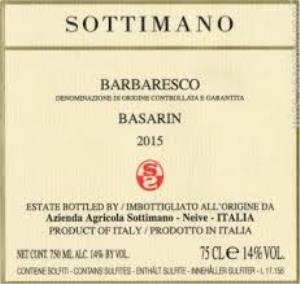
Barbaresco Basarin ex-Domaine |
$71.89 |
60 |
|
| |
JD 95 (5/2025): A jeweled ruby color, the 2021 Barbaresco Basarin reveals more depth on the nose, with elegant aromas of cedar, preserved cranberries, licorice, pretty hints of BBQ spices, and pressed flowers. While it remains medium-framed, it fills and expands on the palate, with broad-shouldered, ripe tannins, even acidity, and notes of dark stones on the finish. It’s deceptive upfront, with a generous ripeness of fruit initially masking its more noble underlying structure. Drink this over the next 15 years. Audrey Frick.
WA 95 (1/2025): Andrea Sottimano says 2021 was one of the best vintages he has seen. There was a lot of snow during the winter that created abundant water reserves lasting throughout the summer. It was a late-ripening vintage, with cool nights, and Andrea harvested until his birthday on October 24th. The 2021 Barbaresco Basarin is expressive and complex with very precise aromas of cassis, navel orange, pulverized stone and licorice root. The tannins are chalky, and the wine offers a pretty sense of lingering sweetness. Winemaking is traditional, with up to three months of submerged cap and aging in botti. Fruit comes from a three-hectare site in Neive with old vines on white soils. Production is 9,000 bottles.
VM 94 (10/2024): The 2021 Barbaresco Basarin is fabulous. Rich, ample and seductive, the Basarin marries the charm that is so typical of this sector with the breadth and structure of Barbaresco. These two qualities are evident in tasting this after the 2023 Langhe Nebbiolo. Transparent and vibrant, the 2021 has so much to offer. Crushed rose petals, mint, orange peel, spice, tobacco and incense build into the long, sustained finish. This is even better than it was last year. Antonio Galloni |
|
|
2020 |
Barbaresco Cotta ex-Domaine |
$79.95 |
41 |
|
| |
VM 96 (10/2023): The 2020 Barbaresco Cottá is another fabulous wine in this range from Sottimano. Dark and super-classic in bearing, the 2020 has tremendous stature along with a darker and more somber personality than usual. The balance here is just mind-blowing. Scorched earth, leather, tobacco and incense infuse the finish with tons of nuance to complement its muscular personality. Antonio Galloni.
JD 96 (5/2023): Moving to the 2020 Barbaresco Cotta, fantastic mineral-tinged aromas of crushed stones, pencil shavings, and blackberry are followed by a medium-bodied red with a ripe yet linear feel and crunchy red fruits of red plum, orange rind, and clove. I liked this for its more tension-packed and energetic feel and stony texture. Drink 2025-2040. Audrey Frick.
WA 94+ (8/2023): A wine from Sottimano that also draws its fruit from the village of Neive (and Barbaresco, because these 2.8 hectares of vines are on the border), the 2020 Barbaresco Cottá shows an austere character with pronounced rust or iodine aromas that are neatly layered into dark fruit and dried cherry. The wine sports a generous, medium-weight texture that offers a good amount of textural firmness to the palate. Give this pretty wine a little more time to flesh out. 9,000 bottles were produced. |
|
|
2021 |
Barbaresco Cotta ex-Domaine |
$71.95 |
60 |
|
| |
JD 97 (5/2025): The 2021 Barbaresco Cotta also sports a bright red color in the glass. It has a pure and seductive nose leading with aromas of wild raspberries, anise, sweet tea, and floral perfume. The palate is inviting and more approachable out of the gate, with ripe tannins, a floating, medium-bodied frame, and pretty notes of apricot lingering on the finish. It’s hard to resist now, but it should have plenty of longevity over the coming 15-20 or more years. Audrey Frick.
VM 96 (10/2024): The 2021 Barbaresco Cottá is quite the powerhouse. As usual, it is marked by a huge mid-palate of fruit, but more classic winemaking these days keeps that in check while also adding the notable structural dimension to balance things out. Black cherry, licorice, incense, graphite, tobacco and scorched earth all build in a virile, potent Barbaresco to treasure for the next two decades. This has come together beautifully since I tasted it last year. Antonio Galloni. |
|
|
2014 |
Barbaresco Curra ex-Domaine |
$89.99 |
21 |
|
| |
WA 95 (6/2019): Whoa, this is a wine with great potential, but the 2014 Barbaresco Currá needs at least another two years to just chill out. It's way too tightly wound at the moment. This vineyard is right next door to Cottà, but the Currà (the accents here reflect the real spelling of these MGA crus) is a whole different animal altogether. The soil that lies underground accounts for the difference. This Barbaresco is closed and hard if released too early, and this vintage definitely needs more time to show that elegance, which is bound to be remarkable when it does. The fabric of the mouthfeel is different, to say the least, but there is much more complexity as well. Some 3,000 bottles were made.
VM 94 (10/2017): Bright aromatics and veins of incisive tannin give the 2014 Barbaresco Currà its energy and drive. Like all of these 2014s, the Currà has a bit more volume and textural depth than is typically the case, along with sweeter, riper tannins. To be released in 2018. Antonio Galloni. |
|
|
2019 |
Barbaresco Curra ex-Domaine |
$82.99 |
18 |
|
| |
WA 96 (8/2023): Released one year later than the other Barbarescos in this portfolio, the Sottimano 2019 Barbaresco Currá brings the intensity up a notch and not just in terms of dark fruit and cassis. The wine's mineral profile is more pronounced and, in careful moderation, so is the oak toast and spice delivery. There are more distinct elements here, all played forward with great intensity, that ultimately reach a place of excellent balance and endurance. Sadly, only 2,000 bottles emerged from this 1.6-hectare vineyard site in Neive.
VM 94 (10/2022): The 2019 Barbaresco Currà is another stellar wine in this range from Sottimano. Deep and authoritative, the 2019 possesses tremendous depth and textural intensity. Incisive Currà tannins are present, but they are pretty much buried by the sheer richness of the fruit. Antonio Galloni. |
|
|
2020 |
Barbaresco Curra ex-Domaine |
$89.99 |
60 |
|
| |
VM 96 (10/2023): The 2020 Barbaresco Currà is an infant, but it is stellar. Wild, savory and intensely perfumed, the 2020 is super-expressive of place. The Currà is the deepest of the 2020s, also the most backward. I would not be in any rush to open bottles. Black fruit, leather, tobacco and cloves add to an impression of brooding intensity. Antonio Galloni.
WA 94 (6/2025): This wine is released one year later than the other Barbarescos in this portfolio. The Sottimano 2020 Barbaresco Currá reveals an open-knit character with immediate tones of tart cherry, dried raspberry and lavender sachet. There is an inherent sweetness to those fruit and floral aromas, and the wine remains contained in terms of mouthfeel thanks to its mid-weight texture. Fruit comes from a 1.5-hectare parcel in Nieve with 40- and 50-year-old vines. Given the warmth of the vintage, I recommend a near- or medium-term drinking window for this 3,000-bottle release. |
|
|
2021 |
Barbaresco Fausoni ex-Domaine |
$71.95 |
60 |
|
| |
JD 96+ (5/2025): The 2021 Barbaresco Fausoni is a bright red color and leads with a detailed and elegant bouquet of dried roses, pomegranate, toasted incense, and dusty earth. It’s bright and medium-bodied, with focused acidity, finely coiled and nervous tannins, and a clean, savory finish. It feels a bit wound up, but who are patient should be rewarded over the coming 15 years. Audrey Frick.
VM 96+ (10/2024): The 2021 Barbaresco Fausoni is bright, nervy and finely cut. Crushed rocks, white pepper, incense, red fruit, pink grapefruit and orange peel all scream out of the glass. Nervy and sinewy, with tons of top-end brightness, the Fausoni is a rock star. But it's also a wine for readers who appreciated the more linear, classically austere style of Barbaresco. Antonio Galloni. |
|
|
2018 |
Barbaresco Pajore ex-Domaine |
$85.99 |
1 |
|
| |
VM 95 (2/2022): The 2018 Barbaresco Pajorè is quite closed. It shows all the translucent elegance of all the wines in the range. Spice, mineral, melted road tar, rose petal, leather and lavender bring out the darker, more balsamic inflections of Nebbiolo. This potent, structured Barbaresco is quite backward today. Readers need to be especially patient. Antonio Galloni.
WA 94 (6/2021): With fruit from Treiso, the 2018 Barbaresco Pajore shows a lot of shape and depth, all supported by generous but carefully balanced fruit. The bouquet is layered with summer cherry and dried cassis, with earthy tones, camphor ash and powdered licorice. You also get a whiff of crushed flowers or roses. This is an extremely silky and elegant wine with only 6,000 bottles produced.
JD 94 (5/2021): Of the 2018s, the 2018 Barbaresco Pajore has the darkest profile, with dried cherry, tobacco, mint, and cedar. Savory with blood orange, red plum skin, and turned earth, more firm tannins build, with more modest acidity. Drink 2024-2035. |
|
| Tua Rita |
1999 |
Giusto di Notri Rosso Toscana IGT |
$79 |
2 |
|
| |
| WA 96 (10/2001): The brawny, serious, opaque purple-colored 1999 Giusti dei Notre is a barrique-aged, unfined, unfiltered blend of 65% Cabernet Sauvignon and 35% Merlot. Its opaque purple color is accompanied by awesome aromas of weedy tobacco, espresso, smoke, chocolate, black currants, and blackberries. Dense, full-bodied, thick, viscous, rich, and pure, it requires another 2-3 years of cellaring, and should last for 15+. Sadly, production is a measly 800 cases. |
|
|
2000 |
Giusto di Notri Rosso Toscana IGT |
$79 |
3 |
|
| |
| WA 95 (12/2002): Impressive is the opaque purple-colored 2000 Giusto dei Notri, a blend of 65% Cabernet Sauvignon, 30% Merlot, and 5% Cabernet Franc aged 20 months in 100% new French oak before being bottled without filtration. It requires decanting to strut its stuff, but it is phenomenally rich with notes of blackberries, creosote, truffles, vanilla, and licorice presented in a full-bodied, powerful, concentrated style with remarkable precision and harmony for a wine of such massive intensity and richness. The finish lasts for 40-45 seconds. Anticipated maturity: 2007-2020. |
|
| | USA Red |
| Alban Vineyards |
2011 |
Reva Alban Estate Syrah |
$95 |
2 |
|
| |
WA 94-96 (8/2015): All of the 2011 Syrahs will be in bottle by the time you read this. The 2011 Syrah Reva Alban Estate Vineyard offers a cool-climate, pretty and perfumed style to go with lots of pepper, violets, iodine and dark fruits, with just a hint of vanilla and oak. Full-bodied, fresh and lively, with bright acidity and fine tannin, it's a Northern Rhone look-alike that will have 15-20 years of longevity.
VM 92-94 (9/2015): Bright purple. Energetic black and blue fruit scents, with notes of olive paste and candied violet adding complexity. Shows very good focus and lift to its sweet boysenberry and cherry-cola flavors, gaining weight and sweetness with aeration. Finishes with excellent power and persistence, leaving peppery spice and cola notes behind. Quite Old World in style and structure, showing no excess fat or undue warmth. Josh Raynolds. |
|
| Anakota |
2009 |
Helena Dakota Vyd. Cabernet Sauvignon |
$89 |
5 |
|
| |
WA 95 (1/2020): Deep garnet colored, the 2009 Cabernet Sauvignon Helena Dakota Vineyard explodes from the glass with wonderfully profound, expressive notions of baked plums, Black Forest cake, chargrill, molten rocks, tapenade and woodsmoke with nuances of dried flowers, bay leaves, truffles and unsmoked cigars. Full-bodied and firm, with fantastic freshness, the palate is laden with black fruit preserves and savory layers, finishing on a lingering savory note.
VM 93 (7/2019): Bright medium ruby. Musky aromas of blue and black fruits, violet, licorice and minerals, complicated by a liqueur-like suggestion and some sexy oak tones. Densely packed and fine-grained, conveying lovely inner-mouth mineral lift as well as a distinct thickness of texture to its flavors of dark fruits, spices and crushed rock. This wonderfully suave yet penetrating Cabernet offers a terrific combination of sweetness, vibrancy and definition. Finishes tactile and very long. Delicious! (14.5% alcohol) (Drink between 2019-2033). Stephen Tanzer. |
|
| Anderson's Conn Valley Vineyards |
2006 |
Eloge Proprietary Blend |
$85 |
2 |
|
| |
| WA 95+ (12/2009): The 2006 Eloge’s dark plum/ruby color is followed by a sweet kiss of plum, black cherry, earth, licorice, and spice box, a medium to full-bodied wine, abundant tannin, and impressive concentration, purity, and overall complexity. Reasonably evolved, and extremely seductive aromatically, with a slightly structured finish, it can be enjoyed now and over the next 15 years. It is a blend of 65% Cabernet Sauvignon, 25% Cabernet Franc, 7% Petit Verdot, and 3% Merlot. |
|
| Andrew Will |
2007 |
Champoux Vyd. Proprietary Blend |
$55 |
2 |
|
| |
WA 95 (9/2016): Shockingly good and rivaling the Sorella in terms of quality, the 2007 Champoux Vineyard (52% Cabernet Franc, 21% Merlot, 19% Cabernet Sauvignon and 8% Petit Verdot) offers layered, floral characteristics intermixed with ample wild herbs, olive, dark fruits and earth. Medium to full-bodied, rich and concentrated, with seriously impressive purity and length on the finish, its impeccable balance will keep this drinking nicely through 2031.
VM 91+ (11/2009): Bright ruby-red. Medicinal blackberry and violet aromas are accompanied by a slightly decadent quality. Deep, broad and rich, conveying an extremely ripe dried-fruit impression. This is most impressive today on the back half, where it spreads out impressively to coat the palate, and where the big, broad tannins serve to accentuate rather than cut off the wine's fruit. Stphen Tanzer. |
|
|
2008 |
Champoux Vyd. Proprietary Blend |
$55 |
3 |
|
| |
WA 95 (8/2011): The 2008 Champoux Vineyard is made up of 46% Cabernet Sauvignon, 25% Merlot, 23% Cabernet Franc, and 5% Petit Verdot. It sports an inviting bouquet of sandalwood, rose petal, Asian spices, a hint of leather, black currant, and blackberry. This is followed by a succulent, plush, pleasure-bent wine that deftly conceals enough structure to evolve for 5-7 years. It offers a drinking window extending from 2016 to 2028+.
VM 91 (11/2011): Bright ruby-red. Spicy redcurrant and nutty oak on the nose and palate. Sweet, broad and concentrated, with concentrated currant fruit given a slightly dry edge by substantial dusty tannins. Stephen Tanzer. |
|
|
2016 |
Champoux Vyd. Proprietary Blend |
$55 |
1 |
|
| |
JD 97 (4/2019): One of the finest examples of this cuvée I’ve tasted is the 2016 Champoux Vineyard, which comes from one of the top terroirs in the state and is in the slightly cooler Horse Heaven Hills AVA. The blend in 2016 is 50% Merlot, 30% Cabernet Sauvignon, and 20% Cabernet Franc, all aged 18 months in just 25% new French oak. Young, full-bodied, and primordial, it has incredible potential but is going to need 4-5 years of bottle age. Thrilling notes of blueberries, cassis, lead pencil shavings, and bouquet garni all define the bouquet and it has remarkable purity and elegance. It picks up more floral and high-toned notes with time in the glass and is a brilliant bottle of wine that will keep for 2-3 decades. Readers looking for classic, age-worthy Bordeaux blends that will stand up with the best out there need to give the wines of Andrew Will a serious look. These are classic, balanced wines that deserve more attention in the market. (Drink between 2019-2044).
WA 94+ (12/2019): A blend of 50% Merlot, 30% Cabernet Sauvignon and 20% Cabernet Franc, the 2016 Champoux Vineyard opens with a rich and ripe expression of dark, dusty fruit interlaced with supporting oak tones on the nose. Medium to full-bodied in the mouth, dark cherry, black plum and cassis flood the palate with a structured focus and mineral tension. The fruit structure becomes a touch grippy across the mid-palate, showing firm tannins and representing a style that plays the middle ground between the Ciel du Cheval and Two Blondes bottlings in the same range. The wine ends with a long, complex finish—worth your time and money.
VM 92+ (12/2019): Bright ruby-red. Blackberry, cassis and bitter chocolate on the nose; displaying more oak today than the Ciel du Cheval. Densely packed and still rather tight, showing a higher pitch than the Ciel du Cheval blend, with less early pliancy and sweetness but more penetration to its flavors of dark berries and black cherry accented by licorice and bitter chocolate. A bit more powerful on the firm, long, resounding finish but less nuanced today than the Ciel. This may need more time for its firm dusty tannins to soften. Like the Ciel, this is a Merlot-heavy wine with real shape and structure. (15.1% alcohol) (Drink between 2022-2030). Stephen Tanzer. |
|
|
2012 |
Ciel du Cheval Proprietary Blend |
$65 |
6 |
|
| |
WA 95 (9/2016): A gorgeous wine that's loaded with that candied lavender, violets, lead pencil shavings, black cherries and licorice aromas and flavors that define this terroir, the 2012 Ciel du Cheval Vineyard is full-bodied, elegant and silky on the palate. It has polished tannin, impeccable balance between its alcohol, tannin and acidity, and a great finish. It's another beauty that will still benefit from short term cellaring and keep through 2032.
VM 92+ (12/2014): Saturated medium ruby. Superripe aromas of black cherry, dark chocolate and black walnut. Lush, sweet and chocolatey, with some very ripe notes to its dark fruit and nutty oak flavors. A bit musclebound and unrefined today, in need of time in bottle to shed some of its baby fat. Finishes with big, chewy, tongue-dusting tannins and repeating notes of burnished oak. Stephen Tanzer. |
|
| Arietta |
2018 |
Variation One Proprietary Blend |
$79 |
1 |
|
| |
| VM 96 (1/2021): The 2018 Variation One is positively stellar. Deep, inky and explosive, with striking depth, the 2018 is a meaty, powerful wine loaded with character. Black cherry fruit, chocolate, game, licorice and dried wild herbs infuse the 2018 with tremendous density. Co-fermented Syrah and Merlot are magical here. The 2018 opens beautifully with a bit of time in the glass, but its best days clearly lie ahead. Antonio Galloni. |
|
| Beau Vigne |
2013 |
Juliet Cabernet Sauvignon |
$85 |
2 |
|
| |
| WA 96 (12/2015): A blend of 94% Cabernet Sauvignon and the rest Petit Verdot and Cabernet Franc, the 2013 Cabernet Sauvignon Juliet has a similar style but seems even more opaque purple, with loads of blueberry and blackberry fruit, some white flowers, licorice, baking spices and a touch of asphalt. It has a long, full-bodied, massively rich mouthfeel and finish, without any heaviness. It’s a beauty to drink over the next quarter century as well. |
|
|
2006 |
Reserve Cabernet Sauvignon |
$85 |
3 |
|
| |
| WA 96 (12/2008): Absolutely profound is the 2006 Cabernet Sauvignon Reserve, which clearly puts Beau Vigne alongside the Shafer Hillside Select Cabernet as one of the stars of Stags Leap. A wine of great intensity, exceptional power, and admirable grace as well as equilibrium, this full-bodied 2006 offers beautifully sweet creme de cassis, licorice, spice box, and toasty oak characteristics. Multidimensional, with a layered mid-palate, and a finish that lasts 45+ seconds, it will benefit from some bottle age, although it is accessible enough to be drunk now. Drink it over the next 20-25 years. This small boutique operation (nine acres of Cabernet Sauvignon and one acre of Cabernet Franc and Petit Verdot) sits on a knoll in the Stags Leap viticultural area. Although somewhat under the radar among the top Napa producers, Beau Vigne’s offerings are very impressive. |
|
|
2007 |
Reserve Cabernet Sauvignon |
$75 |
6 |
|
| |
| WA 94+ (12/2009): More backward and structured, the 2007 Cabernet Sauvignon Reserve possesses copious black fruit, licorice, and forest floor notes as well as a boatload of tannin. While neither as charming nor accessible as the Juliet, it needs 3-4 years of cellaring, and should last for two decades thereafter. |
|
|
2007 |
Reserve Cabernet Sauvignon |
$85 |
2 |
|
| |
| WA 94+ (12/2009): More backward and structured, the 2007 Cabernet Sauvignon Reserve possesses copious black fruit, licorice, and forest floor notes as well as a boatload of tannin. While neither as charming nor accessible as the Juliet, it needs 3-4 years of cellaring, and should last for two decades thereafter. |
|
|
2013 |
Romeo Cabernet Sauvignon |
$89 |
2 |
|
| |
| WA 95 (12/2015): The opaque purple 2013 Cabernet Sauvignon Romeo (97% Cabernet Sauvignon and 3% Petit Verdot) displays notes of coffee beans and blackberries as well as some toast and charcoal embers. It is ripe and full-bodied, with a layered mouthfeel, and stunning purity and richness. Drink it over the next 20-25 years. |
|
| Becklyn Cellars |
2015 |
Moulds Vyd. Reserve Cabernet Sauvignon Lightly Scuffed Label |
$72.25 |
1 |
|
| |
| JD 95 (12/2017): From a site in the Oak Knoll AVA, the 2015 Cabernet Sauvignon Reserve Moulds Vineyard (it's labeled just as Reserve) is another inky purple-colored beauty that has a cooler-climate vibe in its blackberry smoke tobacco, leafy herbs, and mineral-laced style. It's medium to full-bodied, pure, concentrated and structured, and will keep for two decades. This estate was started in 2012 by Austin, TX-based Matt and Amber Denny. (Drink between 2018-2038). |
|
| Betz Family Winery |
2008 |
Clos de Betz Proprietary Blend |
$55 |
4 |
|
| |
WA 95 (8/2010): The Bordeaux-styled wines begin with the 2008 Clos de Betz, a multi-regional blend from four renowned vineyards, and composed of 66% Merlot, 25% Cabernet Sauvignon, and 9% Petit Verdot. It was aged for 16 months in 65% new French oak. A glass-coating opaque purple color, it surrenders an expressive nose of pain grille, graphite, Asian spices, a hint of balsamic, black currant, and blackberry. On the palate it admirably combines elegance with power. It has superb concentration, incipient complexity, layers of fruit, and a lengthy finish. Give it 6-8 years of additional cellaring and then drink it through its 25th birthday.
VM 93 (12/2010): Deep, full ruby-red. Dark berries, licorice, bitter chocolate and graphite on the nose and palate. Densely packed but showing superb energy and lift to the flavors of dark berries, cocoa powder and violet. There's nothing rustic about these classy wines. Finishes with terrific clarity and lively minerality. |
|
|
2014 |
Clos de Betz Proprietary Blend |
$55 |
2 |
|
| |
WA 95 (6/2017): Possessing the highest percentage of Merlot ever for the cuvee (at least until the 2015), the 2014 Clos de Betz is 71% Merlot, 19% Cabernet Sauvignon and 10% Petit Verdot that’s just under half from Red Mountain fruit and the rest from Columbia Valley sites. Notes of cassis, licorice, damp herbs, chocolate and earth all flow to a medium to full-bodied, supple, elegant and incredibly polished 2014 that needs 2-3 years of bottle age and will keep for 10-15 years.
JD 95 (4/2018): Including the highest percentage of Merlot ever, the 2014 Clos de Betz checks in as 71% Merlot, 19% Cabernet Sauvignon, and the balance Petit Verdot. It offers a beautiful bouquet of cassis, licorice, violets, and earthy, herbal notes as well as a medium to full-bodied, incredibly elegant style on the palate. It’s tight and closed, yet has remarkable purity and depth. Give bottles 2-3 years of bottle age.
VM 94 (11/2016): Bright, dark red-ruby. Alluring floral lift to the aromas of blackberry, cassis, Bing cherry, sweet spices and anise. Sweet, plush wine with great sex appeal to its intense, pliant flavors of amarena cherry, flint and spicy oak. Really remarkable--and not at all stewed--for Merlot from a hot year; Betz noted that he picked these vines early, "with tension and vitality." Finishes very long and smooth, with suave, perfectly supported tannins dusting the front teeth. A great, velvety Merlot-based wine from Washington. Betz adds some Cabernet Sauvignon and Petit Verdot to wine "to provide more structure, nuance and color." (Drink between 2018-2026). Stephen Tanzer. |
|
|
2008 |
Pere de Famille Cabernet Sauvignon |
$69 |
1 |
|
| |
WA 96 (8/2010): The 2008 Cabernet Sauvignon Pere de Famille is a blend of 85% Cabernet Sauvignon, 10% Petit Verdot, and 5% Merlot sourced from 3 regions and 4 vineyards. A glass-coating opaque purple color, it gives up an expressive perfume of sandalwood, mineral, truffle, espresso, incense, violets, and blackberry. Suave on the palate with well-integrated fine-grained tannins, this sweetly-fruited, dense, layered offering will benefit from 6-8 years of cellaring and will have a drinking window extending from 2016 to 2038.
VM 94+ (12/2010): Good deep ruby-red. A slight element of reduction quickly dissipated to reveal aromas of cassis, minerals, mocha and licorice. Deep, silky and compellingly sweet, but with brisk acidity that's a bit intrusive today. Best today on the firmly tannic, extremely long aftertaste. This superb cabernet boasts a stunning core of sappy fruit, with a licorice note from a bit of petit verdot that gives it a Pauillac-like character. It would be infanticide to open this anytime soon. The finishing breadth and spreading tannins are spectacular for Washington wine. A retaste of the superlative 2007 Pere de Famille indicated that this wine was beginning to shut down in bottle, but its acid/tannin structure gives it the sheer grip for a long and positive evolution in bottle. It will be fascinating to compare these two vintages side by side in seven or eight years. |
|
| Booker Vineyard |
2013 |
Tempranillo |
$65 |
1 |
|
| |
WA 96 (8/2015): Competing with Epoch's top-notch Tempranillo as the best example of the variety in California, Jensen's 2013 Tempranillo is a blockbuster that's not made in every vintage. Black cherries, currants, leather, dried herbs and savory spices all emerge from this full-bodied, thick and unctuously textured beauty. It has the classic tannic grip of the variety, yet that's paired with the hallmark texture and purity of the estate. This is an awesome wine any way you look at it.
VM 92 (9/2015): Opaque ruby. The nose displays an array of dark fruit and floral scents, along with suggestions of pipe tobacco and woodsmoke. Sweet and generous in style, offering broad, edge-free flavors of blackberry and bitter cherry. Closes smooth and very long, with gentle tannins providing shape. This hefty, seamless example of Tempranillo will be delicious in its youth but also has the depth to age. (Drink between 2019-2026). Josh Raynolds. |
|
|
2013 |
Tempranillo |
$75 |
1 |
|
| |
WA 96 (8/2015): Competing with Epoch's top-notch Tempranillo as the best example of the variety in California, Jensen's 2013 Tempranillo is a blockbuster that's not made in every vintage. Black cherries, currants, leather, dried herbs and savory spices all emerge from this full-bodied, thick and unctuously textured beauty. It has the classic tannic grip of the variety, yet that's paired with the hallmark texture and purity of the estate. This is an awesome wine any way you look at it.
VM 92 (9/2015): Opaque ruby. The nose displays an array of dark fruit and floral scents, along with suggestions of pipe tobacco and woodsmoke. Sweet and generous in style, offering broad, edge-free flavors of blackberry and bitter cherry. Closes smooth and very long, with gentle tannins providing shape. This hefty, seamless example of Tempranillo will be delicious in its youth but also has the depth to age. (Drink between 2019-2026). Josh Raynolds. |
|
|
2014 |
Tempranillo |
$95 |
1 |
|
| |
| WA 97-99 (8/2016): Possibly one of the greatest expressions of this variety yet from the US, the inky colored 2014 Tempranillo offers classic notes of smoked black plums, cedary spice, charred meats and chalky minerality, with more and more floral notes emerging with time in the glass. Big, full-bodied and tannic, forget it for 4-5 years and enjoy over the following decade or more. |
|
|
2014 |
Estate 24 Proprietary Blend |
$69 |
1 |
|
| |
| WA 94-96 (8/2016): The 2014 Estate Ext 24 is the, you guessed it, the extended aged version of the Estate cuvee. This was previously called the Alchemist and in 2014 is made from 51% Tempranillo, 28% Syrah, 13% Petit Verdot and 8% Grenache. Getting a few expletives in my rough notes, this beauty sports a deep purple color as well as thrilling aromatics, full-bodied richness, building, firm tannin and straight up awesome purity. The Tempranillo structure is front and center, so I suspect short term cellaring will be the name of the game. |
|
|
2013 |
Estate Proprietary Blend |
$75 |
2 |
|
| |
WA 96 (8/2015): Formerly labeled as the Alchemist, the 2013 Booker Estate is 84% Syrah, 11% Tempranillo and the rest a splash of Cabernet Sauvignon and Petit Verdot. Inky colored, deep, savory and spicy, with the Tempranillo front and center at the moment, it offers lots of dark fruits, truffle, dried spice and meaty aromatics, full-bodied richness and enough tannic grip to warrant another year or two in bottle.
VM 94 (9/2015): Bright purple. Deeply perfumed, complex bouquet of dried cherry, licorice, potpourri and smoky minerals, with a subtle note of raw meat. Very sweet and creamy on the palate, offering intense black and blue fruit flavors that gain depth and spiciness with air. Picks up notes of candied flowers and vanilla on the back end, finishing with superb energy, suave tannins and lingering sweetness. Josh Raynolds. |
|
|
2015 |
Fracture 22 Syrah |
$95 |
1 |
|
| |
| JD 98 (8/2017): Seeing 22 months in barrel, the 2015 Fracture 22 possesses additional richness and depth over the base cuvée. Crème de cassis, black currants, smoked meats, licorice and roasted herb characteristics give way to a full-bodied, opulent, incredibly hedonistic Syrah that has a layered, silky texture, sweet tannin and a forward style that’s still going to surprise in the cellar give its balance and richness. |
|
|
2010 |
Fracture Syrah |
$89 |
2 |
|
| |
VM 95-97 (8/2012): The 2010 Fracture (Syrah) shows off gorgeous purity and finesse in its rich dark fruit. This is a decidedly overt, flashy wine, yet it also possesses stunning aromatics and impeccable, world-class balance. Layers of fruit built to the huge, opulent finish. I can hardly wait to taste this from bottle. In 2010, 100% of the fruit was de stemmed. Antonio Galloni.
JD 94-97 (6/2012): Not yet bottled and tasted out of barrel, the 2010 Booker Vineyard Syrah Fracture is possibly the most impressive vintage of this to date. A blend of 100% Syrah that’s aged all in French oak, it delivers a stunning bouquet of smoked black fruits, toast, chocolate, roasted meats, and crushed flowers that gives way to a full-bodied, structured, and elegantly put together palate. Chewy, ripe tannin frames the finish beautifully, and this is impressive. It should benefit from short term cellaring on release, and have a fairly broad drink window. |
|
|
2011 |
Fracture Syrah |
$89 |
1 |
|
| |
WA 97 (8/2013): Up there with the best of the vintage, the 2011 The Fracture is ethereal stuff that’s made with the goal to be the most ready to drink of the lineup. I’m not sure if that goal is met or not, but I can say the wine is utterly brilliant. Seeing only 5-10% stem inclusion, it delivers rocking aromas of cassis, black raspberry, hints of roasted herbs, licorice and chocolate that give way to a medium to full-bodied, seamless and textured effort that has both elegance and deep, layered fruit and richness. Hard to resist and a joy to drink, it nevertheless has the balance and depth to evolve gracefully through 2021. Drink 2015-2021.
VM 95 (7/2013): The 2011 Fracture, 100% Syrah, is one of the deepest and richest of these 2011s. A plush, highly expressive mid-palate opens to reveal layers of dark fruit, leather, licorice and melted road tar. The 2011 is endowed with considerable aromatic depth and pure richness. Eric Jensen aged the 2011 in Hermitage and Francois Freres barrels, 50% new.
JS 94 (11/2011): Gorgeous aromas of dark berries with blackberry and blueberry; hints of flowers too. Full and rich with wonderful cocoa, coffee and blackberries. Intensely long. So much going on here. Seductive. One or two years more before striking.
VM 94 (12/2013): (100% syrah and 15% alcohol, the highest in the Booker set this vintage): Inky purple. Pungent, smoke-accented aromas of black raspberry, olive tapenade and floral oils. Very syrah. Lush and complex on the palate, offering potent flavors of cherry-cola, blackberry, violet pastille and star anise. Rich but surprisingly lively syrah, with powerful closing punch and gently chewy, harmonious tannins. |
|
|
2012 |
Fracture Syrah |
$89 |
1 |
|
| |
| WA 96 (8/2014): There are roughly 293 cases of the 2012 Fracture to go around, and it checks in as a blend of 100% Syrah that was aged 18 months in French oak. A big, rich and decadent effort, it’s another spectacular effort from this estate that does everything right. Creme de cassis, chocolate, spice-box, graphite and ground pepper all come together beautifully here, and this beauty has a forward, supple and full-bodied style that’s hard to resist. More elegant and open than past vintages, I’d drink bottles over the coming 4-5 years, but it will evolve for longer. |
|
|
2014 |
Fracture Syrah |
$85 |
1 |
|
| |
| VM 95 (9/2016): Dark purple. A heady, assertively perfumed bouquet evokes ripe black and blue fruits, sandalwood, Indian spices and smoky minerals, and a suave floral pastille topnote builds in the glass. Deeply concentrated yet lively blackberry and boysenberry flavors unfold slowly, picking up allspice, black cardamom and cola nuances on the back half. Shows Outstanding clarity and power on the sweet, supple finish, which is given shape by smooth, steadily building tannins. I've no doubt that this wine will reward patience, but it's awfully delicious right now. Josh Raynolds. |
|
|
2015 |
Fracture Syrah |
$89 |
1 |
|
| |
WA 97 (9/2017): “I want my softest, most textured, rounded Syrah with density and gentle tannins to go into this label,” winemaker Eric Jensen informed me. Produced from 100% Syrah, the medium to deep garnet-purple colored 2015 Fracture has a vibrant nose of crushed red currants and black cherries with hints of bay leaves, cloves, aniseed and forest floor, plus a touch of roses. Full-bodied and beautifully structured, it has a lively backbone supporting the dynamic fruit, finishing with a beautiful herbal lift.
JD 96 (8/2017): Leading off the 2015s, the 2015 Fracture is 100% Syrah that was brought up mostly in new barrels. It’s a classic, elegant Paso Syrah that delivers loads of black raspberries, cassis, toasted spices and crushed flower-like aromas and flavors. A more elegant, streamlined example of this cuvee, it shows the freshness of the vintage, supple tannin and a charming, elegant style that’s a dream to drink. It is already approachable, yet will still be better with another year or two in bottle. |
|
|
2016 |
Fracture Syrah |
$89 |
1 |
|
| |
| JD 98 (11/2018): The base 2016 Fracture is another flat-out awesome wine from Jenson that has everything you could want from a Syrah grown on limestone soils on the west side of Paso Robles. Made from 100% Syrah aged in 70% new French oak, it offers a huge nose of blackcurrants, toasty oak, espresso, smoke tobacco, and crushed flowers. Deep, massively concentrated, and textured, it still glides across the palate with thrilling purity of fruit and has a great, great finish. Eric Jensen’s Booker Vineyards continues to make a ripe, sexy, pedal-to-the-metal syle of wine and these latest 2016s don’t disappoint. |
|
|
2014 |
Fulldraw Proprietary Blend |
$75 |
1 |
|
| |
WA 95 (8/2016): First made last year, the 2014 Fulldraw checks in as a mix of 46% Syrah, 33% Grenache and 21% Mourvedre that was raised mostly in barrel. Its inky purple color is followed by a rockin', sweet, layered bouquet of creme de cassis, black plums, vanilla bean, licorice and cured meats. A classic Paso Robles GSM blend, with full-bodied richness, no hard edges, tons of sweet fruit and beautiful purity, it benefits from a decant and will shine for upwards of a decade.
VM 94 (9/2016): Bright violet. Ripe red and blue fruits, candied lavender, incense and a hint of spicecake on the highly fragrant nose. Juicy and focused on the palate, offering intense black currant and bitter cherry flavors that deepen and become sweeter with air. Shows impressive depth and vivacity, with no rough edges. The spice and floral notes come back strong on the strikingly persistent, seamless finish, which features smooth, harmonious tannins and a lingering suggestion of sappy red fruit. Josh Raynolds. |
|
|
2015 |
Fulldraw Proprietary Blend |
$79 |
1 |
|
| |
JD 96 (8/2017): The 2015 Fulldraw comes from a site located just beside Jensen’s estate Booker Vineyard and is 50% Grenache, 30% Mourvèdre and 20% Syrah. It has a gorgeous, Châteauneuf du Pape-like (it reminds me of Domaine de Marcoux’s Vieilles Vignes cuvée) perfume of red and black fruits, spice-box, incense, fennel and cured meats. Ethereally textured and elegant, yet also ripe, powerful and concentrated, it has ripe tannin, it’s an incredible wine that builds with time in the glass. While beautiful today, it will be even better with short term cellaring and keep through 2027.
WA 95 (9/2017): A blend of 50% Grenache, 30% Mourvèdre and 20% Syrah, the 2015 Fulldraw has a medium to deep garnet-purple color and opens with black and blue fruit notes of blackberries and blueberries with suggestions of licorice, tree bark and black soil, plus a waft of lavender. The medium to full-bodied palate has bags of elegance, with restrained, understated beauty and wonderful freshness, finishing long with velvety tannins supporting the perfumed fruit. |
|
|
2015 |
Jada Vyd. |
$69 |
1 |
|
| |
| WA 94-96 (8/2016): From a hillside vineyard just off of Vineyard Drive road (near Denner) that has lots of clay soils (so more water retention and better canopy development, which is very different from Booker Vineyard), the 2015 Jada Vineyard checks in as a mix of 55% Syrah and 45% Grenache that saw 25% stems and aging all in barrel. Full-bodied, rich, unctuous and downright sexy, with lots of jammy blackberry, cassis, roasted herbs and melted licorice (there are some floral notes hiding in there as well), it's another stacked red from Jensen that readers shouldn't miss. |
|
|
2010 |
My Favorite Neighbor Proprietary Blend |
$55 |
1 |
|
| |
WA 94-96 (8/2012): Booker’s 2010 My Favorite Neighbor bursts from the glass with a heady array of blueberries, dark cherries, spices, violets, mint and licorice. The 2010 stands out for its huge fruit and impeccable balance. Proprietor Eric Jensen planned to give the wine a full 24 months in oak. This is another compelling wine full of promise. The blend is 44% Cabernet Sauvignon, 33% Petit Verdot and 23% Syrah. Anticipated maturity: 2013-2018.
VM 92 (12/2012): (made from 44% cabernet sauvignon, 33% petit verdot and 23% syrah): Bright purple. Spicy cherry, cassis and blueberry aromas are brightened by cracked pepper and rose, with a slow-building vanilla note adding sweetness. Pliant, deeply concentrated dark berry flavors show very good precision and energy, with an exotic building floral pastille note adding vibrancy. Shows impressive power on the finish, which offers a bitter cherry pit character and noteworthy persistence. |
|
|
2011 |
My Favorite Neighbor Proprietary Blend |
$53 |
1 |
|
| |
WA 95 (8/2013): Holding things slightly closer to the vest, the 2011 My Favorite Neighbor (46% Syrah, 40% Petit Verdot and 14% Cabernet Sauvignon) has full-bodied richness and power to go with classic aromas and flavors of cassis, wild herbs, tobacco and cedar. The Cabernet and Petit Verdot really show here, with the Syrah component adding more plushness on the palate. Firming up nicely on the finish, with ripe, yet notable tannin, this serious 2011 should be given another 2-3 years in the cellar. While it will be hard to resist in its youth, I wouldn’t be surprised to see this drinking nicely at age 15 and beyond. Drink 2015-2026.
VM 95 (7/2013): The 2011 My Favorite Neighbor is one of the many highlights at Booker this year. Explosive, full-bodied and opulent, the 2011 captures the generous, resonant warmth that is so typical of Paso Robles while at the same time retaining gorgeous balance and proportion. There is so much to like here. What a gorgeous wine! The blend is 46% Syrah, 40% Petit Verdot, and 14% Cabernet Sauvignon.
VM 91+ (12/2013): (46% syrah, 40% petit verdot and 14% cabernet sauvignon): Inky purple. Deeply pitched black and blue fruit scents are lifted by zesty Asian spice and floral nuances. Ripe and fleshy, offering expansive cassis, blueberry and bitter chocolate flavors and a touch of candied licorice. Closes with firm, youthful tannins, lingering smokiness and a hint of black pepper. The most brooding wine in the Booker lineup this year and the only one that I'd insist on stashing away for another few years. |
|
|
2014 |
My Favorite Neighbor Proprietary Blend |
$69 |
1 |
|
| |
| WA 97-99 (8/2016): Hold onto your hats with this one, the 2014 My Favorite Neighbor Proprietary Blend will see 24 months in barrel, and there will only be a single cuvee in 2014. This insanely good barrel sample gives up serious, inky, yet pure notes of violets, licorice, black raspberries, creme de cassis and graphite to go with building tannin, a stacked mid-palate and blockbuster length. I'd like to have a case of it in the cellar. |
|
|
2012 |
Oublie Proprietary Blend |
$85 |
2 |
|
| |
| WA 96 (8/2014): There are roughly 293 cases of the 2012 Fracture to go around, and it checks in as a blend of 100% Syrah that was aged 18 months in French oak. A big, rich and decadent effort, it’s another spectacular effort from this estate that does everything right. Creme de cassis, chocolate, spice-box, graphite and ground pepper all come together beautifully here, and this beauty has a forward, supple and full-bodied style that’s hard to resist. More elegant and open than past vintages, I’d drink bottles over the coming 4-5 years, but it will evolve for longer. |
|
|
2012 |
Remnant 24 Proprietary Blend |
$75 |
1 |
|
| |
| WA 94-96 (8/2014): Still in barrel, the 2012 Remnant 24 (identical blend to the regular release) will see 24 months in oak before bottling. It’s also worth noting that since there was no My Favorite Neighbor produced in 2012, this cuvee received all of the grapes that would normally go into that cuvee. While billed as a catch-all blend, it tastes like anyone else’s top wine and offers loads of sweet black fruits, damp underbrush, chocolate and roasted herbs to go with a full-bodied, rich, layered and downright sexy profile. There’s no shortage of tannin here either, so a year of cellaring is recommended. It will have 10-15 years of longevity, but bottles wouldn’t last that long at my house. |
|
|
2010 |
Remnant Proprietary Blend |
$69 |
1 |
|
| |
WA 96 (8/2012): The 2010 Remnant is gorgeous and utterly refined from the very first taste. Dark red cherries plums, licorice, incense, mint and spices are some of the many notes that jump from the glass in this delineated, fragrant red. The appropriately named Remnant is 60% Syrah, 20% Tempranillo, 11% Mourvèdre, 5% Grenache and 4% Counoise, all what Jensen calls 'super-press juice,' which is the part of the press many winemakers don't even use in their final blends. In other words, Remnant is essentially a wine made from leftovers. Frankly, this a bit of a miracle in the glass, but everything works together beautifully. That can only mean that Booker is a great site, and Eric Jensen knows how to coax the very best from his vines.
VM 93 (11/2012): Dark purple. Powerful aromas of candied dark berries, licorice and mocha, with smoke and allspice nuances that build with air. Lush and expansive, offering ripe black and blue fruit flavors lifted by gentle acidity. Closes sweet, supple and very long, with pliant tannins and resonating spiciness. Josh Raynolds.
JD 93 (6/2012): Even more structured and firm, the 2010 Booker Vineyard Remnant is a blend of 60% Syrah, 20% Tempranillo, 11% Mourvedre, 5% Grenache, and 4% Counoise that contains a touch of press wine, and was fermented with 50% whole cluster and aged all in neutral oak for 16 months. Very masculine and edgy, with aromas of blackberry and currant fruit intermixed with dark chocolate, pan drippings, and bloody meat, this full-bodied blend is savory, chewy, and concentrated on the palate. The edgy quality of the Tempranillo really shows in the tannin structure and this will benefit from 1-2 years (or more) of bottle age, and have an interesting evolution. |
|
|
2015 |
Ripper 22 Grenache |
$75 |
1 |
|
| |
JD 97 (8/2017): Seeing additional time in barrel (22 months to be exact), the 2015 Ripper 22 is the exact same wine as the traditional release yet saw additional time in older barrels. I always love tasting experiments like this; same juice, just a longer elevage. Is it better? Yes, it is. Offering similar kirsch liqueur, framboise, crushed flowers, candle wax and white pepper, it’s full-bodied, ethereally textured and perfectly balanced, with fine, building tannin and a great finish. It has another level of depth, and length, over the classic cuvée, and it going to be longer lived as well.
WA 96 (9/2017): Produced from 100% Grenache with 6 months’ extra time in barrel, the 2015 Ripper Ext "22" has a pale to medium ruby-purple color and gregarious nose of spice cake, potpourri, Chinese five spice and licorice with a kirsch, red currant jelly and rose hip tea nose, plus a waft of dusty earth. Full-bodied, concentrated and packed with savory and expressive spice flavors, it has a velvety structure and plenty of freshness, finishing long and multilayered. |
|
|
2011 |
Ripper Grenache |
$89 |
1 |
|
| |
WA 96+ (8/2013): Starting out the tasting and absolutely rocking, the 2011 The Ripper checks in as a blend of 100% Grenache that was brought up in equal parts concrete and neutral barrel. Offering up layers of kirsch, dried underbrush, white pepper and hints of spring flowers, it flows onto the palate with a medium to full-bodied, vibrant profile that gains richness and depth with air. Leaning towards the more focused, elegant side of the spectrum, this beauty doesn’t lack for texture or length. Give it a year or three and enjoy through 2023. It’s superb and well worth the effort to track down. Drink 2015-2023.
VM 94 (7/2013): Eric Jensen has done a fabulous job with the 2011 Ripper, no easy feat after the iconic 2010. Expressive floral notes, mint, spices and kirsch all lift out of the glass. The freshness and crystalline purity of the year come through in spades. Jensen aged the 2011 70% in cement and 30% in neutral oak, an approach that worked beautifully. Over the last few years, Ripper has established itself as one of the most distinctive Grenaches in California.
VM 93 (12/2013): (100% grenache and 14.6% alcohol): Deep ruby. Spicy black raspberry and cherry compote on the highly perfumed nose, with zesty mineral and spice notes adding vibrancy. Deeply pitched but lively red fruit flavors show excellent clarity and sweetness, with a jolt of tangy acidity adding spine. The sappy, broad finish is shaped by smooth and harmonious tannins. This wine was raised entirely in used demi-muids. |
|
|
2012 |
Ripper Grenache |
$79.20 |
1 |
|
| |
WA 96 (8/2014): The 2012 The Ripper (always 100% Grenache), which checks in at 13.6% alcohol, is a fabulous effort that was brought up all in neutral 500-liter French oak barrels. Loaded with notions of kirsch, dried flowers, rose petal and underbrush, it’s about as seamless and elegant as this cuvee gets, yet it’s still no lightweight and has full-bodied richness and depth. Showing plenty of fine tannin on the finish, it is hard to resist now, but should have a solid 10-12 year drink window.
VM 94 (7/2014): A dark, voluptuous wine, the 2012 Ripper bursts from the glass with dark red and black stone fruits, spices, new leather and menthol flesh out in the glass. In 2012, the Ripper is much darker and riper than normal, with less varietal character than has been the case of late. In 2012, Eric Jensen managed the canopies to get as much hang time as possible, which resulted in extended hang time and a harvest that was about three weeks later than normal. Personally, I have enjoyed Booker's Ripper most when the Grenache characteristics are emphasized to a greater degree. The 2012 was done entirely in neutral 500 liter barrels. |
|
|
2010 |
The Alchemist |
$75 |
1 |
|
| |
| JD 94+ (6/2012): The 2010 Booker Vineyard The Alchemist (80% Syrah, 10% Cabernet Sauvignon, and 10% Petit Sirah and in 50% new French oak) is much more in the typical Booker Spectrum and is a classic, textbook Paso Robles blend. Offering up chocolate-laced aromas of blackberry, raspberry, spice, smoke, and tar, this full-bodied, powerful blend is voluptuous and gorgeously textured, while still showing the focused profile of the 2010 vintage. Beautifully pure, layered, and rich, this beauty will age gracefully for a decade or more. |
|
|
2010 |
The Alchemist 22 Red |
$75 |
1 |
|
| |
| VM 94-96 (8/2012): In my view, the 2010 Alchemist 22 is the wine that seems to gain the most through the extended time in barrel, as the tannins have an element of polish that isn’t found in the regular bottling. Perfumed aromatics are woven throughout an expressive core of dark red fruit, licorice, tar and mint. The overall impression is one of seamless beauty and tons of promise. This is a fabulous showing from Booker and proprietor Eric Jensen. Antonio Galloni. |
|
|
2010 |
Vertigo 22 Proprietary Blend |
$75 |
1 |
|
| |
| VM 93-95 (8/2012): Booker's 2010 Vertigo 22 wraps around the palate with dark red fruit, flowers, mint and spices. The extra time in barrel has given the Vertigo 22 a dimension of seamlessness and total integration the regular bottling doesn't have. At the same time, some of the vibrancy and pure energy of the regular Vertigo has been dampened ever so slightly. Readers will find much to admire in both. Antonio Galloni. |
|
|
2012 |
Vertigo 24 Proprietary Blend |
$75 |
1 |
|
| |
WA 95-97 (8/2014): Still in barrel, the 2012 Vertigo 24 release shows a similar level of purity to go with killer aromatics (black raspberry, bouquet garni and licorice), full-bodied richness and a layered, decadent style on the palate. It has a tad more richness and depth than the straight bottling, and is an incredible red.
VM 91-93 (7/2014): The 2012 Vertigo 24 has a little more tannic spine than the straight Vertigo. Dark red stone fruits, spices, mint and new leather are all very much alive. Although quite supple and expressive, the 2012 also has plenty of drive and energy. Antonio Galloni. |
|
|
2013 |
Vertigo 24 Proprietary Blend |
$69 |
1 |
|
| |
| WA 93-96 (8/2015): The extended barrel-aged release of the Vertigo cuvee, the 2013 GSM Vertigo EXT was still in barrel at the time of this tasting. Similar in style, with full-bodied depth and richness, it has more toasted bread, meaty, bloody notes and spice as well as a sexy, voluptuous and seamless style on the palate. I actually prefer the earlier bottling release at present, but this is still and knockout wine. |
|
|
2014 |
Vertigo 24 Proprietary Blend |
$59 |
1 |
|
| |
| WA 95-97 (8/2016): Another blockbuster barrel sample is the 2014 GSM Vertigo EXT, which is 68% Syrah, 26% Mourvedre and the rest Grenache (there's less Grenache than normal in the 2014). Violets, cassis, licorice and black raspberries all flow to a rich, concentrated blend that's much more supple, rounded and forward than the 2015, while still showing plenty of grip and focus. |
|
|
2011 |
Vertigo Proprietary Blend |
$69 |
1 |
|
| |
VM 95 (7/2013): The 2011 Vertigo is one of the clear highlights of the year in Paso Robles. A rich, resonant wine, the 2011 boasts gorgeous depth and power, especially for the year. The brightness of the vintage comes through on the finish laced with expressive dark Syrah fruit. Floral and spice notes add vibrancy as well as complexity. The 2011 is 69% Syrah, 24% Mourvedre and 7% Grenache. I very much like the sense of purity here.
WA 94 (8/2013): More Syrah heavy, with 62% Syrah, 24% Mourvedre and a splash of Grenache, fermented with 30% stems and aged in 20% new French oak, the 2011 Vertigo is red fruit-driven, with plenty of raspberry, licorice and floral notes flowing to a medium to full-bodied, balanced and lively palate. Gaining more minerality and spice in the glass, it, too, is a knockout effort from Eric. Enjoy it over the coming 7-8 years. Drink now-2021.
VM 94 (12/2013): (69% syrah, 24% mourvedre and 7% grenache): Inky ruby. Suave, vanilla-accented blackberry, blueberry and floral pastille aromas show impressive energy and thrust. Surprisingly elegant, even graceful on the palate, with vibrant, violet-tinged dark berry and bitter cherry flavors complicated by slow-building spicecake and cracked pepper nuances. Silky tannins add structure to the long, alluringly sweet finish, with its lasting floral note. Wine lovers familiar with Eric Jensen's past work will be surprised (pleasantly, I hope) by this wine's finesse. |
|
|
2012 |
Vertigo Proprietary Blend |
$65 |
1 |
|
| |
| WA 95 (8/2014): The 2012 Vertigo is a blend of 57% Syrah, 32% Mourvedre and 11% Grenache that spent 18 months in French oak. It has fabulous purity to go with notions of sweet red and black berries, crushed flowers, licorice and rose petal on the nose. This flows to a medium to full-bodied, supple and seamless red that has no hard edges, building richness, and a graceful, lightly textured feel that never seems heavy or cumbersome. It will thrill for upward of a decade. |
|
|
2014 |
Vertigo Proprietary Blend |
$65 |
1 |
|
| |
| WA 95+ (8/2016): A big, rich, structured effort, the 2014 GSM Vertigo is 68% Syrah, 26% Mourvedre and 6% Grenache. Sporting a saturated purple color, it offers fabulous notes of cassis, blackberries, crushed rock, licorice and dried Provencal herbs (lavender, thyme) in a full-bodied, rich package. One of the more tannic wines from Eric, it needs 2-3 years of bottle age and will have a decade or more of longevity. |
|
| Boudreaux Cellars |
2008 |
Reserve Cabernet Sauvignon |
$75 |
1 |
|
| |
| WA 96 (10/2022): The 2008 Cabernet Sauvignon Reserve is immaculate, with a lush and focused nose that is still compact and primary. Full-bodied, the wine expands on the palate, revealing focus, precision and power with a still-tight frame and firm tannic edge. The Cabernet concludes with long, lingering flavors of black plum essence, oak spices and notions of crème de cassis. Even though it’s a 2008, it has plenty of life left; so be patient, and reward your future self. |
|
| Bougetz Cellars |
2014 |
Amaryllis Cabernet Sauvignon |
$45 |
3 |
|
| |
| WA 95+ (12/2016): The 2014 Cabernet Sauvignon Amaryllis, a blend of 94% Cabernet Sauvignon and the rest Merlot, Petit Verdot and Malbec, comes from Spring Mountain. The wine has an opaque bluish/purple color, a stunning blueberry and blackberry richness with background floral notes. It is concentrated and full-bodied with extravagant fruit hiding moderate levels of tannin. This is a wine of terrific purity and richness, and that $62.00 price is possibly one of the great values in world-class Cabernet Sauvignon from Napa Valley. This wine is going to go the distance and evolve over 15-20+ years time. Anyone lucky enough to latch onto a bottle should go deep in terms of purchasing – it’s that good. Drink it now, or drink it in 20 years. |
|
| Cadence |
2012 |
Bel Canto Red Mtn. Cara Mia Vyd. Proprietary Blend |
$59 |
2 |
|
| |
| WA 95 (6/2015): I think the most approachable in the lineup, the 2012 Bel Canto has a complex, perfumed style in its dried flowers, dried spices, vanilla and black cherry and black raspberry-like fruit profile. A blend of 84% Cabernet Franc, 8% Merlot and 8% Petit Verdot that spent 20 months in 50% new French oak, it’s full-bodied, concentrated and structured on the palate, yet has perfect balance and a great texture. Few in the US are doing Cabernet Franc better this, and I suspect it will hold nicely for 15-20 years. |
|
|
2014 |
Bel Canto Red Mtn. Cara Mia Vyd. Proprietary Blend |
$40 |
3 |
|
| |
| WA 96 (6/2018): The 2014 Bel Canto is also showing very well indeed with a few years of bottle age, opening in the decanter and glass with notes of cassis, cigar wrapper, loamy soil, pencil shavings and black truffle. On the palate, it's medium to full-bodied, layered and deep, with beautifully suave structuring tannins and a deep core of concentrated fruit. The finish is long, complex and finely delineated. While this elegant, Bordelais-styled blend is already drinking well, I suspect it still has two decades of life and evolution ahead of it. |
|
|
2012 |
Camerata Cara Mia Vyd. Cabernet Sauvignon |
$55 |
5 |
|
| |
| WA 95 (6/2015): Sensational stuff, the 2012 Camerata (91% Cabernet Sauvignon and 9% Cabernet Franc) is big, burly effort that offers classic Red Mountain structure and depth. Giving up lots of black cherry, crushed rocks, dried violets and graphite, it is savory, powerful and concentrated on the palate. It needs 4-5 years of cellaring and will hold for two decades after that. |
|
| Carlisle |
2014 |
Sierra Mar Vyd. Syrah |
$50 |
1 |
|
| |
WA 95 (9/2016): Even better, the 2014 Syrah Sierra Mar Vineyard might be the top Syrah out of this vineyard. Also inky and glass-staining, it offers killer notes of caramelized plums, smoked meats, licorice, cassis and pepper in a full-bodied, ultra-pure, elegant package. I love its mid-palate and this total blockbuster will knock your socks off over the coming decade or longer.
VM 92 (3/2017): The 2014 Syrah Sierra Mar Vineyard, from the southern end of the Santa Lucia Highlands, shows a much denser and more powerful expression of the appellation. Black fruit, licorice, cloves and leather are pushed forward. There is no shortage of depth, but today, the Sierra Mar is a bit monolithic. Antonio Galloni. |
|
| Cayuse |
2019 |
En Cerise Vyd. Syrah |
$95 |
2 |
|
| |
WA 97 (10/2022): Made without the use of Viognier, the 2019 Syrah en Cerise is a firmer and denser expression of Syrah with Walla Walla attitude and swagger. Aromas of dark cherry, smoke and a hint of baking spices with turned earth express beautifully with notions of black plums with black peppercorn. Medium-bodied and with 13.5% alcohol on the label, the palate and mouthfeel are generous as it offers a broad-shouldered structure with a firm tannic edge that is fresh and food-friendly. The wine glides to an impressive finish with lingering hints of sage and olives as the fine-grained tannins continue with persistence.
VM 96 (3/2023): The word “smoky” doesn’t even do this justice, as the 2019 Syrah En Cerise Vineyard smolders up with a savory blend of air-dried and salt-cured meats, cigar ash and grilled sage offset by a dramatically pretty hint of sweet lavender. It’s soft-textured and round, with a core of saline-minerals and brisk acidity propelling tart wild berries across the palate. Peppery yet refined, the 2019 leaves a staining of blackberry concentration and silky tannins. Nuances of rosemary and a hint of bitter cacao slowly fade. It’s the perfect combination of Northern Rhône character with New World fruit. The En Cerise is simply stunning and with a bright fruit ahead of it. (Drink between 2024-2032). Eric Guido.
JD 95 (7/2022): More shiitake mushrooms, forest floor, and savory notes emerge from the 2019 Syrah En Cerise Vineyard, which offers more fruit and density with time in the glass. Ripe black cherries, currants, peppery herbs, tobacco, leather, and funky earth all make an appearance on the nose, and it's medium to full-bodied on the palate, with ripe yet present tannins, nicely integrated acidity, and a good core of fruit. It's one of the earthier, more savory wines in the lineup and should evolve gracefully for 20 years or more. (Drink between 2022-2043). |
|
| Ceritas |
2020 |
Cuvee Annabelle Pinot Noir |
$95 |
3 |
|
| |
JD 95 (8/2022): From an exceptionally windy, exposed site at 1800 feet, the 2020 Pinot Noir Cuvee Anabell is highly aromatic of fresh alpine herbs, wild raspberry, and fresh soil. The palate is more structured, with darker fruit of fresh red plum skin, turned earth, and spice. This wine will benefit from time in bottle to integrate its structure. Drink it over the next 15 years.
VM 94 (8/2023): The 2020 Pinot Noir Annabelle is another seriously impressive wine in this range from Ceritas. It offers lovely depth and textural richness. Sweet red cherry, red plum, blood orange, menthol and spice all meld together in this very pretty Pinot. The 2020 was made from one of the two blocks Ceritas has here. (Drink between 2023-2028). Antonio Galloni. |
|
| Chalk Hill |
2007 |
Estate Proprietary Blend |
$65 |
8 |
|
| |
WA 95 (2/2010): Perhaps the finest Estate Red to date is the 2007. Its dense ruby/purple hue is followed by blackberry, cassis, cedar, and licorice characteristics, supple tannins, a more accessible personality, full body, and admirable purity, texture, and length. Drink this beauty over the next 2-3 decades.
VM 91 (6/2010): (51% cabernet sauvignon, 24% malbec, 13% merlot, 11% petit verdot and 1% carmenere) Inky ruby. Highly aromatic nose combines cassis, cherry skin, cured tobacco and smoky oak. Supple on entry, offering sweet dark fruit flavors, then tightly wound in the middle, with a sappy quality to the dark berry liqueur and smoky herb flavors. Showing a lot of exotic character right now, much of which seems oak-derived, but there's a concentrated dark fruit as well. The smoky note gains power toward the back, which shows rather suave tannins and lingers with very good intensity. |
|
| Charles Smith |
2013 |
Royal City Syrah |
$89 |
1 |
|
| |
WA 98 (6/2016): A candidate for the wine of the vintage, the 2013 Syrah Royal City is as expansive, sexy and voluptuous as they get in the vintage, hands down. It’s deep ruby/purple color is followed by incredible notes of wild herbs, lavender, gamey meats, olive paste and sweet dark berry fruits. Full-bodied, relatively forward and charming, it still packs a wealth of material and has building tannin, all suggesting it will drink nicely for 10-15 years.
VM 92 (11/2016): Medium red. Raspberry, pepper and herbs on the nose. Boasts lovely sweetness but also a distinctly savory quality to its red fruit and floral flavors. This Syrah manages to combine power and restraint, not to mention very good definition. Finishes with substantial broad, dusty tannins and subtle length. Stephen Tanzer. |
|
| Corliss |
2007 |
Cabernet Sauvignon |
$75 |
6 |
|
| |
| VM 94-97 (11/2010): Full red-ruby. Plum, tobacco and loam on the shy nose. Wonderfully rich and suave in the mouth, with ineffable floral lift to the deep, sweet flavors of cherry, plum and minerals. Outstanding cabernet in the making-by any standard. Most impressive today on the explosively long back end, where the wine's huge structure is currently hidden by sheer material. Incidentally, this is the first vintage to include some estate fruit (from Red Mountain). It will be a treat to taste this wine alongside a half dozen of Washington's other cabernet superstars a decade hence. Stephen Tanzer. |
|
|
2008 |
Cabernet Sauvignon |
$75 |
3 |
|
| |
WA 95 (6/2013): More perfumed and lively aromatically, yet more firm and backwards on the palate, the 2008 Cabernet Sauvignon is a knockout 100% Cabernet Sauvignon that spent 30 months in 70% new French oak. Classically styled, with black currants, toasty oak, violets, licorice and background meatiness, it is a full-bodied, structured and age-worthy 2008 that will evolve gracefully for 15+ years. It improves over the evening but should ideally be given another handful of years in the cellar. Drink now-2028+.
VM 94+ (11/2011): Bright red-ruby. Aromas of blueberry, cocoa powder and licorice; one can smell the sexy Taransaud barrels here. Silky on entry, then sweet and superconcentrated in the middle, spreading out to saturate the entire palate with dark berry and coffee flavors. A wine of extraordinary energy and clarity. Most impressive today on the echoing, juicy finish, where the ripe tannins are already in perfect harmony with the wine's fruit. As with the Corliss Red Wine, I would not be at all surprised if this wine merited an even higher score by the time it's released in the fall of 2013. Stephen Tanzer. |
|
|
2008 |
Red Wine |
$55 |
6 |
|
| |
WA 94+ (6/2013): Just about as good, the Bordeaux blend 2008 Corliss (formerly reviewed as Red Wine) is comprised of 34% Merlot, 25% Cabernet Franc, 23% Cabernet Sauvignon, 13% Petit Verdot and 5% Malbec that spent 30 months in 65% new French oak. Almost a meal on its own, it has full, rich aromas and flavors of currants, smoked herbs, milk chocolate and potpourri to go with a full-bodied, beautifully textured and balanced palate. Youthfully structured and tannic, it needs another 1-2 years of bottle age and will keep for 10-15 years.
VM 93+ (11/2011): Good red-ruby. Sexy aromas of plum, pie cherry, Asian spices, minerals and cocoa powder, with a floral quality from the cabernet franc component. At once suave and penetrating, with terrific energy and definition to the flavors of sweet cherry, minerals and spices. This classy, vibrant wine finishes with sweet, broad tannins and terrific lift and length. It will no doubt be even more complex and harmonious by the time it's released in late 2013. Stephen Tanzer. |
|
| DeLille Cellars |
2012 |
Chaleur Estate |
$69 |
2 |
|
| |
WA 95+ (6/2015): The 2012 Chaleur Estate is truly terrific, with classic Cabernet notes of blackcurrants, lead pencil shavings, tobacco, chocolate and damp earth. Almost Bordeaux-like in its structure and focus on the palate, it has nicely integrated acidity, beautiful concentration and plenty of tannic grip that comes through on the finish. While not lacking in texture or concentration, the overall impression here is one of focus, purity and balance, and it won't hit prime time for another 4-7 years. This is a young, beautifully put together Washing State Cabernet Sauvignon that will have 25 years or more of overall longevity.
VM 94+ (11/2015): (the blend here is almost identical to that of the Harrison Hill): Bright medium ruby. Coolish aromas and flavors of blueberry, redcurrant, plum liqueur, cocoa powder, licorice, graphite and tobacco leaf. Cool, suave and deep, communicating Outstanding intensity and floral lift. Finishes with utterly noble, firm tannins and superb building length. This beauty reminded me of a top Saint-Julien wine. |
|
|
2014 |
Chaleur Estate |
$65 |
1 |
|
| |
WA 95 (6/2017): A more open, charming and sexy red compared to the 2013, Delille's 2014 Chaleur Estate comes all from Red Mountain and is a blend of 65% Cabernet Sauvignon, 25% Merlot, 8% Cabernet Franc and the balance Petit Verdot. Aged 20 months in new French oak, this beauty offers a gorgeous bouquet of creme de cassis, lead pencil shavings, chocolate and espresso roast. Reminding me of a first or second growth Pauillac from a warm year, with more mineral, tobacco and earth coming through with air, this full-bodied, impeccably balanced 2014 has sweet tannin, nicely integrated acidity and a good finish. Drink it anytime over the coming two decades.
VM 94 (10/2017): Bright medium ruby. Aromas of blueberry, plum, cocoa powder and violet are lifted by sexy spicy oak. Very rich, large-scaled and densely packed, boasting outstanding breadth to its flavors of currant, chocolate, anise and brown spices. Classically dry, very deep wine with an intriguing salinity and outstanding chocolatey length. As with a couple of the other DeLille wines from Bordeaux varieties, this one is complicated by captivating Christmas spices. (Drink between 2019-2026). Stephen Tanzer. |
|
|
2015 |
Chaleur Estate |
$65 |
1 |
|
| |
JD 95 (4/2018): While I always think of the Harrison Hill release as the Margaux in the lineup, the Chaleur is much more Pauillac/Saint Julien in style. The 2015 Chaleur Estate checks in as 65% Cabernet Sauvignon, 25% Merlot, and 10% Cabernet Franc. It’s a full-bodied, deep, concentrated effort that offers terrific cassis and black cherry fruits, graphite, scorched earth, licorice, and crushed rock-like minerality. Like all the 2015s from Delille, it has an elegant, pure, focused style and is beautifully balanced. Owner/Winemaker Chris Upchurch compared the 2015s from Washington State to the 2009s from Bordeaux, and given the sweltering heat in 2015, I understand the comparison. However, the 2015s come across as more focused and classic in style, in part, I suspect to the vines shutting down throughout the summer and I think the true phenolics actually lag the 2012s, 2014s, and 2016s. These wines are concentrated, have notable purity, and building tannin. They’re going to benefit from short-term cellaring. As usual, I tasted the barrel samples during my visit at the estate and the bottled wines at my office in Colorado. (Drink between 2018-2030).
VM 93 (11/2018): Dark red-ruby. Aromas of cassis, raspberry, blueberry and licorice, plus a whiff of lead pencil. Plush, sexy and sweet, boasting complex, highly concentrated flavors of dark berries, spicy oak and cocoa powder. Finishes very rich but quite primary, with terrific lingering boysenberry fruit and a rather muscular framework. A large-scaled, spicy Red Mountain blend with serious old-vines complexity and depth--and balanced from the start. According to winemaker Jason Gorski, this Cabernet was picked in October even in this very warm growing season. (14.2% alcohol) (Drink between 2019-2027). Stephen Tanzer.
WA 92+ (6/2018): Offering up aromas of cassis, menthol, loamy soil and cherries, the 2015 Chaleur Estate is medium to full-bodied, rich and chewy, with a nice core of fruit but rather assertive, chewy tannins that might equally easily be derived from barrel or seeds. I suspect this will always be rather firm and tannic, but I wouldn't bet against it mellowing with time. It's a blend of 65% Cabernet Sauvignon, 25% Merlot and 10% Cabernet Franc. |
|
|
2016 |
Chaleur Estate |
$70 |
1 |
|
| |
| VM 94+ (12/2019): Bright ruby-red. Pungent lift to the aromas of cassis, boysenberry, violet, wild herbs and licorice. Dense, intense and fine-grained, with an exciting balance of sweetness and acidity to the flavors of dark berries, licorice and cocoa powder. Boasts a serious tannic spine for extended aging. The berries were larger than normal in 2016, noted Gorski, but the production here was still just under three tons per acre. Stephen Tanzer. |
|
|
2013 |
Four Flags Cabernet Sauvignon |
$75 |
4 |
|
| |
WA 95 (6/2016): Up there with the incredible 2012, yet in a more focused, tight, backwards style, the inky colored 2013 Cabernet Sauvignon Four Flags comes from four separate vineyards (Klipsun, Grand Ciel, Ciel du Cheval and Upchurch) and exhibits classic Red Mountain characteristics of black fruit, smoked herbs, licorice, graphite and dusty minerality on the nose. Possessing serious intensity, full-bodied richness, ripe, yet present tannin and a fabulous finish, it needs to be forgotten for 4-5 years, and it will drink beautifully through 2038.
VM 93 (11/2016): Deep ruby-red. Aromas of cassis, licorice and crushed rock, plus a very ripe suggestion of plum brandy that winemaker Chris Upchurch says is from the Klipsun fruit. Wonderfully dense, fine-grained and broad, combining Latour-like saline, gravel and graphite notes with the vibrant blueberry and mineral aspect of Ciel du Cheval. Seriously structured, sharply focused, very pure wine with lovely floral lift and elegance. Finishes with sweet tannins and outstanding breadth. (Drink between 2018-2025). Stephen Tanzer. |
|
|
2016 |
Four Flags Cabernet Sauvignon |
$75 |
2 |
|
| |
JD 97 (4/2019): One of the gems in the lineup is the 2016 Cabernet Sauvignon Four Flags. This thrilling, sensational Cabernet Sauvignon has a beautiful perfume of red currants, spice box, new leather, and dried flowers. Medium to full-bodied, seamless, and thrillingly textured, it offers balance, remarkable purity, and a finish that won’t quit. While Red Mountain is known for producing powerful, structured wines, this is all about finesse and elegance. It will drink nicely for two decades. (Drink between 2019-2039).
WA 94 (12/2019): Named for the four famous vineyards on Red Mountain, the 2016 Cabernet Sauvignon Four Flags immediately shows power and elegance on the nose, with a fresh core of fruit and minerality, showcasing rich and velvety oak tones. The wine is rich and complex on the medium to full-bodied palate that's overflowing and expressive, with good depth and breadth, balanced tannins and the lifting support of oak spices and energetic acidity. It lingers long, with a tannic edge that will settle down with time, making it ready for food now.
VM 92+ (12/2019): Bright ruby-red. Blackberry, licorice, black pepper and minerals on the nose. Densely packed, fine-grained and nicely concentrated but a bit youthfully unforthcoming today, showing limited sweetness and early appeal. I find this a bit peppery, if not lean, in the early going, with a distinct coolness in the style of some '16s. Finishes savory and persistent, with a smooth dusting of tannins and some peppery herbs in a varietal way. Lay this one down. (made from three clones) (Drink between 2022-2032). Stephen Tanzer. |
|
|
2018 |
Four Flags Cabernet Sauvignon |
$55 |
1 |
|
| |
JD 96+ (5/2021): All Red Mountain Cabernet Sauvignon (78% new French oak), the 2018 Cabernet Sauvignon Four Flags showed brilliantly, offering a Pauillac-like nose of smoky red and blue fruits, lead pencil, and tobacco. Medium to full-bodied, beautifully balanced, and concentrated, it has lots of velvety tannins, a stacked mid-palate, and a great finish. It ranks with the top Cabernets from the appellation and is a stunning wine. Drink bottles over the coming 20-25 years.
WA 94+ (10/2021): Displaying a magenta core, the 2018 Cabernet Sauvignon Four Flags blossoms in the glass with elements of cinnamon-spiced cherries, crème de cassis and plum reduction with a floral and dusty essence. Medium to full-bodied, this 100% Cabernet is ripe with a firm tannic edge while offering flavors of blackberry jus and a steady mineral-laced sensation across the mid-palate. The wine glides to an elongated finish with lasting flavors of graphite, black plum and dusty flowers.
VM 94 (3/2022): Already quite nicely evolved, the 2018 Four Flags evokes black tea, exotic spice and chocolate aromas alongside a great wall of dark fruits. Full-bodied and intense, with sagebrush and scorched earth undertones, this is drinking beautifully right now and will continue to cellar well for another 15 years - or more! (Drink between 2021-2035). Owen Bargreen. |
|
|
2019 |
Grand Ciel Syrah |
$50 |
1 |
|
| |
WA 96 (5/2023): Big, bold and broad-shouldered, the 2019 Syrah Grand Ciel offers a firm, fresh nose with a rocky and dusty blackberry essence and subtle notes of graphite and baking spices. Full-bodied, firm and focused, the palate reveals fine-grained tannins and a long, spicy and textural finish. It’s still tight and just a baby, so give it another two to three years in the cellar before opening. Your patience will be rewarded. Enjoy with food.
JD 95 (6/2023): All Syrah from a great vineyard on Red Mountain, the 2019 Syrah Grand Ciel Vineyard reveals a deep ruby/plum hue (it's not opaque) to go with a great perfume of mulberries, meaty blue fruits, pepper herbs, leather, and hints of iron. Rich, medium to full-bodied, balanced, and elegant on the palate, it has fine tannins, a silky, layered mouthfeel, and a great finish. It's going to evolve for 15-20 years as well. (Drink between 2023-2043).
VM 94 (3/2023): Cracked ashen stones, savory herbs and smoky black currants form the 2019 Syrah Grand Ciel's beguiling bouquet. This is silky and round on the palate, with depths of dark fruit, savory spice and herbal tones that swirl throughout. It leaves the palate caked in salty minerals and a web of fine-grained tannins while tapering off with pretty inner violet florals and a dark fruit concentration. (Drink between 2024-2032). Eric Guido. |
|
|
2010 |
Harrison Hill Proprietary Blend |
$65 |
11 |
|
| |
WA 95 (6/2013): More complex, deep and mineral-driven, the awesome 2010 Harrison Hill (65% Cabernet Sauvignon, 25% Merlot, 9% Cabernet Franc and 1% Petit Verdot) comes from the tiny Snipes Mountain AVA and the second oldest planting of vines in the state. Loaded with notions of smoked herbs, crushed stone, tobacco, bay leaf, black currant and hints of saddle leather, it flows seamlessly onto the palate with full-bodied richness, brilliant extract and serious persistence on the finish. Despite have knockout richness, it’s also silky, weightless and elegant, with juicy acidity lifting up the finish. Give bottles 3-4 years and enjoy over the following 15 years or more. Drink 2016-2028+.
VM 92 (11/2013): (65% cabernet sauvignon, 25% merlot, 9% cabernet franc and 1% petit verdot): Cassis, blackberry and a nutty nuance on the nose. Fat, lush and sweet; showing a much more open-knit texture today than the Lot 1 cabernet. Seamless and long, with tannins thoroughly buffered by dark fruit. |
|
|
2010 |
Harrison Hill Proprietary Blend Bin-Soiled Label |
$65 |
3 |
|
| |
WA 95 (6/2013): More complex, deep and mineral-driven, the awesome 2010 Harrison Hill (65% Cabernet Sauvignon, 25% Merlot, 9% Cabernet Franc and 1% Petit Verdot) comes from the tiny Snipes Mountain AVA and the second oldest planting of vines in the state. Loaded with notions of smoked herbs, crushed stone, tobacco, bay leaf, black currant and hints of saddle leather, it flows seamlessly onto the palate with full-bodied richness, brilliant extract and serious persistence on the finish. Despite have knockout richness, it’s also silky, weightless and elegant, with juicy acidity lifting up the finish. Give bottles 3-4 years and enjoy over the following 15 years or more. Drink 2016-2028+.
VM 92 (11/2013): (65% cabernet sauvignon, 25% merlot, 9% cabernet franc and 1% petit verdot): Cassis, blackberry and a nutty nuance on the nose. Fat, lush and sweet; showing a much more open-knit texture today than the Lot 1 cabernet. Seamless and long, with tannins thoroughly buffered by dark fruit. |
|
| Den Hoed |
2009 |
Andreas Wallula Vyd. Cabernet Sauvignon |
$69 |
4 |
|
| |
WA 95 (6/2013): My favorite of these new releases, and possessing a fantastic mix of richness and structure, the 2009 Cabernet Sauvignon Andreas is a 100% Cabernet Sauvignon that spent 30 months in 90% new French oak. Featuring knockout richness and depth, this massively fruited, yet elegant effort offers up aromas of black currants, licorice, tobacco leaf, mint and mulled spices to go with an unctuous, chewy texture on the palate. Count me a fan of this big, rich, butremarkably balanced and fresh wine. There’s certainly some tannin present on the palate, but the overall impression here is one of polish and richness. Enjoy it over the coming decade or so. Drink now-2024+.
VM 90 (11/2013): Good full, bright ruby. Very ripe, savory aromas of dark cherry and bitter chocolate. Mellow and deep on the palate, showing an inviting nutty quality to the raspberry, redcurrant and plum fruit flavors. Finishes with broad, ripe tannins and noteworthy persistence. Offers a lovely balance between its body and its acid/tannin structure. Stephen Tanzer. |
|
| Denner |
2012 |
The Dirt Worshiper Syrah Blend |
$50 |
2 |
|
| |
| WA 94+ (8/2015): The estate's Northern Rhone-inspired release and a blockbuster in the making, the 2012 The Dirt Worshipper Estate checks in as a blend of 95% Syrah, 3% Viognier and 2% Roussanne. It was fermented with 50% whole clusters and saw 20 months in 15% new French oak. It's a beautiful wine that has classy notes of cracked pepper, olive paste, bacon fat and sweet black raspberry fruit. These give way to a medium to full-bodied, elegant, seamless and youthful wine that has striking purity of fruit and plenty of fine tannin. It needs 2-3 years of cellaring and will keep through 2027. |
|
| Dom. Drouhin |
2022 |
Cuvee Laurene Pinot Noir Bin-Soiled Label |
$64 |
2 |
|
| |
JD 97 (8/2024): The medium ruby-colored 2022 Pinot Noir Laurene is more layered and complex, with a cologne consisting of cedar, leather, black cherries, wild raspberries, umami savory notes, and mossy earth. Medium-bodied, it has more structure and slightly broader shoulders, with ripe tannins and evenly balanced, ripe acidity. It’s only going to improve with time and will drink well over the next 20 years. (Drink between 2024-2044). Audrey Frick.
VM 94+ (8/2024): The 2022 Pinot Noir Laurène is spicy, revealing an intense burst of crushed cherries and strawberries complemented by hints of clove and a cascade of dusty rose. This is juicy in style with ripe red berry fruits that saturate as saline minerals amass toward the close. Violet and lavender tones linger through the lightly structured finish, leaving a pleasant tart blackberry tinge that slowly fades. (Drink between 2026-2036). Eric Guido. |
|
|
2022 |
Origine 35 Pinot Noir |
$50 |
2 |
|
| |
JD 96 (8/2024): A medium red hue, the 2022 Pinot Noir Origine has fantastic aromatics revealing polished and layered notes of black cherry liqueur, wildflowers, and violets. Medium-bodied, it has great persistence on the palate, with a lot of mouthwatering ripeness, and boasts velvety, ripe tannins with notes of leather. It has wonderful, savory undertones, with pure fruit all the way through and a salty finish with a hint of porcini powder. Drink 2025-2045. (Drink between 2025-2045).
VM 93+ (8/2024): The 2022 Pinot Noir Origine 35 is understated in the glass, dusty, floral and perfumed, with a burst of crushed strawberries that fills the senses. This sweeps across the palate like pure silk, lifted and racy in feel, with a graceful personality and perfumed red berry fruits that swirl throughout. Rosy inner florals resonate as the 2022 tapers off long with a primary concentration. A web of fine tannins lingers without hindering any momentum. (Drink between 2025-2034). Eric Guido.
WA 93 (12/2024): The 2022 Pinot Noir Origine 35 is scented of rhubarb, cranberry, salami, forest floor and lavender. The medium-bodied palate is plush and inviting with silky tannins and a long, flavorful finish. It drinks beautifully straight from the bottle. |
|
| Donelan |
2014 |
Cushing’s Block Barbed Oak Vyd. Pinot Noir |
$69 |
1 |
|
| |
JD 95 (7/2017): Coming from a single block in the Barbed Oak Vineyard located in Bennet Valley, the 2014 Pinot Noir Cushing’s Block is a ripe, sweetly fruited and downright sexy beauty that offers classic Pinot fruit as well as complex forest floor, rose petals and spring flowers aromas and flavors. This medium-bodied, plush, incredibly elegant 2014 has a silky texture, fine tannin and a great finish. While it’s drinking beautifully today it will easily keep for a decade. It’s much more seamless and approachable than either of the 2013s.
WA 94+ (2/2017): Coming from the Calera clone planted to gravelly soil, this vintage of Cushing’s Block was produced with 30% whole cluster and aged in French barrels for 16 months, 25% new. Medium ruby-purple colored, the 2014 Pinot Noir Cushing’s Block gives pronounced earthy notes of forest floor, damp earth and fungi over scents of warm cranberries, pomegranate, red currants and violets. Medium to full-bodied with plenty of opulent red fruits accented by earthy/herbal notes, it has a solid frame of grainy tannins and lively acid, finishing with great length.
VM 93 (3/2017): An addition to the range, 2014 Pinot Noir Cushing's Block emerges from Barbed Oak Vineyard in Bennett County. Dark red cherry, plum, blood orange and exotic spice give the wine its alluring personality. Deep, pliant and expressive, the 2014 is a real beauty. This is an impressive debut. Antonio Galloni. |
|
|
2010 |
Cuvee Christine Syrah |
$55 |
5 |
|
| |
| WA 95 (12/2013): The 2010 Syrah Cuvee Christine could easily pass for a California version of a Northern Rhone Hermitage. Its black/purple color is accompanied by notes of camphor, graphite, creme de cassis and acacia flowers. The wine is super-rich, intense and full-bodied with good underlying minerality as well as loads of fruit and glycerin as well as a powerful, long finish with sweet tannin. It should drink well for a decade or more. |
|
|
2013 |
Walker Vine Hill Syrah |
$59 |
3 |
|
| |
| JD 97+ (7/2017): One of the larger scaled examples of this cuvee I’ve tried, the 2013 Syrah Walker Vine Hill saw only partial destemming and 20 months in 25% new French oak. Reminding me a great vintage of Hermitage Les Bessards from Delas, it boasts phenomenal notes of crème de cassis, graphite, roasted herbs, melted licorice and burning embers. Rich, voluptuous, seriously ripe and decadent, yet with density, tannin and structure, it needs 3-4 years of cellaring (it needs an hour decant or more if drinking today) and will have two decades of overall longevity. This is what great California Syrah tastes like! |
|
| Farella Estate |
2013 |
Coombsville Cabernet Sauvignon |
$75 |
2 |
|
| |
VM 95 (10/2015): The 2013 Cabernet Sauvignon is a total knock-out. Intense black fruit, graphite, violets and smoke blossom as this explosive, structured Cabernet Sauvignon shows off its compelling personality. Virile, dark and intense, Farella's 2013 is deeply intriguing and also a reference-point for what Coombsville Cabernet Sauvignon is all about. This is one of the sleepers of the vintage. Antonio Galloni.
WA 87 (12/2015): As for the 2013 Cabernet Sauvignon, it has a nice framework, moderate intensity, but with pure blackcurrant fruit, a touch of loamy soil notes and background oak. It's medium-bodied, elegant and stylish. Drink it over the next 10-15 years. |
|
| Force Majeure |
2010 |
Ciel du Cheval Collaboration Series I Red Wine |
$60 |
4 |
|
| |
WA 95 (6/2013): Made by Ben Smith of Cadence with the overall intent to show elegance and refinement in a Washington blend, the 2010 Collaboration Series I checks in as a blend of 64% Cabernet Sauvignon and the balance equal parts Cabernet Franc, Merlot and Petit Verdot. Borderline opaque purple in color, it offers a perfumed, civilized bouquet of fresh black raspberry, damp underbrush, pencil shavings, toast and violets to go with a full-bodied, gorgeously balanced and pure mouthfeel on the palate that carries a light texture and ripe tannin. All from the first-rate Ciel du Cheval vineyard and aged in 70% new French oak, it is an elegant, ethereal and age-worthy blend that will evolve gracefully for 3-4 years and have upwards of 10-12 years or more of ultimate longevity. Drink 2016-2025.
VM 92+ (11/2013): (64% cabernet sauvignon, and 12% each cabernet franc, merlot and petit verdot; includes cabernet sauvignon plantings dating back to 1982 and 1975; made by Ben Smith; five of the eight barrels were new): Good dark red. Aromas and flavors of blueberry, coffee, mocha and sexy coconutty oak are lifted by a minty high note. Fine-grained and suave, in a distinctly cooler style for the year. Firm acidity and a pronounced medicinal reserve contribute to the impression of solid structure. Finishes with very smooth tannins and excellent length. Stephen Tanzer. |
|
|
2008 |
Ciel du Cheval Collaboration Series Reserve Syrah |
$60 |
1 |
|
| |
| WA 95 (6/2013): More exotic and meaty, with serious coffee bean, roasted herbs, game, smoke and blacker styled fruit, the 2008 Ccollaboration Series Reserve Syrah also comes from the top-class Ciel du Cheval Vineyard in Red Mountain and is 100% Syrah (previous vintages had small amounts of Viognier co-fermented). Made by Ben Smith (Cadence Winery) and aged for 38 months in all-new French oak, it is a serious, age-worthy effort that has full-bodied richness, awesome concentration and a detailed, focused finish. More backwards and dense than normal for this cuvee (both the 2005 and 2006 were much evolved and open-knit on release), it integrated its oak component beautifully over the multiple days I followed the bottle and only improved with air. Give bottles another 3-4 years in the cellar and enjoy over the following 10-15 years. Drink 2016-2026. |
|
|
2009 |
Ciel du Cheval Collaboration Series Reserve Syrah |
$60 |
2 |
|
| |
| WA 96 (6/2013): The 2009 Collaboration Series Reserve Syrah is similar to the 2005 and 2006 Reserve Syrahs with its up-front, sexy and almost slutty kirsch and blackberry liqueur-styled fruit, graphite, roasted meats, dried flowers and underbrush-like aromas and flavors. Despite the extended time in barrel, it remains supremely pure and fresh, which, let me tell you, is not always the case with wines that have spent over three years in barrel! Full-bodied, supple and hard to resist, with a core of sweet fruit, a layered, rich texture and a big finish, it is ready to go now and I see no reason to delay gratification. A decade or more of longevity is most likely on the conservative side. Drink now 2022. |
|
|
2010 |
Ciel du Cheval Collaboration Series V Cabernet Sauvignon |
$65 |
8 |
|
| |
| WA 96 (6/2013): The most full-throttle of the lineup, the 2010 Collaboration Series V is comprised of 100% Cabernet Sauvignon, from Ciel du Cheval blocks planted in 1975 and 1982, that was aged in 100% new French oak. Made by Chris Gorman, it offers up a decadent array of creme de cassis, smoked herbs, chocolate, roasted meats and freshly sharpened pencil-like qualities on the nose. Full-bodied, seamless and even elegant on the palate, yet with layers of fruit and texture, it has clean, integrated acidity, superb polish to its tannin and big minerality that emerges on the finish. Certainly impressive now, it still needs another 3-4 years of bottle age and will shine for 15 years or more. Drink 2015-2028+ |
|
|
2010 |
Ciel du Cheval Collaboration Series V Cabernet Sauvignon |
$70 |
2 |
|
| |
| WA 96 (6/2013): The most full-throttle of the lineup, the 2010 Collaboration Series V is comprised of 100% Cabernet Sauvignon, from Ciel du Cheval blocks planted in 1975 and 1982, that was aged in 100% new French oak. Made by Chris Gorman, it offers up a decadent array of creme de cassis, smoked herbs, chocolate, roasted meats and freshly sharpened pencil-like qualities on the nose. Full-bodied, seamless and even elegant on the palate, yet with layers of fruit and texture, it has clean, integrated acidity, superb polish to its tannin and big minerality that emerges on the finish. Certainly impressive now, it still needs another 3-4 years of bottle age and will shine for 15 years or more. Drink 2015-2028+ |
|
|
2011 |
Ciel du Cheval Collaboration Series V Cabernet Sauvignon |
$60 |
4 |
|
| |
WA 95 (6/2014): Starting out and concentrated, structured and full-bodied, with rocking creme de cassis, lead pencil, sweet tobacco and hints of gaminess, the 2011 Cabernet Sauvignon Collaboration Series V is 100% Cabernet that comes from vines planted in 1975 and 1982. Spending 20 months in 100% new French oak, this knockout Washington State Cabernet will be better in another year or three, and have two decades of longevity. It’s a resounding success in this difficult vintage.
VM 91+ (12/2014): Bright, medium red-ruby. Subdued, pure aromas of crushed blackberry, blueberry, licorice pastille and violet, complicated by leather and bitter chocolate nuances. Tightly wound and youthfully backward, with an insidious liquid velvet character currently hidden by strong inner-mouth tension. Finishes with serious tongue-dusting tannins, very good grip and verve, and lingering notes of cassis, smoked meat, leather and exotic oak. Stephen Tanzer. |
|
|
2012 |
Ciel du Cheval Collaboration Series V Cabernet Sauvignon |
$60 |
6 |
|
| |
WA 97 (6/2015): Made by Chris Gorman, the 2012 Collaboration Series V Cabernet Sauvignon Ciel du Cheval is a blockbuster. Big, bombastic, full-bodied and decadent, it still stays classy and elegant, with lively black raspberry, cassis, caramelized cherries, crushed flowers and high-class oak all emerging from the glass. Enjoy this pedal-to-the-metal Cabernet over the coming two decades.
VM 89 (11/2015): (14.9% alcohol; made by Chris Gorman): Dark ruby-red. Cassis, licorice, chocolatey oak and a whiff of leather on the slightly medicinal nose. Densely packed and full, conveying an almost port-like sweetness to the flavors of cassis, black cherry and licorice. This chewy, plush wine is a bit youthfully clenched today; perhaps a few years of cellaring will bring more complexity. Finishes with tongue-dusting tannins and very good length. |
|
|
2010 |
Ciel du Cheval Collaboration Series VI Red Wine |
$60 |
1 |
|
| |
WA 94+ (6/2013): A brilliant Southern Rhone-like blend of 56% Mourvedre, 38% Syrah and 6% Grenache that was fermented all in concrete and aged in neutral French oak puncheons, the 2010 Collaboration Series VI was made by James Mantone of Syncline Wines. Spectacular, with vividly defined aromas of blackberry, pepper, flowers, underbrush and licorice, it flows onto the palate with lively acidity, polished tannin and an elegant, seamless texture that has no hard edges and an overall classy, refined feel. Already approachable and complex, it will benefit from short-term cellaring and drink nicely for 10-12 years. Drink now-2025.
VM 91+ (12/2013): (56% mourvedre, 38% syrah and 6% grenache; made by James Mantone of Syncline; fermented in square concrete bins and 500-liter puncheons): Good bright, medium ruby-red. High-toned aromas of red berries, red pepper and licorice, plus a whiff of tree bark. At once sweet and bright, with the red fruit flavors accented by spices and pepper. Lovely energetic, intense mourvedre here. A very successful blend with sound natural acidity. Most of the Force Majeure Vineyard's mourvedre fruit was stolen in 2010, with the thieves leaving only the outside rows intact. |
|
|
2011 |
Collaboration Series Reserve Syrah |
$50 |
2 |
|
| |
| WA 95-97 (6/2013): A new cuvee that might be renamed by the time you read this (I heard more than three different ideas in the 5-10 minutes we spent with the wine), the 2011 Collaboration Series Syrah Special Project is made from 92% Ciel du Cheval Syrah and 8% co-fermented Viognier and Roussanne. Sexy, supple and gorgeously perfumed, it boasts knockout aromatics of black raspberry, peach pit, smoked cherries, bramble and pepper as well as a full-bodied, seamless and voluptuous texture that has no hard edges. It gains focus and detail on the finish, yet will be hard to resist in its youth given the purity of fruit and quality of the texture; nevertheless, it should evolve gracefully. Drink now-2026. |
|
|
2012 |
Force Majeur Vyd. Cabernet Sauvignon |
$60 |
4 |
|
| |
WA 95+ (6/2015): Made by Todd Alexander and coming from the new estate vineyard, the 2012 Estate Cabernet Sauvignon is backward and structured, with gorgeous dark fruits, scorched earth, graphite and crushed rock giving way to a full-bodied, concentrated tannic feel on the palate. This is a serious effort that will need a decade of cellaring, yet should have 25+ years of overall longevity.
JD 95+ (1/2018): The 2012 Estate Cabernet Sauvignon comes from the estate vineyard located high up on Red Mountain. It offers a perfumed, masculine and mineral-laced bouquet of crushed violets, blueberries, plums and wild herbs to go with a full-bodied, rich, structured style on the palate. While there's plenty of upfront fruit, it has building tannin, tons of minerality, and a great finish, all suggesting it needs short term cellaring. Give bottles 3-4 years and enjoy over the following 15-20 years. (Drink between 2020-2040).
VM 92 (11/2015): Bright, dark ruby. Black cherry, cassis, minerals and licorice on the tight nose, with a faint herbal quality. Sweet flavors of dark berries and spices show lovely plushness and depth. Nicely concentrated but still a bit youthfully clenched and a bit dry on the back end, even if the tannins are fine-grained and suave. Very impressive Cabernet but extremely primary today and in need of patience. This bottling comes from the winery's steep estate vineyard on Red Mountain. (Drink between 2019-2025). Stephen Tanzer. |
|
|
2013 |
Force Majeur Vyd. Cabernet Sauvignon |
$75 |
4 |
|
| |
| WA 95+ (6/2015): Made by Todd Alexander and coming from the new estate vineyard, the 2012 Estate Cabernet Sauvignon is backward and structured, with gorgeous dark fruits, scorched earth, graphite and crushed rock giving way to a full-bodied, concentrated tannic feel on the palate. This is a serious effort that will need a decade of cellaring, yet should have 25+ years of overall longevity. |
|
|
2011 |
Force Majeure Vyd. Collaboration Series Cabernet Sauvignon |
$60 |
6 |
|
| |
| WA 93-95+ (6/2013): Coming all from the new, incredibly steep estate vineyard located high up near the top of Red Mountain, the 2011 Collaboration Series Cabernet Sauvignon is distinct in the lineup for its deep black currant, tobacco, underbrush, violets and mineral-loaded profile. More rounded and supple on the palate than some of the Ciel du Cheval bottlings, it has a rich, weighty mouthfeel, knockout purity of fruit and enough silky tannin to allow it to evolve gracefully for at least a decade. This is only the fourth leaf for the vineyard and hats off to the Force Majeure crew for having the vision to push the envelope on where grape vines can be planted and for the perseverance to work those steep hillsides. Drink now-2021. |
|
| Force Majeure (Grand Reve) |
2006 |
Collaboration I Red Wine |
$65 |
12 |
|
| |
| WA 95 (10/2009): The 2006 Collaboration I is the same blend but spent “only” 23 months in barrel. It reveals a similar aromatic and flavor profile but appears to be just a bit more forward, succulent, and voluptuous. It will deliver prime drinking from 2012 to 2025. |
|
|
2007 |
Collaboration I Red Wine |
$65 |
9 |
|
| |
JD 94+ (6/2011): A Bordeaux blend of 63% Cabernet Sauvignon, 13% Cabernet Franc, 13% Petit Verdot, and 11% Merlot, the 2007 Grand Reve Vintners Collaboration Series I is made by Ben Smith of Cadence Winery and is aged for 23 months in 70% new French oak and the rest in 1-year-old barrels. The wine boasts full-scaled, complex aromatics of sweet crème de cassis, spice box, sage, tobacco, and hints of mint on the nose. This is followed by a full bodied, beautifully put together wine that has a rounded, soft texture, perfectly ripe fruit, good acidity, and a blockbuster finish that’s loaded with fine grained, polished tannin. Given the fruit and texture, this is superb now, however, it should continue to evolve positively for 3-5 years, and have a solid 15-20 year drink window.
VM 91 (11/2011): Good full red. Strawberry, raspberry, mocha and red licorice on the slightly medicinal nose. Juicy and vibrant, with harmonious acidity giving energy and definition to the cabernet-dominated flavors of red berries, spices, mocha and fresh herbs. Plenty of flavor depth here without any heaviness. Finishes with suave tannins and excellent length. Stephen Tanzer. |
|
|
2007 |
Collaboration II Red Wine |
$65 |
1 |
|
| |
| WA 96 (8/2011): The 2007 Collaboration II was made by Ross Mickel. It is a blend of 40% Grenache, 38% Syrah, 20% Mourvedre, with the balance Viognier and Roussanne aged in 40% new French oak. Exotic spices, underbrush, brier, game, black cherry, and blueberry aromas compose the nose of this layered, plush, succulent southern Rhone impersonator. This lengthy effort can be approached now but will evolve gracefully for several years and drink well through 2019. |
|
|
2007 |
Collaboration III Red Wine |
$65 |
1 |
|
| |
JD 95 (6/2012): Showing a beautifully sweet bouquet of blackberry, blueberry, smoked meat, crushed rock like minerality, and hints of lavender and flowers, the 2007 Collaboration Series III Ciel du Cheval Vineyard is 100% Syrah that was aged in 33% new French oak. Upfront and fruit forward on the nose, it turns more savory on the palate, showing a full-bodied, concentrated mid-palate, brilliant purity of fruit, and a dry, structured finish that still has some tannin to integrate. Give bottles another 3-4 years in the cellar, and then drink over the following decade.
VM 92 (11/2010): Bright, full medium ruby. Pure but laid-back aromas of cherry, raspberry, licorice, menthol and flowers. Juicy, spicy and ripe, with lovely intensity to its red fruit and floral flavors. A note of soft citrus fruit adds complexity and an element of delicacy. The suave, building finish displays excellent energy and a hint of black pepper. Stephen Tanzer. |
|
|
2008 |
Collaboration III Red Wine |
$65 |
5 |
|
| |
| JD 96 (5/2011): Made by Mark McNeilly of Mark Ryan Winery, the 2008 Grand Reve Vintners Syrah Collaboration Series III is 100% Syrah that was aged in 40% new French Burgundy barrels. Paul McBride describes the goal of this wine as highlighting the style of Washington State Syrah, and I can say that this delivers on all marks. A big, upfront wine, with brilliantly pure blackberry, ground pepper, licorice, and spice aromas literally jumping from the glass, it’s both intense, and yet restrained and elegant at the same time. More graphite and chocolate like notes develop on the palate, where the wine is full bodied and seamless, possessing superb balance, amazing purity of fruit, and an excellent finish where dusty tannin emerge. While there’s no harm in drinking now, after seeing how the ’06 is developing, this should really be given 3-6 years in the cellar, and I wouldn’t be surprised to see this drinking superbly in 2025 or later. A drop dead gorgeous example of what Washington State can do with Syrah! |
|
|
2006 |
Collaboration Series Reserve Syrah |
$60 |
3 |
|
| |
| JD 95 (6/2011): Like the ’05 Reserve Syrah, the 2006 Grand Reve Vintners Reserve Syrah is made by Ben Smith, sees a dash of co-fermented Viognier, and gets an extended stint in 100% new French oak. Downright sexy and upfront, with a huge perfume of crème de cassis, raspberry ganache, spice cabinet, licorice, graphite, and dried meats on the nose, the wine is full bodied in the mouth, showing gorgeous fruit and a brilliant, creamy, and mouth filling texture that stays light and airy. There’s not a hard edge to be found, and the sheer seamlessness and approachable nature makes this a joy to drink. Given how approachable it is, I don’t see any reason to hold off, however, it should have at the least a decade of prime drinking. |
|
| Galerie |
2018 |
Pleinair Cabernet Sauvignon |
$45 |
6 |
|
| |
| JD 95 (1/2021): Made by Gianna Kelly, the 2018 Cabernet Sauvignon Pleinair comes from a handful of vineyards and is 100% Cabernet Sauvignon brought up in 65% new French oak. Its deep purple hue is followed by a rich, concentrated, nicely balanced 2018 with loads of ripe dark fruit, chocolate, and tobacco aromatics, medium to full body, a solid spine of acidity, and just wonderful overall balance and purity, which is the hallmark of this great vintage. Building nicely with time in the glass, it shines for its balance, elegance, and purity more so than sheer power, and it’s already a joy to drink. Nevertheless, it should easily evolve for 15-20 years. This smoking value is well worth seeking out. (Drink between 2021-2041) |
|
| Gramercy Cellars |
2008 |
John Lewis Reserve Syrah |
$75 |
2 |
|
| |
| JD 96 (6/2011): A selection of the top barrels, the 2008 Gramercy Cellars Syrah John Lewis Reserve is 100% from the Les Collines vineyard, made with a fair bit of whole cluster, and aged predominantly in larger, neutral 500L French oak barrels. Sharing some aromatic traits with the straight ’08 Syrah, only more focused and slightly more rich, the wine is beautifully complex with smoky cassis, wild herb, hung game, smoked meats, pepper, and olive characteristics all showing on the nose. This is followed by a medium to full bodied palate that shows brilliant finesse and elegance to go with loads of fleshy, ripe fruit, a superb texture, and a classically styled, focused and very long finish. This needs considerable airtime if drinking anytime soon, and showed best on the second and third day after opening. It should be ready for prime time drinking in around 3-5 years, and have 15+ years of longevity. In short, this stunning Syrah highlights the uniqueness and profile that only Walla Walla can deliver and should not be missed! |
|
|
2012 |
John Lewis Reserve Syrah |
$75 |
3 |
|
| |
| WA 95+ (6/2015): The 2012 Syrah John Lewis comes from the Les Collines Vineyard in Walla Walla and is 100% Syrah that saw 80% whole clusters and 18 months in mostly neutral French oak puncheons. Tight, backward and nicely structured, with bright acidity, it has layered aromatics of black fruits, black olives, cracked pepper, dried violets and tobacco leaf. This is a sensational Syrah that has deserve 4-5 years of bottle age, and will have 20-25 years of overall longevity. |
|
|
2010 |
Lagniappe Syrah |
$59 |
2 |
|
| |
| WA 95 (6/2013): More rich, full and voluptuous, while still not losing the house style, the 2010 Syrah Lagniappe is a knockout Syrah that easily matches the brilliant 2009. Perfumed, intense and complex, with Northern Rhone-like aromas of wild berry fruit, smoked bacon, lavender and black pepper, it flows onto the palate with a classically constructed, firm mouthfeel that carries vibrant acidity, beautiful richness and a great finish. A 100% Syrah from Red Willow, Minick and S J R vineyards that spent 23 months in 14% new French oak, it builds brilliantly in the glass and will thrill for 10-12 years. Drink now-2022. |
|
|
2011 |
Lagniappe Syrah |
$59 |
2 |
|
| |
| WA 95 (6/2014): Shockingly good, the 2011 Syrah Lagniappe is gorgeous, and certainly, one of the wines of the vintage. Giving up ample smoked meats, red and black currants, spice box, hints of cedar and ground pepper this medium to full-bodied, beautifully concentrated effort fleshes out nicely on the palate, has ripe tannin and knockout length. Drink it anytime over the coming 10 to 12 years. |
|
|
2013 |
Lagniappe Syrah |
$59 |
4 |
|
| |
| WA 95 (6/2016): Slightly more fruit driven than the meaty, peppery John Lewis release, the 2013 Syrah Lagniappe is a drop dead gorgeous Syrah that does everything right. Its almost opaque purple color is followed by a complex, layered bouquet that includes ample black and blue fruits, ground pepper, lavender, olive and hints of bacon fat. This gives way to a medium to full-bodied, layered, silky 2013 that has a great mid-palate, juicy acidity and a great finish. I’d happily drink it today, but it should be at its best from 2018-2028. |
|
|
2012 |
Reserve Cabernet Sauvignon |
$85 |
1 |
|
| |
| JD 98 (1/2018): A sensational Cabernet that doesn't put a foot wrong, the 2012 Cabernet Sauvignon Reserve from Gramercy sport a deep ruby color to go with fabulous notes of crème de cassis, lead pencil, graphite, and hints of tobacco. Rich, full-bodied, seamless and ultra-pure, with building tannin and a heady, decadent finish, this is serious all around and will see its 30th birthday in fine form. Hats off to the team at Gramercy for this blockbuster! (Drink between 2016-2042) |
|
| Hayfork |
2008 |
Lewelling Ranch Cabernet Sauvignon |
$59 |
6 |
|
| |
| WA 94+ (12/2010): Some investment in patience will be warranted with this wine, which is 95% Cabernet Sauvignon and 5% Merlot from the Llewelling Ranch at the base of St. Helena’s western hills. Aged in 100% new French oak, the wine is tight and restrained, but bursting with potential. Oodles of minerality, black currants, graphite, tobacco leaf, and spice box are all present in this deep, full-bodied, concentrated and powerful wine. However, the tannins are still present and the wine in need of 4-5 years of cellaring. It should keep for 20-30 years. |
|
|
2012 |
Lewelling Ranch Cabernet Sauvignon |
$75 |
1 |
|
| |
| WA 96 (12/2015): The 2012 Cabernet Sauvignon Lewelling Ranch, which is actually a great value in the scheme of Napa pricing, is a blend of 94% Cabernet Sauvignon and 6% Petit Verdot that was aged for 20 months in 70% new French oak. The wine displays gorgeous licorice, lead pencil shavings, black currants, loamy soil undertones and a touch of barrique. Dense purple, it has a full-bodied, multi-layered mouthfeel and a stunning finish with good acidity and velvety, well-integrated tannin, alcohol and wood. This is a scrumptious, full-throttle Cabernet Sauvignon to drink over the next 15 or so years. |
|
| Horsepower Vineyards |
2020 |
High Contrast Vyd. Syrah |
$95 |
5 |
|
| |
VM 96+ (8/2023): The 2020 Syrah High Contrast Vineyard is youthfully restrained, with blackberry and clove offset by wet stone and sage. This is soft and enveloping, with silken textures and ripe black fruits, all energized by brilliant acidity. This finishes with a salty flourish, gripping the palate with youthful tension. Spiced citrus mingles with silty tannins as savory hints of rosemary fade. This is so giving today, yet also beautifully balanced for the cellar. (Drink between 2024-2032). Eric Guido.
JD 95 (6/2023): Similarly translucent purple-hued, the 2020 Syrah High Contrast Vineyard has a brilliant perfume of cassis, leafy herbs, ground pepper, and smoked meat, with some background iodine, lavender, and assorted Rocks funk all developing with time in the glass. The palate is terrific as well, with a dense, concentrated mid-palate, building tannins, and a great finish. This meaty, smoky, gamey, exotic Syrah will benefit from a few years of bottle age and evolve for 10-15 with ease. (Drink between 2025-2040).
WA 92 (5/2023): Displaying a deep magenta core and an open-knit nose, the 2020 Syrah High Contrast Vineyard is earthy with spicy and savory tones that sway with black cherry skin and hot rocks. Medium to full-bodied, the palate reveals a dense and chewy mouthfeel with spicy and umami essences before gliding to a fresh, lingering finish with a tannic edge and persistent mineral essences. |
|
| Hunnicutt |
2013 |
Napa Valley Cabernet Sauvignon |
$89 |
2 |
|
| |
| WA 95 (12/2015): Hunnicutt’s 2013 Cabernet Sauvignon Napa, a blend of 93% Cabernet Sauvignon and 7% Merlot, is stunning. Overseen by winemaker Kirk Venge, the son of legendary Nils Venge, this 568-case cuvée a is terrific. Sweet blackberry fruits jump from the glass, the wine broad, savory and full-bodied with beautiful purity and intensity. It’s also a great value in Napa Cabernet Sauvignon given the quality. Drink it over the next 20 years. |
|
| Jonata Winery |
2016 |
Fenix Merlot Bin-Soiled Label |
$89 |
1 |
|
| |
JD 97+ (10/2018): Incorporating a big chunk of Cabernet Sauvignon (30%), the Merlot-dominated 2016 Fenix offers a saturated purple color as well as a powerful, full-bodied, decadent style in its blackcurrants, black cherries, chocolate, lead pencil, and leafy herb aromas and flavors. With a stacked mid-palate, thrilling purity, and an expansive, layered, heavenly profile, it's one of the finest Merlots coming out of California. It will flirt with perfection at maturity. (Drink between 2020-2040).
VM 95 (9/2018): Jonata's Merlot-based 2016 Fenix is bright, focused and taut, all qualities that lend energy to a core of raspberry jam, chocolate, spice and floral notes. Somewhat shy today, the 2016 needs a few years in bottle to blossom. I especially like the wine's energy and restrained yet powerful style. (Drink between 2021-2031). Antonio Galloni.
WA 93+ (9/2019): A blend of 58% Merlot, 30% Cabernet Sauvignon, 10% Cabernet Franc and 2% Petit Verdot aged in 70% new French oak, the 2016 Fenix has a deep ruby color and nose of warm red and black cherry, chocolate, dried green herbs, cedar, graphite, blackberry pie, plum and dried flowers—dense but classic. Medium to full-bodied, it floods the mouth with luscious dark fruits, firmly framed by grainy tannins and great freshness, finishing long and chocolaty. Delicious! |
|
| Jones Family Vineyard |
2007 |
Cabernet Sauvignon |
$95 |
3 |
|
| |
| WA 94+ (12/2009): A gorgeous offering, the 2007 Cabernet Sauvignon Estate comes from a hillside vineyard located between St. Helena and Calistoga. Its dense blue/purple color is accompanied by complex aromatics of white flowers, creme de cassis, blueberry pie, charcoal, and a hint of subtle oak. With full-bodied power, stunning purity, concentration, and texture, an undeniable minerality, and a 45-second finish filled with fruit and tannin, this may be the finest wine yet produced by Jones Family Vineyards. It should evolve for 20-25 years. |
|
| Juslyn |
2005 |
Perry’s Blend Proprietary Blend |
$55 |
2 |
|
| |
| WA 95 (12/2008): The full-bodied 2005 Perry’s Blend (88% Cabernet Sauvignon, 7% Merlot, and the rest Cabernet Franc and Petit Verdot) is a combination of estate fruit and purchased grapes. It is a wine of extraordinary elegance and precision, displaying a sweet, expansive nose of spring flowers, black currants, and hints of blueberries as well as crushed rocks. An ethereal lightness and overall harmony give the wine a Bordeaux-like framework. It possesses terrific purity and depth, and a sweetness to the tannin that suggests it can be drunk now or cellared for 15+ years. |
|
|
2009 |
Perry’s Blend Proprietary Blend |
$55 |
2 |
|
| |
WA 95 (10/2013): A sexy, upfront, lush, opulently-styled effort, the 2009 Perry’s Blend Estate is a 440-case blend of 38% Cabernet Sauvignon, 37% Merlot, 23% Cabernet Franc and 2% Petit Verdot. This crowd-pleaser boasts medium to full body, a dense plum/purple color, and sweet black raspberry and blueberry fruit intermixed with notions of flowers, espresso and white chocolate. Enjoy this stunning red wine over the next 10-15 years.
VM 92 (12/2012): The 2009 Red Blend Perry's Blend impresses for its silky fruit and sensual, totally inviting personality. Freshly cut flowers, spices and raspberries all meld together in this graceful, medium-bodied wine. All the elements are very nicely balanced, while the Spring Mountain tannins are largely tamed. The 2009 is 38% Cabernet Sauvignon, 37% Merlot, 23% Cabernet Franc and 2% Petit Verdot. (Drink between 2014-2024). Antonio Galloni. |
|
|
2005 |
Spring Mountain Estate Cabernet Sauvignon |
$59 |
11 |
|
| |
WA 95+ (12/2008): More backward, but also revealing the noble sweetness of tannin that is so important for this varietal, the 2005 Cabernet Sauvignon Spring Mountain Estate exhibits a dense ruby/purple hue as well as sweet aromas of black currants, white chocolate, camphor, and spring flowers. Beautiful purity, ripe tannins, full body, and a 45-second finish result in a dazzling example of Spring Mountain Cabernet. However, patience is warranted. Give this wine 2-3 years of bottle age, and drink it over the following 15+ years.
VM 88 (5/2016): Medium red-ruby. Wild aromas of black cherry, mocha, truffle, leather and game. Sauvage and savory in the mouth, conveying moderate concentration but a pliant texture to its dark fruit and animal flavors. Dusty tannins will not get in the way of enjoying this rather easygoing wine 2016. Perhaps a bit dry on the aftertaste but there's little in the way of Spring Mountain rigidity here. (Drink between 2016-2020). Stephen Tanzer. |
|
| K Vintners |
2012 |
The Hustler Syrah |
$79 |
1 |
|
| |
| WA 95-97 (6/2015): Still in barrel at the time of this tasting, the 2012 Syrah The Hustler is a blockbuster-styled Syrah that's overflowing with notions of sweet red and black fruits, toasted bread, cured meats and cedar. Only made in special vintages (it was previously made in '03, '07 and '09) and aged 38 months in French oak, it's full-bodied, decadent and layered, with a weightless, elegant, seamless feel. Coming all from the Morrison Lane Vineyard (it's actually the Morrison Lane Syrah with extended barrel aging), it should be ready to go on release and dish out tons of pleasure over the following decade or more. The extended elevage has given this a more upfront feel, yet I suspect it will also allow it age more slowly as well. |
|
| Kosta Browne |
2021 |
Keefer Ranch Vyd. Pinot Noir |
$89 |
2 |
|
| |
| JD 95 (6/2024): The 2021 Pinot Noir Noir Keefer Ranch takes on great foresty aromas of pine needles, Asian spices, toasted cedar, and dried strawberries. Medium-bodied, it feels more linear through the palate, with refreshing, even acidity, fine tannins, and a long finish, with notes of blood orange through the palate. It’s very well-defined and is going to do its best with another year or so in bottle. Drink 2025-2037. |
|
|
2022 |
Russian River Valley Pinot Noir |
$75 |
1 |
|
| |
| JD 95 (7/2025): The 2022 Pinot Noir Russian River Valley is a saturated bright red hue and is ripe and pure on the nose, with notes of red cherry liqueur, pressed flowers, baking spices, and fresh forest earth. It has a rounded feel with a medium-bodied frame and fills the palate pure, ripe tannins and an elegant, weightless feel throughout the finish. This beautifully styled appellation wine is a highlight of the vintage and retains lovely freshness. Drink 2026-2040 Audrey Frick. |
|
|
2019 |
Santa Lucia Highlands Pinot Noir |
$89 |
5 |
|
| |
| JD 95 (8/2021): The 2019 Pinot Noir Santa Lucia Highlands comes from a cooler region south of Monterey Bay and was only partially destemmed and fermented in 64% in concrete, 29% in stainless, and the rest in barrel. The aging spanned 14 months in 52% new French oak. It has a more pure, fruit-driven style in its assorted red and blackberry, leafy herb, pepper, and rocky mineral-like aromas and flavors. I love its purity, and it's medium to full-bodied, with flawless balance and a great finish. The purity, balance, and length are exceptional, and it develops more complexity and layers with time in the glass. Drink this beauty over the coming decades. |
|
| Larkmead Vineyards |
2012 |
Firebelle Red Wine |
$95 |
6 |
|
| |
WA 96 (10/2014): Living up to its barrel tasting notes, the 2012 Proprietary Red Firebelle (54% Merlot, 21% Malbec, 13% Petit Verdot and the rest Cabernet Sauvignon) was aged 18 months in 62% French oak. Sweet blackcurrant, blackberry, licorice, chocolate and loamy soil notes are followed by a savory, expansive, opulent, dense yet approachable and exuberant wine. It is best consumed over the next 12-15 years.
VM 91 (12/2014): Larkmead's 2012 Firebelle is a dark, voluptuous beauty. Black fruit, spices, plums, mocha, licorice and leather meld together in an intense, powerful wine bursting at the seams with intensity and power. With time in the glass, the 2012 finds a bit more focus and finesse. Rose petals, mint, mocha, lavender, and cinnamon are layered into the finish in a striking Firebelle to drink now and over the next 15 years, give or take. (Drink between 2017-2031). Antonio Galloni. |
|
| Law Estate Wines |
2011 |
Audacious Red Wine |
$59 |
2 |
|
| |
WA 96 (8/2014): The 2011 Audacious (38% Cabernet Sauvignon, 36% Syrah, 18% Grenache and 8% Petit Sirah) reminds me of a Howell Mountain Cabernet with its creme de cassis and purple fruits, lead pencil shavings, caramelized meats and chalky minerality. As with the other 2011s from this estate, it has full-bodied richness and depth, solid mid-palate concentration and building tannin that comes through on the finish. It's a terrific wine that will have 10-15 years of longevity.
VM 93 (7/2014): The 2011 Audacious might be the most promising of these wines. Beams of acidity and tannin run through the fruit in a vivid, striking wine endowed with tremendous purity and vibrancy. Grilled herbs, smoke, tobacco and licorice are some of the many notes that add complexity on the finish. What a gorgeous wine this is. The 2011 is 38% Cabernet Sauvignon, 36% Syrah, 18% Grenache, 8% Petite Sirah. Antonio Galloni. |
|
|
2010 |
Intrepid Red Wine |
$65 |
1 |
|
| |
| WA 95 (8/2013): Even better and one prodigious Syrah, the 2010 Intrepid (100% Syrah) dishes out smoking notes of dark crushed berries, spring flower, coffee bean, edgy minerality and hints of chocolate that flow to a full-bodied, layered and multi-dimensional wine that carries its richness and depth effortlessly. Serious stuff, it is a classic Paso Robles Syrah that should not be missed! |
|
|
2011 |
Intrepid Red Wine |
$55 |
2 |
|
| |
WA 95 (8/2014): The inky-colored 2011 Intrepid checks in as a blend of 100% Syrah that spent 22 months in 50% new French oak barrels. It's another smoking effort from this estate that gives up classy framboise, black licorice, chocolatey oak and toasted spice to go with a full-bodied, layered and thrillingly pure profile on the palate. Top class all the way, it will be better in another year and have upward of a decade of longevity.
VM 90 (7/2014): Layers of cassis, blackberry jam, spices and new leather all flesh out in the 2011 Intrepid, Law's 100% Syrah. The 2011 is overt and built on pure fruit. This is one of the sweeter wines in the range, partly the result of slightly higher toast levels in the barrels. Although not quite as compelling as the very best wines in the range, the 2011 is unique and poised for far greater things once the vines get older and the winemaking team gains more experience with the site. Antonio Galloni |
|
| Lewelling Vineyards |
2007 |
St. Helena Cabernet Sauvignon |
$85 |
6 |
|
| |
| WA 95 (12/2009): The classic 2007 Cabernet Sauvignon tastes like proprietor Alfred Tesseron’s over-achieving 5th growth Pauillac, Chateau Pontet Canet moved to Napa. Bursting with creme de cassis, flower, lead pencil, and spice characteristics, it is a dense, pure, full-bodied wine with a terrific texture. This is a gorgeously harmonious, seamless Cabernet Sauvignon with awesome concentration as well as aging potential. Drink it now and over the next 25 years. |
|
|
2008 |
Wight Vyd. Cabernet Sauvignon |
$89 |
5 |
|
| |
| WA 95+ (12/2010): The slightly more expensive, opaque purple-hued 2008 Cabernet Sauvignon Wight Vineyard (aged 18 months in 100% new French oak) is essentially a barrel selection. Obviously, the more structured wines with more density and aging potential were chosen for this cuvee. Very backward compared to the Napa bottling, the Wight Vineyard exhibits more graphite and toast along with creme de cassis, smoke and floral characteristics. Deep, rich and reserved with plenty of tannin, it needs time in the bottle, so cellar it for 4-5 years and drink it over the following three decades. |
|
| Linne Calodo |
2017 |
In My Dreams |
$45 |
1 |
|
| |
| VM 96 (12/2020): Deep, brilliant ruby. Powerful, smoke-accented red and dark berry and spice-cake aromas are complemented by suave floral and incense accents that expand as the wine opens up. Appealingly sweet and broad on the palate, offering sappy black raspberry, cherry liqueur, star anise and lavender pastille flavors supported by a spine of juicy acidity. Smoothly plays richness off energy and finishes spicy and extremely long, with lingering florality and smooth tannins that add shape and subtle grip. (Drink between 2024-2034). Josh Raynolds. |
|
|
2017 |
In My Dreams |
$55 |
7 |
|
| |
| VM 96 (12/2020): Deep, brilliant ruby. Powerful, smoke-accented red and dark berry and spice-cake aromas are complemented by suave floral and incense accents that expand as the wine opens up. Appealingly sweet and broad on the palate, offering sappy black raspberry, cherry liqueur, star anise and lavender pastille flavors supported by a spine of juicy acidity. Smoothly plays richness off energy and finishes spicy and extremely long, with lingering florality and smooth tannins that add shape and subtle grip. (Drink between 2024-2034). Josh Raynolds. |
|
|
2017 |
Outsider Lightly Bin-Soiled Label |
$55 |
2 |
|
| |
VM 95 (2/2020): Brilliant violet. An intensely perfumed bouquet displays fresh black and blue fruit, vanilla and succulent herb qualities; candied violet, licorice and exotic spice nuances build in the glass. Sweet and expansive in the mouth, offering mineral-laced cassis, cherry compote and fruitcake flavors that show superb depth and spicy peppery bite. Tightens up slowly on an extremely long, floral-dominated finish framed by velvety, well-knit tannins. (Drink between 2024-2034). Josh Raynolds.
JD 92 (10/2019): Mostly Zinfandel blended with 20% Syrah and 5% Carignan, aged 20 months in 16% new French oak, the 2017 Outsider is one of the more exotic wines in the lineup, showing lots of mulberry and blackberry fruits, exotic spice, candied orange rind, and dried herb aromas and flavors. This medium to full-bodied beauty has good acidity, ultra-fine tannins, no hard edges, and a wonderful sense of weightlessness on the palate. It’s another sweetly fruited, opulent wine from Trevisan. (Drink between 2019-2027). |
|
|
2017 |
Outsider Bin-Soiled Label |
$55 |
6 |
|
| |
VM 95 (2/2020): Brilliant violet. An intensely perfumed bouquet displays fresh black and blue fruit, vanilla and succulent herb qualities; candied violet, licorice and exotic spice nuances build in the glass. Sweet and expansive in the mouth, offering mineral-laced cassis, cherry compote and fruitcake flavors that show superb depth and spicy peppery bite. Tightens up slowly on an extremely long, floral-dominated finish framed by velvety, well-knit tannins. (Drink between 2024-2034). Josh Raynolds.
JD 92 (10/2019): Mostly Zinfandel blended with 20% Syrah and 5% Carignan, aged 20 months in 16% new French oak, the 2017 Outsider is one of the more exotic wines in the lineup, showing lots of mulberry and blackberry fruits, exotic spice, candied orange rind, and dried herb aromas and flavors. This medium to full-bodied beauty has good acidity, ultra-fine tannins, no hard edges, and a wonderful sense of weightlessness on the palate. It’s another sweetly fruited, opulent wine from Trevisan. (Drink between 2019-2027). |
|
|
2012 |
Overthinker |
$55 |
2 |
|
| |
| VM 95 (9/2015): Inky purple. Spicy black and blue fruits, incense, violet and Asian spices on the flamboyantly perfumed nose. Densely packed, mineral-tinged blueberry and bitter cherry flavors show superb depth and vivacity and a seamless texture, with zero excess fat. Juicy, precise and alluring sweet, delivering an uncanny blend of richness and energy. Sappy and focused on the gently tannic, penetrating finish, with the berry and floral notes echoing. (Drink between 2021-2028) Josh Raynolds. |
|
|
2018 |
Rising Tides Lightly Bin-Soiled Label |
$59 |
2 |
|
| |
| VM 97 (12/2020): Opaque ruby. Ripe red/blue fruits, potpourri, incense and exotic spices on the deeply perfumed, expressive nose. Stains the palate with sweet boysenberry, Chambord and floral pastille flavors, which are sharpened by energetic mineral and white pepper flourishes. Shows serious depth and power but comes off lively and delivers strong floral thrust on the extremely long, spicy, gently tannic finish. (Drink between 2023-2033). Josh Raynolds. |
|
|
2012 |
Sticks and Stones |
$55 |
2 |
|
| |
| WA 95 (8/2014): The 2012 Sticks and Stones is a smoking blend of 63% Grenache, 19% Mourvedre and 18% Syrah. Cherry blossom, cassis, wild flowers and licorice can all be found in this full-bodied, supple and elegant wine. It has no hard edges, but thrilling purity and a sexy style that keeps you coming back to the glass. Bottles wouldn't last long at my house, but this will evolve gracefully on its balance and purity. |
|
| Mount Eden Vineyards |
2014 |
Estate Pinot Noir |
$89 |
5 |
|
| |
WA 96 (4/2024): The 2014 Pinot Noir Estate is a textbook, elegant offering from Mount Eden, although in very limited quantities due to an extremely dry vintage and resultant poor yields. It has a perfumed, alluring nose of dried flowers, orange peel, oolong tea and brick dust. A subtle, refined, precise texture unfolds on the palate, leading to a beautiful, flowing finish of weightless intensity. This shows wonderfully at 10 years old and could be capitalized on now or held for a decade further.
VM 96 (12/2019): One of the unquestioned highlights in this tasting, the 2014 Pinot Noir is brilliant, precise and wonderfully engaging from the first impression. Perhaps most surprisingly of all, the 2014 does not really seem to show any signs of drought. Today, I am quite struck by its freshness, energy and translucence. Put simply, the 2014 is a wine of pure and total class. Two thousand fourteen was the most severe drought year I have ever experienced, including 1976 and 1977. Jeffrey Patterson added. I dropped more crop than ever, as I was not sure how much fruit the vines would ripen. It was uncharted territory. In tasting, though, the 2014 does not come across like a wine from a drought year, which is truly fascinating. (Drink between 2020-2039). Antonio Galloni.
JD 95 (8/2017): Seeing one-third whole clusters and 12 months in barrel, the 2014 Pinot Noir Estate has a subtle, nuanced style as well as terrific notes of dried strawberries, red currants, spice-box and forest floor. It's elegant, seamless and silky on the palate, with fine tannin and impeccable balance. Give it a few years to develop more complexity (although I'd happily drink it today) and it's going to keep for 10-15+ years. Winemaker Jeffrey Patterson makes a classic, old-school, age-worthy style of wine from his vineyard located on the east side of the Santa Cruz Mountains. These wines see longer time in barrel than most, hence these are mostly 2014s and 2013s. This is unquestionably one of the benchmark estates for Pinot Noir and Chardonnay in California. (Drink between 2017-2032). |
|
|
2019 |
Estate Pinot Noir |
$64 |
6 |
|
| |
JD 98 (4/2025): The 2019 Pinot Noir is an outstanding and memorable wine, a tremendously light, bright, and complex reflection of the great site from a great vintage. Lovely aromatics of orange peel, cranberry, and Bing cherry wrap around a supple mid-palate of earthy rose and violet, the tannins unobtrusive and the acidity balanced. Lengthy, the wine takes on different nuances along the mid-palate, showing more forest and black tea, adding a quiet density that stretches to a formidable finish. This wine wows now but should drink well for another 20-25 years. Virginie Boone.
WA 93+ (4/2024): The 2019 Pinot Noir Estate was fermented with 35% whole clusters and aged in 50% new French oak. It has a lively, fragrant, focused nose with potpourri, blood orange, bay laurel and evergreen aromas. The palate is slim and high-toned, supported with structured acidity that softens with aeration. Readers who enjoy Mount Eden's classically proportioned Pinot Noirs might find this a bit angular, but a year or two in the cellar should help it come together. |
|
| My Favorite Neighbor |
2016 |
Proprietary Blend |
$89 |
3 |
|
| |
| WA 96 (10/2018): The 2016 My Favorite Neighbor Proprietary Blend is 69% Cabernet Sauvignon, 20% Syrah and 11% Petit Verdot. Very deep purple-black colored, it reveals intense cassis, ripe plums and wild blueberries with touches of licorice, tilled soil and black pepper with a waft of floral notions. Full, rich, chocolaty and oh-so-seductive, it fills the mouth with generous crushed black berries flavors framed by rounded tannins and finishing long and spicy. |
|
| No Girls |
2019 |
Walla Walla Valley La Paciencia Vyd. Grenache |
$79 |
5 |
|
| |
WA 96 (10/2022): The 2019 Grenache la Paciencia Vineyard opens to a classic, dusty and red-fruited core with savory tones, worn leather and smoked cherry compote. Medium-bodied, the palate offers a fine mineral tension with an essence of umami before swaying to show the more savory and floral side of Grenache. The wine continues to gain complexity before concluding with a gorgeous floral lift, persistent spicy edge and firm tannic finish. Bravo, this is delicious juice!
JD 95 (7/2022): Sporting a translucent ruby hue, the 2019 Grenache La Paciencia Vineyard offers up a savory, exotic nose of mulled cherries, darker strawberries, truffle, rose petals, orange tea, and scorched earth. This is always an ethereal, seamless, exotic expression of Grenache, and the 2019 is medium-bodied, has a seamless, incredibly pure, almost Burgundian mouthfeel, ripe tannins, and a great finish. Drink bottles any time over the coming 10-15 years. (Drink between 2022-2037).
VM 94 (3/2023): The 2019 Grenache La Paciencia Vineyard lulls me in with a nuanced mix of dusty violets, wild strawberries, with stems and all, complicated by a whiff of crushed stones. This splashes across the palate, silky and refined yet energetic, with mineral-tinged red fruits that slowly saturate under an air of rosy inner florals. It leaves a reverberation of spicy tension through the finish, while becoming quite mineral and nearly salty in character. Hints of green olive and sage slowly fade. The Grenache from La Paciencia vineyard is refined for 22 months in neutral demi-muids and foudre. I love its savory profile and spicy nature, yet another year or two of cellaring is recommended. The soils of La Paciencia are much sandier than the surrounding vineyards, which tends to add an extra level of elegance to the No Girls portfolio. (Drink between 2023-2029). Eric Guido. |
|
|
2019 |
Walla Walla Valley Tempranillo |
$79 |
3 |
|
| |
JD 96+ (7/2022): Lastly, the 2019 Tempranillo sports a slightly denser purple/plum color to go with both red and blue fruits supported by complex cedar, sandalwood, tobacco, and saddle leather-like nuances. Medium to full-bodied on the palate, it's another seamless, elegant wine from this incredible winemaker that has ultra-fine tannins, a great mid-palate, plenty of density, and a great finish. It's a gorgeous wine that can be drunk today or cellared for two decades if you're so inclined. (Drink between 2022-2042).
VM 95 (3/2023): The 2019 Tempranillo is zesty, thrilling with an old-world bouquet of red currants and dried strawberries complemented by dusty rose, balsam herbs, spiced citrus rinds and worn leather. It’s silky and refined, propelled by vibrant acidity which also helps to enliven and sweeten the tart wild berry fruits within. The 2019 finishes lightly tannic yet full of energy, with blood orange and sour cherry candies that linger on. This is deceptively drinkable today, yet with the balance to excel through medium-term clearing. The No Girls Tempranillo refines for 22 months in a combination of demi-muids and barrels, of which 50% are new. Stunning. (Drink between 2024-2031). Eric Guido.
WA 93 (10/2022): Juicy and dark-fruited, the 2019 Tempranillo la Paciencia opens to fresh and savory aromas in the glass. Medium-bodied, flavors of oak and dusty plum sway with notions of dark cherry and blackberry skin before showcasing a balanced structure with lifting tannins. Displaying finesse and power, the wine glides to a food-friendly finish that will remain crushable for years. Enjoy with food. |
|
| O'Shaughnessy |
2008 |
Howell Mountain Cabernet Sauvignon |
$95 |
1 |
|
| |
WA 94+ (12/2010): The 2008 Cabernet Sauvignon Howell Mountain is comprised of 81% Cabernet Sauvignon and the rest six other grapes - Merlot, Malbec, St. Macaire (how often do you see that!), Petit Verdot, Carmenere, and Cabernet Franc - and is aged 20 months in three-fourths French oak. It has a dense purple color, a wonderful, crystalline nose of crushed rock, camphor, creme de cassis and spring flowers, and a full-bodied mouthfeel. The tannins are moderately high, but they are soft and well-integrated. This is a wine of tremendous intensity and plenty of up-side. Give this wine 2-3 years of bottle age and drink it over the following 20-25 years.
VM 93 (6/2011): (81% cabernet sauvignon, along with merlot, cabernet franc, malbec, petit verdot, carmenere and St. Macaire; as with the 2004 and 2006 bottlings, this wine includes all seven varieties planted in this vineyard): Bright ruby-red. Perfumed nose offers plum, black cherry, graphite, mocha, cedar, chocolate mint and sexy toasty oak (75% new). Compellingly sweet and pliant, with a velvety texture given shape by harmonious acidity. Still a bit ungiving on the firmly tannic finish, which hints at menthol. This very rich, pure wine needs time in bottle to develop more complexity and should be long-lived. |
|
| Passing Time |
2014 |
Horse Heaven Hill Cabernet Sauvignon |
$55 |
2 |
|
| |
JD 97 (8/2024): Another rock star wine from this team, the 2014 Cabernet Sauvignon Horse Heaven Hills (86% Cabernet Sauvignon, 9% Merlot, and the rest Cabernet Franc), offers up a Pauillac-like style in its darker currants, iron, lead pencil, and obvious minerality. These give way to a more medium to full-bodied Cabernet with beautiful concentration, integrated oak, ultra-fine tannins, and a blockbuster finish. I’d gladly put this up with the all-time greats from the state. As with the Walla Walla Valley release, it has at least another decade of prime drinking, and I suspect even more. (Drink between 2024-2034).
WA 97 (6/2017): Another sensational red from this team is the 2014 Horse Heaven Hills Cabernet Sauvignon, and it’s easily the finest wine I’ve tasted from this team. Made from 86% Cabernet Sauvignon, 9% Merlot and 5% Cabernet France brought up mostly in new barrels, it offers incredible purity and precision, building tannin, full-bodied richness and a tight, focused style on the palate. Bottled unfined and unfiltered, give bottles 2-4 years of bottle age and enjoy over the following two decades or more.
VM 93 (11/2016): Bright, dark ruby-red. Black plum, sweet dark berries and spices are lifted by a floral element on the nose. Plush, sweet and pliant, conveying strong energy as well as a sense of power to the very concentrated black cherry, dark berry, violet and fresh herb flavors. Finishes with serious but suave palate-saturating tannins and terrific spicy breadth and length. At once large-scaled and sophisticated, and built to age. (Drink between 2018-2027). Stephen Tanzer. |
|
|
2015 |
Horse Heaven Hill Cabernet Sauvignon |
$55 |
5 |
|
| |
JD 96+ (4/2019): Tons of smoked black fruits, high-class smoke tobacco, graphite, and background oak emerge from the 2015 Cabernet Sauvignon Horse Heaven Hills. Deep, full-bodied, tannic, and concentrated, it’s a powerhouse wine that needs to be forgotten for 4-5 years and will keep for 25+. (Drink between 2023-2043).
VM 93 (10/2017): Bright, saturated medium ruby. Alluring violet lift to the mouthfilling aromas of cassis, black cherry, violet, licorice and black olive. Silky, fine-grained and light on its feet, offering a plush, edge-free texture to the flavors of cassis, cocoa powder and coriander. Terrific, lightly saline vinosity and peppery lift here. A classic, elegantly styled Cabernet in an Old World style, finishing suave and very long, with noble tannins, restrained sweetness and terrific lift. Impeccably balanced wine. (Drink between 2018-2026). Stephen Tanzer.
WA 87 (6/2018): Aromas of plum preserve, berry fruit liqueur and charred new oak introduce the 2015 Horse Heaven Hills Cabernet Sauvignon, a firm, astringently tannic wine with overripe flavors of fig and prune and a somewhat diffuse but simultaneously chewy finish. While some of Passing Time's 2015s are undeniable successes in their overtly sun-kissed, fruit-forward register, this bottling wasn't one of my favorites. |
|
|
2017 |
Horse Heaven Hill Cabernet Sauvignon |
$55 |
1 |
|
| |
JD 95 (4/2020): Moving to the flagship appellation blends, the 2017 Cabernet Sauvignon Horse Heaven Hills is 88% Cabernet Sauvignon, 7% Merlot, and 5% Cabernet Franc, all aged 21 months in 80% new French oak. Deep purple/plum-colored, with notes of tobacco leaf, damp earth, chocolate, and assorted darker fruits, it hits the palate with medium to full-bodied richness, a rounded, supple texture, polished tannins, and a great finish. It's beautifully done and shows the more classic, elegant style of the vintage nicely. These wines by Chris Peterson continue to offer rich yet classic, balanced styles.
VM 94 (12/2019): Bright ruby-red. Aromas of blue and black fruits and licorice are lifted by floral and herbal nuances. A very stylish, silky Cabernet Sauvignon with terrific inner-mouth violet lift and sexy oak tones to its fine-grained flavors of dark berries and cocoa powder. Concentrated, savory and very long; more pliant than the 2016 version owing to its nobility of tannins. Very classy juice--and showing brilliantly today. (the Cabernet Sauvignon comes from Klipsun and Red Mountain vineyards, the Cab Franc from Bacchus; 80% new oak) (Drink between 2021-2030). Stephen Tanzer.
WA 92 (12/2019): The 2017 Horse Heaven Hills Cabernet Sauvignon has splashes of 7% Merlot and 5% Cabernet Franc added in to round out the blend. The nose is lush with a clean expression that will age beautifully for the next decade. The wine has a blackberry and red cherry core, with dusty plum and soft savory notes that add to the complexity. The mouthfeel is still youthful and currently showing well, with a tight mineral expression and approachable tannins, ending with a long, spicy finish. The wine will be ready a touch sooner than the 2016s and will bring pleasure. |
|
|
2014 |
Red Mountain Cabernet Sauvignon |
$55 |
3 |
|
| |
JD 96 (8/2024): The 2014 Cabernet Sauvignon Red Mountain is almost beautiful, and I love that it shows an incredible sense of elegance and purity, which can be hard to find in older Red Mountain releases. Blended with 3% Cabernet Franc, it’s still youthful and has medium to full-bodied richness, terrific tannins, and flawless balance. I love it today, yet I see no reason it shouldn’t evolve for another decade or more. (Drink between 2024-2034).
WA 95 (6/2017): The inkiest, most vibrantly colored of the lineup, the Cabernet Sauvignon (there’s 3% Cabernet Franc) dominated 2014 Red Mountain Cabernet Sauvignon sports a textbook Red Mountain bouquet of plums, blackcurrants, liquid violets and dried earth. Rich, full-bodied, concentrated and layered, it's a beautiful wine that's going to benefit from short term cellaring and keep for two decades.
VM 91+ (11/2016): Full medium ruby. Pungent, expressive aromas of blueberry, licorice and camphor. Tight and penetrating in the mouth, showing less obvious fruit sweetness in the early going than the Horse Heaven Hills bottling, but complex, savory and plenty ripe. This backward, youthfully bound-up, powerfully structured wine from Klipsun vineyard fruit showcases the strong Red Mountain tannins and will require patience. (Drink between 2020-2029). Stephen Tanzer. |
|
|
2017 |
Red Mountain Cabernet Sauvignon |
$55 |
1 |
|
| |
JD 95+ (4/2020): More minerality as well as notes of black raspberries, cassis, toasted spice, graphite, and scorched earth emerge from the 2017 Cabernet Sauvignon Red Mountain (there is 3% Merlot). This rich, structured yet beautifully balanced Red Mountain Cabernet is full-bodied, beautifully balanced, and long. Give this super-intense, pure, structured 2017 3-4 years of bottle age and enjoy over the following 20 years or more. These wines by Chris Peterson continue to offer rich yet classic, balanced styles. (Drink between 2023-2045).
WA 94 (12/2019): Composed of 97% Cabernet Sauvignon and 3% Cabernet Franc, the 2017 Red Mountain Cabernet Sauvignon has a rich black-fruited core on the finessed nose, with a wet minerality and dried red florals. The full-bodied palate turns a touch tarter, with the fruit set moving from blackberries to black raspberries with a dusty minerality. The wine has a tight grip and lingers on the finish with good focus and balance. The 2017 vintage is showing really well, and it is a safe bet to add this to your cellar. |
|
| Pax |
2003 |
Obsidian Vyd. Syrah |
$40 |
1 |
|
| |
WA 96 (12/2005): From Knight’s Valley, the 2003 Syrah Obsidian (named for the area’s Obsidian soils) boasts a dense blue/purple color in addition to big, opulent, concentrated, heady aromatics, massive body, and abundant amounts of blackberry fruit intermixed with licorice and flowers. It’s a gorgeous Syrah that needs a bit more time in the bottle to strut its stuff. Anticipated maturity: 2007-2020.
VM 93 (6/2005): ( from a high, rocky vineyard rich in volcanic deposits from Howell Mountain Full, deep ruby. Aromatic, somewhat exotic nose features blackberry, purple flowers, flint, tar, licorice and smoke. Comes across as fatter than the Kobler syrah but not quite as precise. But the sweetness of the powerful, deep black fruits is almost shocking. This has terrific depth of flavor and an exotic, liqueur-like aspect. Has the sweet fruit to buffer its big, broad tannins. This may be even better than the excellent '02 release. |
|
|
2004 |
The Emerald Pool Alder Springs Vyd. Syrah Cracked Wax Capsule |
$55 |
1 |
|
| |
WA 94-96+ (12/2005): The 2004 Syrah Alder Springs The Emerald Pool, from a new block of the Alder Springs Vineyard, was fashioned from fruit grown in pure volcanic/gravel soils. The result is a wine offering notes of scorched earth, smoked meats, blackberries, cassis, and flowers. With more than 16% alcohol, superb stuffing, texture, and intensity, this beauty possesses tremendous power interwoven with considerable elegance and definition. Anticipated maturity: 2007-2020.
VM 92+ (6/2006): Saturated ruby. Tarry, raw cassis and kirsch complicated by star anise, pepper and a whiff of white fruit on the nose. Highly concentrated and densely packed, with powerful dark fruit flavors complicated by spices, pepper, minerals, burnt cinders and sexy woodsmoke. Distinctly feral wine ("the evil side of syrah," comments Mahle). Finishes with outsized tannins. |
|
| Peirson Meyer |
2009 |
Napa Valley Cabernet Sauvignon Signed Bottle |
$59 |
4 |
|
| |
VM 95+ (12/2012): The 2009 Cabernet Sauvignon is typical of the year in this part of Napa Valley, where the wines are rich, broad and voluminous. Less floral and refined today than the 2008, the 2009 is built on a serious core of deep, expressive fruit. Juicy dark raspberries, flowers, spices and mint are layered into the generous finish. The 2009 could use another year in bottle to shed some baby fat, but it is exceptionally beautiful and polished, even today. There is so much hidden potential here.
WA 88 (10/2013): The 2009 Cabernet Sauvignon exhibits the vintage’s chunky, monolithic, tannic style with notes of dark fruits, white chocolate and earthy undertones. It will be even better with a few more years of bottle age, and should keep for 12-15 years. |
|
| Quilceda Creek |
2009 |
Palengat Proprietary Blend |
$95 |
1 |
|
| |
WA 97 (6/2013): Much more Cabernet Sauvignon-dominated, the 2009 Palengat (86% Cabernet Sauvignon, 8% Cabernet Franc and 6% Merlot) shows the warmer vintage with ripe red and black fruit, licorice, roasted meat and hints of singed herbs on the nose. Fantastically polished on the palate, with silky tannin, full-bodied richness and a layered mouthfeel, it is a knockout effort that will have 15-20 years of prime drinking. Drink now-2029.
VM 93 (12/2012): Good full ruby. Aromas of blackcurrant and licorice. Rich, deep and concentrated, with an almost Kahlua-like liqueur quality to its dense, exotic flavors of cassis, dark chocolate, mocha and orange peel. Very rich blend with an impressively long finish featuring fine tannins and hints of licorice pastille, dark berries, sexy Taransaud spices and black walnut. From vines planted at 3 x 6 feet, according to Paul Golitzin, "about as dense as it gets in this state." |
|
| Ramey |
2008 |
Napa Valley Cabernet Sauvignon |
$55 |
5 |
|
| |
| WA 95 (2/2012): The 2008 Cabernet Sauvignon impresses for its layers of dark, plush fruit. Hints of cassis, grilled herbs, tobacco and cedar develop in the glass, adding further complexity and depth. Firm tannins frame the long finish. This is a very classic and beautiful Cabernet. In 2008 the blend is 92% Cabernet Sauvignon, 4% Cabernet Franc and 4% Petit Verdot, sourced from a number of sites, including Somerston, DeSantis, Lamoreaux and Snowden. Anticipated maturity: 2013-2028. |
|
| Rasa Vineyards |
2008 |
Creative Impulse DuBrul Vyd. Cabernet Sauvignon |
$59 |
5 |
|
| |
| JD 95 (6/2011): Rasa’s 2008 Rasa Vineyards Creative Impulse DuBrul Vineyard is a beauty! A blend of 69% Cabernet and 31% Merlot that was aged for 30 months in 60% new French oak, the wine delivers brilliant aromas of black currant and brambly blackberry styled fruits that are intermixed with lead pencil, meat juice, tobacco, and background floral nuances. This is followed by a full bodied, impressively balanced wine that possesses a mouth-filling, rich texture that stays light and airy, good acidity, sweet fruit, and a long, structured finish. It should evolve positively for 3-5 years, and drink well through 2025. A serious, beautifully done wine. |
|
|
2009 |
In Order to Form a More Perfect Union |
$69 |
5 |
|
| |
| JD 96 (6/2012): The first vintage for this wine and a blend of 44% Cabernet Sauvignon, 36% Merlot, and 23% Cabernet Franc that was aged in 60% new French oak, the 2009 Rasa Vineyards In Order to Form a More Perfect Union delivers spectacular aromatics, a seamless, full-bodied texture, and blockbuster length on the finish. Showing notes of crème de cassis, tobacco, charred toast, sweet oak, and spice cabinet on the nose, this stays gorgeously light, elegant, and fresh on the palate, while at the same time showing fantastic intensity, a concentrated mid-palate, and ripe tannin that emerges with more time in the glass. This is impressive any way you slice it, and while it is no doubt a spectacular drink now, it deserves 4-5 years of bottle age, and should keep for upwards of two decades. |
|
|
2009 |
Plus One Kiona Vyd. Cabernet Sauvignon |
$89 |
3 |
|
| |
| JD 95 (6/2012): Showing superb Cabernet character, as well as the minerality and tannin structure of Red Mountain, the 2009 Rasa Vineyards Cabernet Sauvignon Plus One Kiona Vineyard is 100% Cabernet Sauvignon and was aged half in new French oak, and half in neutral barrel. It exhibits classic Cabernet aromas of black currant and creamy blackberry styled fruit that’s intermixed with notions of freshly crushed stone, roasted meats, sweet oak, and spice box on the nose. This flows to a full-bodied, gorgeously proportioned wine that has fantastic concentration, a layered, seamless texture, and building tannin that emerges with time in the glass. There’s plenty of structure here; give bottles 3-4 years in the cellar, and then plan on drinking over the following 15+ years. |
|
|
2007 |
Principia Reserve Syrah |
$89 |
1 |
|
| |
| JD 96 (5/2010): A reserve release and 100% Syrah from 5 vineyards (the bulk of the blend is from Les Collines), the 2007 Rasa Vineyards PRINCIPIA is named after Sir Isaac Newton’s Philosophiæ Naturalis Principia Mathematica (known as Principia). The wine is aged for 23 months in 30% new French oak and offers up a spectacular bouquet of blackberry and cassis fruit, spice, graphite, crème brûlée, and smoke. This puppy is decadent but also fresh and edgy. On the palate, it’s beautifully balanced with medium to full body, a light, seamless texture and a exceptionally long finish. One of the top wines from Washington, this is beautiful now and should continue to drink well over the next 12 to 15 years. (Drink between 2010-2025) |
|
|
2008 |
Principia Reserve Syrah |
$79 |
5 |
|
| |
| JD 94+ (6/2011): A blend of 100% Syrah that’s sourced from 4 separate vineyards (Les Collines Vineyard, Seven Hills Vineyard, Lewis Vineyard, and Portteus Vineyard), the 2008 Rasa Vineyards Syrah Principia Reserve saw 30 months in 24% new French oak. Starting out reticent and slightly closed on the nose, it yields first-rate aromas of smoky black fruits, spiced meats, toast, coffee grinds, and crushed flowers with air. Full bodied on the palate and brilliantly textured, the wine possesses notable balance, beautifully sweet, polished fruit, and a long finish that picks up a chocolatey edge. While I prefer the ’07, this is still a straight up stunning Syrah that should easily evolve and drink well for 15+ years. |
|
|
2012 |
Tilting at Windmills Proprietary Blend |
$59 |
2 |
|
| |
| WA 95 (6/2014): Also Grenache-dominated, yet incorporating 30% Cabernet Sauvignon and 10% Syrah, the 2012 Tilting At Windmills is also rock star stuff. Decadently styled, with creme de cassis, melted licorice, road tar and spice, this full-bodied effort has superb mid-palate depth, an unctuous texture and sweet tannin that coats the palate on the finish. It’s impressive and will have a decade or more of longevity. |
|
| Reynvaan Family Vineyards |
2016 |
In the Hills Syrah |
$75 |
2 |
|
| |
JD 95 (4/2019): From a vineyard located near the estate and a blend of 95% Syrah and 5% Viognier that saw 25% stems, the deep purple-colored 2016 Syrah Estate In The Hills has a Côte Rôtie-like perfume of red and black raspberries, spring flowers, and smoky, meaty notes. It's softer and more sweetly fruited and sexy than the Rocks-driven Syrahs, has full-bodied richness, ripe tannins, and a beautiful finish. (Drink between 2019-2039).
WA 94+ (12/2019): Containing a splash of Viognier, the 2016 Syrah In The Hills takes a page right from the playbook of the Northern Rhône. With vibrant aromas bursting from the glass, the wine opens with a fresh and ripe core of black raspberry, blackberry and fresh flowers with a focus on minerality. On the palate, tones of black pepper are balanced by an elegant oaked expression, with the added lift of red flower petals. The wine is clean and correct, showing stunning finesse and flaunting complexity and layers of depth and breadth on the long, lingering and spicy finish. This is impressive juice that shows a serious focus on high-quality winemaking.
VM 91 (11/2018): Dark red. Wild, musky aromas of raspberry, mocha, spices, black pepper and smoked meat, plus some funkier notes of leather and adhesive tape. Fat, dense, pliant and sweet, but also showing a strong salty quality that I did not pick up in the 2015. This is really remarkably Old World in style for Washington Syrah; if it doesn't have quite the depth of the 2015, it boasts more texture than the 2014. Probably best suited for enjoying on the early side owing to its salinity and softness--not to mention its faintly rustic notes, which dissipated somewhat with air. Finishes with a substantial but fine dusting of tannins and excellent length. (Drink between 2019-2024). Stephen Tanzer. |
|
|
2016 |
In the Rocks Syrah |
$85 |
3 |
|
| |
JD 97 (4/2019): Made from 95% Syrah and 5% Viognier, all from the Rocks region of Walla Walla, the 2016 Syrah Estate In The Rocks is slightly deeper colored than the Contender release and has an incredibly complete, balanced style that checks in near the top of the vintage. Blackberries, ground pepper, olive, and smoked meat notes give way to a medium to full-bodied, ultra-fine, pure Syrah that has a terrific mid-palate, superb balance, and a great, great finish. Reminding me of a mature Hermitage with its aromatic style and complexity, it's great today and will be great in 15 years. (Drink between 2019-2034).
WA 94 (12/2019): The 2016 Syrah In The Rocks has a tart core of black fruit on the nose, with a touch of flowers and a firm base of minerality that almost overpowers the black pepper and oak spices. The wine is medium to full-bodied on the palate, with some good minerality and grippy tannins that show the same seriousness as the "In the Hills" bottling of the same range. It has a focused, linear expression on the finish with a mineral grip and tannic edge.
VM 94 (11/2018): Deep medium red. Musky aromas of dark cherry, mocha and olive tapenade. Wonderfully pliant, plush wine with good peppery lift and harmonious acidity framing the flavors of raspberry, mocha, brown spices, game and warm stones. There's a glyceral quality here for the vintage that suggests this site can really shine in late, slow-ripening growing seasons. Wonderfully plush, smooth wine with perfectly supported, horizontal tannins and lovely rising length. This is almost too good right now but has the structure and energy to age. Very sexy juice. (13.5% alcohol) (Drink between 2019-2025). Stephen Tanzer. |
|
|
2011 |
The Contender Syrah |
$55 |
2 |
|
| |
| WA 95 (6/2014): More mineral driven and tight, with pure black raspberry, blueberry, spice, ground herbs and spiced game, the 2011 Syrah The Contender is full-bodied, beautifully concentrated, textured and long. Incorporating 6% Marsanne and aged 18 months in 25% new French oak, it’s always the texture that sets this cuvee apart. Give it another year or two in the cellar and drink it through 2026. |
|
|
2016 |
The Contender Syrah |
$59 |
2 |
|
| |
JD 96 (4/2019): The 2016 Syrah Estate The Contender from this terrific estate checks in as 95% Syrah and 5% Marsanne that was mostly destemmed (there's 35% stems) and aged 18 months in barrel. Black raspberries, plums, toasted spice, ground pepper and decaying flower notes all emerge from this incredibly elegant, seamless Syrah that shines for its complexity, elegance, and richness. With plenty of tannins and impeccable balance, it's approachable today yet will keep for 10-15 years with no issues. (Drink between 2019-2034).
WA 93 (12/2019): The 2016 Syrah The Contender has an intriguing nose and palate, as it was co-fermented with Roussanne. The nose has the straightforwardness of Syrah, with bacon fat, black pepper, black fruit and river rocks. Medium to full-bodied in the mouth, the Roussanne component seems almost unnoticeable until it hits the palate, where the Roussanne gently puts the wine into focus with a softness on the mid-palate, taming the smoky tones and adding a soft complexity and waxy texture. The wine ends with a chewy and softly tannic finish that is long and lingering. |
|
|
2011 |
The Stonessence Syrah |
$65 |
1 |
|
| |
| WA 97 (6/2014): The 2011 Syrah Stonessence is a blend of 100% Syrah that competes with the top wines in the vintage. Voluptuous, decadent, layered and full-bodied, with thrilling notes of blackberry, blueberry, underbrush, chocolate and ripe herbs, it has low acidity, superb concentration and a downright sexy style that is just hard to resist. Aged 18 months in 25% new French oak, it can be consumed anytime over the coming 10 to 15 years. |
|
|
2013 |
The Stonessence Syrah |
$75 |
3 |
|
| |
| WA 93-69 (6/2015): Also lacking some of the weight found in the '12, the 2013 Syrah Stonessence saw only 5% stem inclusion to go with a similar elevage as the '12. It's still full-bodied and concentrated, however, and offers classic raspberry, big minerality, cracked pepper and some Cornas-like iron and bloody notes. Shining for its complexity and elegance, it should merit a score in the upper end of this range if it puts on weight in bottle. |
|
|
2015 |
The Stonessence Syrah |
$65 |
2 |
|
| |
| JD 96 (4/2018): The most expensive Syrah from Matt is the 2015 Syrah Stonessence and there’s a scant 325 cases made. Its deep ruby/plum color is followed by a salty, bloody Syrah that has loads of complexity, full-bodied richness, sweet tannin, and a big finish. Black raspberries, peppery herbs, dry aged beef, and hints of lavender all emerge from the glass and while it’s already singing, it’s going to evolve gracefully for 10-15 years. |
|
|
2016 |
The Stonessence Syrah |
$75 |
2 |
|
| |
| JD 98 (4/2019): The 2016 Syrah Estate Stonessence (100% Syrah) is similarly purple-colored and has a gamier, more exotic profile. Plums, blackberries, blueberries, cured meats, ground pepper, and iron notes all flow to a powerful, medium to full-bodied Syrah that has a singular, layered character. It shows the more elegant, seamless style of the vintage and is a beautiful, beautiful wine. Bravo! (Drink between 2019-2034) |
|
| Rhys |
2010 |
Family Farm Vyd. Pinot Noir Lightly Bin-Soiled Label |
$55 |
2 |
|
| |
VM 96 (8/2012): A drop-dead gorgeous wine, the 2010 Pinot Noir Family Farm Vineyard boasts stunning richness, depth and power. Juicy dark berries, wild flowers, licorice, tar, smoke and game emerge from the glass. The balance of aromatics, fruit and structure is simply fabulous. Fans of the Rhys wines will flip over the Family Farm in 2010. Anticipated maturity: 2015-2022. Antonio Galloni.
BH 89 (1/2013): (San Mateo County, 12.7%.) There is substantial wood showing and the dark berry fruit and violet aromas are almost overwhelmed. The wood is also present on the delicious, round and solidly well-concentrated medium-bodied flavors that possess good punch and a seductive mouth feel, all wrapped in a persistent finish where the wood rounds off and slightly sweetens it. There is very good material here and thus it's entirely possible that the wood will be successfully integrated in time but at the moment it is too much for my preference. Drink 2017+. |
|
|
2013 |
Home Vyd. Pinot Noir |
$65 |
1 |
|
| |
WA 95 (10/2015): Following the Family Farm release, the 2013 Pinot Noir Home Vineyard has more minerality to go with pretty red fruits, spice and mountain wild flower-like nuances. It has plenty of fruit, yet has a core of tight tannin and acidity that only shows on the finish. Textured, balanced, layered and nuanced, it's a classic Rhys Pinot Noir that has everything you could want. Drink it over the coming decade.
VM 94+ (7/2015): Huge swaths of tannin provide the backbone of the 2013 Pinot Noir Home Vineyard. Many of the Rhys 2013 Pinots are quite appealing today. This is not one of them. Readers will have to be exceedingly patient, as the 2013 is likely to age at a glacial pace by California standards. The flavors are dark, bold and intense, throughout, with a kick of intensity from the rocky soils. The tannins need time to soften a bit, but there is no question the 2013 Home is a knock out. Antonio Galloni.
BH 91 (4/2016): Subtle if distinctly different notes of cigar tobacco and cedar add breadth to the pretty red cherry, pomegranate and plum aromas that are liberally laced with floral and tea nuances. There is a pronounced sense of vibrancy to the refreshing and inviting medium weight flavors that also possess really lovely delineation and a subtle minerality while delivering fine depth and length on the dusty, mouth coating and ever-so-mildly austere finish. This isn't quite as powerful as the Family Farm but this is no shrinking violet in its own right, indeed it is almost rustic. Drink 2021+. Outstanding! |
|
|
2008 |
Horseshoe Vyd. Pinot Noir |
$89 |
2 |
|
| |
BH 95 (10/2010): An exceptionally densely fruited nose that is intensely floral and nuanced with stone, spice and soft earth hints complements to perfection the impressively concentrated medium weight plus flavors that brim with dry extract such that the very firm tannins are rendered almost invisible at present though I suspect that they will become more visible as the baby fat recedes. This broad-scaled effort should age for up to a decade and last several more. Magnificent. Drink 2016+. Outstanding.
WA 87 (2/2011): The 2008 Syrah Horseshoe Ranch (also fermented with 100% stems and aged in 25% new French oak) comes from a parcel planted at a 1,600 foot elevation. While it was impressive from barrel last year, it now reveals more tannin as well as a muscular, masculine, austere, angular, brittle style. Hints of tea, earth and red currants are buried under the hard, sinewy, charmless tannins. This wine may become desiccated unless it fleshes out and reveals more depth of fruit. There is always a delicate balance between the concentration of fruit, ripeness and tannic structure. It is prudent to be skeptical when the tannins dominate a wine’s fruit characteristics so dramatically. It will be interesting to taste this offering in 3-4 years as it is certainly going to last given the acid and tannin profiles. However, I do not know whether it will ever develop much charm or generosity. |
|
|
2010 |
Horseshoe Vyd. Pinot Noir |
$69 |
3 |
|
| |
VM 95 (8/2012): The 2010 Pinot Noir Horseshoe Vineyard is another wine with superb integrity in its fruit and terrific overall balance. Juicy red berries, hard candy. flowers, mint and spices are all woven together nicely. The whole clusters are very nicely balanced. There is wonderful focus and vibrancy throughout, leading to a weightless, totally gracious finish. Antonio Galloni.
BH 90 (1/2013): Here the floral dark berry fruit and spice-tinged nose is presently marked by the toasty wood though an hour or so of air helps to dissipate it. There is good volume and mid-palate density to the delicious, round and nicely detailed medium-bodied flavors that exhibit noticeable bitterness on the otherwise attractively long finish. The extended aeration also helped to largely, if not completely, dissipate the bitterness and it seems clear that this will be one of those wines that is best left to slumber in the cellar for several years first as it's conspicuously awkward today. |
|
|
2012 |
Horseshoe Vyd. Pinot Noir |
$85 |
9 |
|
| |
WA 94+ (4/2015): A ripe, layered effort that took plenty of air time to come together (I followed all of these wines over two days), the 2012 Pinot Noir Horseshoe Vineyard offers gorgeous cherry and raspberry-like notes to go with ample spice-box, dried flowers and smoky characteristics on the nose. Medium to full-bodied, seamless and elegant, it has solid mid-palate density, bright acidity and a big finish. This seemed slightly soft right on opening, but when I came back to the bottle a few hours later, it has come together brilliantly. This beauty should be at it's best from 2017-2027+.
VM 94 (7/2014): Racy and explosive to the core, the 2012 Pinot Noir Horseshoe Vineyard hits the palate with a compelling melange of dark red and black stone fruits, cloves, new leather and menthol. Here the style is all about voluptuousness and texture, two qualities the 2012 has in spades. The Horseshoe was fermented with 20% whole clusters, but they are barely evident given the wine's pure intensity and volume. This full-bodied, exceptionally balanced Pinot from Rhys is striking from start to finish. Antonio Galloni.
BH 91 (1/2015): Once again there is an all but invisible touch of wood setting off the cool, elegant and complex nose that is composed of dark cherry, raspberry, floral, tea and spice nuances. There is a lovely sense of energy to the well-delineated and beautifully refined flavors that possess a dusty mouth feel before terminating in a balanced and delicious finish that is subtly persistent. Here too there is a subtle hint of warmth but it is sufficiently slight that is does not affect the overall sense of harmony. Drink 2020+. Outstanding! |
|
|
2014 |
Skyline Vyd. Pinot Noir |
$89 |
1 |
|
| |
| VM 94+ (7/2016): A huge, tannic wine, the 2014 Pinot Noir Skyline Vineyard is at least several years from delivering true pleasure. Sweet floral notes add aromatic presence, but the 2014 remains a tightly wound ball of energy. White pepper, cherry jam and chalk meld into the deep, searing finish marked by Nebbiolo-like tannin. Antonio Galloni. |
|
| Robert Foley Vineyards |
2004 |
Claret |
$95 |
4 |
|
| |
WA 95 (12/2006): The inky/purple-hued, seamless 2004 Claret boasts gorgeous aromas of creme de cassis, blackberries, smoke, licorice, espresso roast, and spring flowers. With sensational concentration, full body, a voluptuous mouthfeel, decent acidity, and sweet tannin, it can be drunk now and over the next 10-15 years.
VM 92+ (6/2007): (90% cabernet sauvignon and 10% merlot) Saturated medium ruby. Very dark aromas of blackberry, licorice, minerals, tar and molten chocolate. Wonderfully ripe, thick and supple but not overly sweet. In fact, this tannic, brooding, youthfully backward wine is distinctly clenched today and not yet expressing its inherent complexity. Finishes with a medicinal austerity and big, dusty tannins. This boasts terrific fruit but needs four or five years of cellaring. |
|
|
2004 |
Petite Sirah |
$50 |
3 |
|
| |
WA 95 (12/2006): The 2004 Petite Sirah is one of the most compelling examples of this varietal that I have ever tasted from California. As longtime readers know, I believe this is the most underrated varietal in California, but it’s not exactly a fun wine to drink young. After 10-15 years of age, it often reveals more character than many more expensive reds. Bob Foley has fashioned a true blockbuster that should age for three decades, but should be accessible when young given its abundant extraction and richness. The softness of the tannins and the wine’s silky, voluptuous character suggest it can be consumed over the next 2-3 years, but it will not reveal many secondary nuances for 5-6 more years. An inky/black/ruby color is accompanied by notes of incense, fruit cake, blackberries, chocolate, and roasted coffee. Although it has huge body as well as massive concentration, nothing is out of place in this tour de force that takes Petite Sirah to a mythical level of quality. Anticipated maturity: 2009-2025+.
VM 93 (5/2007): Black-ruby to the rim. Very dark, vibrant aromas of mountain blackberry, violet and licorice. Lush, thick and outsized; saturates the entire palate with an essence of black fruits. This boasts huge volume but does not come across as overly sweet. A superb example of petite sirah. |
|
| Robert Keenan |
2008 |
Mernet Reserve Proprietary Blend |
$65 |
2 |
|
| |
WA 95 (12/2010): The 2008 Mernet Reserve Proprietary Red (350 cases produced) is composed of 50% Merlot and 50% Cabernet Sauvignon. I’ve never liked the name that much, but I sure love the wine. Another prodigious effort from Keenan, it boasts an inky/purple color as well as a sweet nose filled with blackberry, black currant and cherry fruit intermixed with mocha and chocolate. Full-bodied and rich with an enticing suppleness as well as admirable length and texture, it should drink well for 15 or more years. For those who haven’t noticed, Michael Keenan appears to be ratcheting up the quality with every new vintage. Bravo!
VM 88 (5/2018): Bright, dark medium ruby. Blackberry and licorice aromas show a faintly weedy quality and a violet high note. A juicy wine with moderate flesh to its flavors of black fruits, herbs and spices, plus a hint of stewed tomato. Not my favorite style but nicely filled in and pliant, with a touch of sweetness even if the Merlot herbacity comes through. Finishes with serious, tongue-dusting tannins and a slight mounting dryness. This Merlot/Cabernet Sauvignon blend isn't going anywhere but there's no hurry to drink it. (Drink between 2018-2026). Stephen Tanzer. |
|
| Sebastiani |
2013 |
Gravel Bed Alexander Valley Proprietary Blend |
$65 |
1 |
|
| |
| WA 97 (3/2016): The 2013 Gravel Bed Proprietary Red is a Bordeaux blend which I assume is primarily Cabernet Sauvignon. It comes from the rockiest sites that Sebastiani owns in Sonoma County. This is a spectacular wine, with blueberry and blackberry fruit, some notes of gravel (as the name suggests), full-bodied opulence, and a multi-layered, almost skyscraper-like mouthfeel, yet it is light on its feet for such great intensity and richness. This is a stunner and another tour de force from winemaker Mark Lyon. This full-bodied classic should drink well for 25-30 years. |
|
| Sheridan Vineyard |
2011 |
Block 1 Cabernet Sauvignon |
$119 |
1 |
|
| |
| WA 96 (6/2014): A wine that was just bottled, the 2011 Block 1 is easily one of the top wines in the vintage. A blend of 100% Cabernet Sauvignon that comes from a southeast facing block in the Sheridan vineyard, it possess a seriously full-bodied, rich and structured style to go with decadent dark fruits, lead pencil, singed cedar and tobacco leaf-like romas and flavors. Give it another year or three and enjoy it over the following 10 to 15 years. |
|
|
2011 |
Block 1 Cabernet Sauvignon |
$94 |
8 |
|
| |
| WA 96 (6/2014): A wine that was just bottled, the 2011 Block 1 is easily one of the top wines in the vintage. A blend of 100% Cabernet Sauvignon that comes from a southeast facing block in the Sheridan vineyard, it possess a seriously full-bodied, rich and structured style to go with decadent dark fruits, lead pencil, singed cedar and tobacco leaf-like romas and flavors. Give it another year or three and enjoy it over the following 10 to 15 years. |
|
|
2007 |
L’Orage Proprietary Blend |
$65 |
9 |
|
| |
| WA 95 (8/2010): The 2007 L’Orage is made up of 65% Cabernet Sauvignon and 35% Cabernet Franc aged in 75% new French oak for 28 months before bottling without fining or filtration. Purple/black in color with a superb, brooding nose of herbs, lavender, Asian spices, tobacco, black currant, and blackberry On the palate it is full-bodied, opulent, dense, rich, and intensely flavored. The oak, tannin, and alcohol are totally harmonious, and all that is missing is another decade of cellaring. It will offer a drinking window extending from 2017 to 2037. |
|
|
2008 |
L’Orage Proprietary Blend |
$65 |
7 |
|
| |
| WA 95 (8/2011): The 2008 L’Orage is composed of 67% Cabernet Sauvignon and 33% Cabernet Franc aged for 26 months in 50% new oak. Super-fragrant notes of clove, cinnamon, incense, violets, black currant, and blackberry are followed by a wine that deftly combines elegance and power. Concentrated, ripe, and lengthy, this nicely proportioned wine will evolve for 4-5 years and drink well through 2028. |
|
|
2006 |
Reserve Cabernet Sauvignon |
$65 |
2 |
|
| |
| WA 95 (10/2009): There are only 250 cases of the 2006 Cabernet Sauvignon Reserve sourced from the tenderloin (Block 1 ) of the Sheridan Vineyard and aged for 30 months in 100% new French oak. A glass-coating opaque purple color, it exhibits a brooding bouquet of toasty oak, cocoa, cassis, blackberry, and incense. Dense, rich, and super-concentrated on the palate, the wine is mouth-filling, focused, and splendidly balanced. It will reward 6-8 years of cellaring and drink well through 2030. |
|
|
2006 |
Reserve Syrah |
$55 |
1 |
|
| |
| WA 97 (10/2009): The 2006 Syrah Reserve is a spectacular effort. Yields for the wine were 1 ton per acre with no crop thinning. It was aged for 30 months in 100% new French oak. Fragrant aromas of vanilla, chocolate, and coconut are reminiscent of an Almond Joy candy bar. Add notes of bacon, smoked meat, and blueberry to the mix and it becomes an exotic, kinky elixir. Mouth-filling, extravagantly rich, and succulent, the wine’s finish lingers for over one minute. So flavorful that it can actually be enjoyed now with 2 hours of decanting, it will benefit from 2-3 years of further bottle age and drink well for at least a decade. |
|
|
2007 |
Reserve Syrah |
$55 |
4 |
|
| |
| WA 98 (8/2010): The 2007 Syrah Reserve was aged in 100% new French oak for 30 months. Purple/black and brooding, it offers up an exotic amalgam of smoked meat, game, bacon, blueberry, and plum. Velvety smooth, layered, and opulent, this chewy, powerful Syrah has remarkable power and length. It is hard to resist now but it should easily evolve for a decade and drink well through its 30th birthday. |
|
|
2008 |
Singularity Syrah |
$55 |
4 |
|
| |
| WA 98 (8/2011): The 2008 Singularity is a cuvee of 100% Syrah aged in 100% new French oak for 30 months. Room-filling aromas of smoked meat, game, lavender, foresty notes, mocha, plum, and blueberry lead to a wine of both finesse and power. Mouth-coating, rich, and already complex, it will benefit from 2-3 years of cellaring and drink well through 2023. |
|
|
2012 |
Singularity Syrah |
$55 |
2 |
|
| |
| WA 96 (6/2015): While not produced in 2011 due to frost damage, the 2012 Singularity is a gorgeous Syrah, from yields of less than a half-ton per acre, that was aged in 100% new French oak. Inky colored and downright voluptuous, with decadent notes of roasted meats, mulled black fruits, chocolate and pepper, it hits the palate with massive amounts of fruit, a stacked, concentrated mid-palate and sweet tannin that round out the finish nicely. Enjoy this full-throttle, pedal-to-the-metal red over the coming decade or more. |
|
| Sojourn Cellars |
2019 |
Gap’s Crown Pinot Noir |
$79 |
1 |
|
| |
JD 95+ (7/2021): I continue to just love the wines from this site, and Sojourn’s 2019 Pinot Noir Gap's Crown Vineyard is a beauty. Lots of plums, darker raspberries, leather, sous bois, and burnt herb notes emerge from the glass, and it hits the palate with medium to full body, a long, elegant, balanced texture, ripe tannins, and a great, great finish. A seriously good Pinot Noir, it should be better with another year in bottle and keep through 2029 or beyond. (Drink between 2021-2029).
WA 92 (6/2021): The 2019 Pinot Noir Gap's Crown Vineyard has a medium ruby-purple color and scents of boysenberries and cranberries with touches of watermelon and red flowers. The palate is medium-bodied, silky and deeply fruited with a layered, spicy finish. |
|
| Switchback Ridge |
2007 |
Peterson Family Vyd. Petite Sirah |
$50 |
2 |
|
| |
WA 95+ (12/2009): The monster 2007 Petite Sirah Peterson Family Vineyard is a massively concentrated, huge, tannic wine that needs a good 7-8 years of cellaring and should keep 20 years. It will be another legend for Petite Sirah, but unless you are a patient connoisseur, few people will ever get to see it at its best.
VM 91 (6/2010): Opaque ruby-blue color. Brooding aromas of black fruits and licorice. Dense, powerful and sweet; a black hole of a wine, with powerful tannins spreading out to saturate the entire palate. This serious, broad, highly concentrated petite sirah is a bit chunkier than the cabernet and will require a lot of patience. Has the sheer fruit to outlast its tannins, but will it become more interesting? |
|
| Tenor Wines |
2010 |
1:1 Proprietary Blend |
$65 |
13 |
|
| |
WA 94+ (6/2014): Looking at the top, Cabernet Sauvignon dominated release, the 2010 1:1 Columbia Valley incorporates slightly more Merlot than normal and checks in as 42% Cabernet Sauvignon, 31% Merlot, 19% Cabernet Franc and 8% Malbec that spent 20 months in 100% new French oak. It offers fabulous purity in its cassis, licorice, toasted spice, graphite and lead pencil shaving like aromas and flavors. Full-bodied, tight, focused and elegant, with integrated acidity and building tannin that comes through with additional time in the glass, this rock star Bordeaux blend will have upwards of two decades of longevity.
VM 90+ (11/2013): Bright, saturated ruby-red. Reticent aromas of cassis, black raspberry, spicecake, graphite, violet and bitter chocolate, plus a distinct herbal complexity. Offers a lovely restrained sweetness to its sappy flavors of raspberry, cherry, currant and spices. Good texture and extract here, as well as exotic spice and wild herb notes to provide mid-palate lift. With its serious dusty tannins and brisk acidity, this promising but youthfully bound-up wine needs time to unwind. Stephen Tanzer. |
|
| Tensley Wines |
2008 |
Colson Canyon Vyd. Syrah |
$55 |
4 |
|
| |
| WA 96 (8/2010): The 2008 Syrah Colson Canyon exhibits notes of scorched earth, smoked meats, blackberries, cassis, and flowers. The complex, northern Rhone-like bouquet is followed by the exuberant, unapologetic, ripe fruit of California. Boasting extraordinary intensity as well as abundant smoky barbecue notes, stunning, full-bodied opulence, and a powerful, layered mouthfeel, this terrific Syrah should drink well for 10-12 years. Fortunately, there are 1,650 cases available. As longtime readers know, Tensley has two wines (200 cases each) that are offered in magnum only. |
|
|
2011 |
Colson Canyon Vyd. Syrah |
$55 |
3 |
|
| |
VM 96 (7/2013): Black cherries meld into plums and spices, followed by hints of leather, rose petals, mint and licorice. A rich, layered Syrah, the 2011 Colson Canyon Vineyard is one of the most voluptuous wines in this range. With time in the glass, the 2011 continues to blossom nicely, providing some clues as to where the future lies. A distinctly layered, fruit-driven Syrah, the 2011 is flat-out dazzling. Colson Canyon sits above the fog line, making it the warmest site Tensley works with. (Drink between 2014-2023). Antonio Galloni.
WA 95 (8/2013): The only wine to see some new oak, the 2011 Colson Canyon Syrah is knockout stuff in this vintage! Meaty and complex, with plenty of dark berry fruit, olive, underbrush, violets, licorice and earth, it is full-bodied, deeply concentrated and has a textured, layered feel on the palate. Easily the best Colson Canyon Syrah I’ve tasted from Joey, this knockout effort will have 10-12 years of longevity. Drink 2014-2023.
JD 92 (8/2017): Reminiscent of the 2006, the 2011 Syrah Colson Canyon Vineyard offers classic cool-climate characteristics of spice, white pepper and cedar, with complex underbrush and ample dark fruits showing in the background. It lacks the breadth and richness of a top vintage, yet shines for its purity, nuance and elegance. Drink it over the coming decade. (Drink between 2014-2029). |
|
|
2012 |
Colson Canyon Vyd. Syrah |
$55 |
2 |
|
| |
WA 94-96+ (8/2013): I wasn’t able taste through a full lineup of Tensley’s 2012, but what I was able to taste was certainly impressive. Overflowing with fruit and texture, the 2012 Syrah Colson Canyon has a stacked mid-palate, sweet tannin and a seamless, pure feel that I suspect will be hard to resist in its youth yet also age gracefully. It should certainly compete with, if not surpass, the fantastic 2011. Drink 2014-2027.
VM 93 (12/2013): Inky purple. Pungent dark fruit liqueur, cherry-cola and potpourri on the deeply scented nose, with hints of smoky minerals and black pepper adding complexity. Lush cassis and cherry compote flavors show impressive power, with exotic candied violet and Indian spice qualities building in the glass. Dusty tannins add grip to a long, sweet, and penetrating finish. A rich and lively wine. |
|
| The Ojai Vineyard |
2003 |
White Hawk Vyd. Syrah |
$50 |
1 |
|
| |
| WA 95 (8/2006): The 2003 Syrah White Hawk Vineyard is intense. This wine, which comes from sandy soils, possesses an opaque blue/purple color, fabulous fruit concentration and density, a noble definition and sweetness of fruit, a broad, savory mouthfeel, and a blockbuster finish. It is one of the finest 2003 Syrahs Adam Tolmach has produced. |
|
| Three Sticks |
2021 |
One Sky Vyd. Pinot Noir |
$85 |
5 |
|
| |
| VM 95 (1/2024): The 2021 Pinot Noir One Sky Vineyard emerges from Bill Price's estate vineyard on Sonoma Mountain. Translucent and finely cut, the One Sky is so refined. Crushed flowers, bright red-toned fruit, chalk, mint and white pepper all give the 2021 notable brilliance. Vibrant saline notes shape the exquisite finish. (Drink between 2025-2033). Antonio Galloni. |
|
| Upchurch Vineyard |
2013 |
Cabernet Sauvignon |
$75 |
6 |
|
| |
WA 96 (6/2016): About as sexy as Red Mountain gets, the 2013 Cabernet Sauvignon Upchurch Vineyard offers almost overflowing notes of creme de cassis, graphite, licorice and building minerality to go with a full-bodied hedonistic, voluptuous and luxuriously textured style on the palate. Coming from a site on the southern end of the appellation and aged in new oak (there's a splash of Merlot in here as well), this beauty has tons of sweet fruit, ripe tannin and an already approachable, hard to resist style. I'm sure there's plenty of tannin hidden in here, but they're covered by layers of fruit and certainly don't detract. This fabulous 2013 can be enjoyed today, or cellared for 10-15 years.
VM 93 (11/2016): Bright ruby-red. Brambly blackcurrant, cocoa powder and dusty oak on the nose. Wonderfully suave, fine-grained Cabernet with terrific concentration and complexity to its flavors of cassis, huckleberry, violet and licorice. This remarkably suave, broad wine shows a restrained sweetness and a very long, ripely tannic, edge-free finish that's as much about red fruits as black. If this wine doesn't have quite the complexity and grip of the 2012, it's not far off. (Drink between 2018-2028). Stephen Tanzer. |
|
|
2015 |
Cabernet Sauvignon |
$65 |
5 |
|
| |
WA 95+ (6/2018): The 2015 Cabernet Sauvignon Upchurch Vineyard is showing very well from bottle, unfurling in the glass with aromas of blackcurrants, crème de cassis, licorice, subtle cigar ash and a judicious framing of new oak. On the palate, it's full-bodied, richly tannic and layered, with a deep core of dark fruit, juicy balancing acids and a serious structural chassis. The upside here appears to be considerable, so cellar it for another 4 or 5 years, then follow it for two decades.
JD 94 (4/2018): The top cuvée is the 2015 Cabernet Sauvignon, which comes from a tiny parcel at the southern end of Red Mountain. It's a classic expression of this terroir and offers lots of red and black currant fruit, dried earth, graphite, and leafy herbs aromas and flavors. Like the Counterpart cuvée, it's tight and structured, with good acidity, and short-term cellaring is going to be your friend. It's a gorgeous wine, though, that's going to have 2-3 decades of overall longevity. Chris Upchurch releases his own wine under his Upchurch label which is sourced exclusively from his estate vineyard on Red Mountain. (Drink between 2018-2038).
VM 94 (11/2018): Bright, full ruby. Cassis, blackberry, licorice and a whiff of mocha on the nose. A step up in sweetness and pliancy--not to mention depth of flavor--from the Counterpart blend, but still with terrific floral lift to its red fruit flavors. (Upchurch uses an old Oakville clone that retains acidity well.) This plush wine delivers a near-perfect combination of ripeness and structure (like the best Red Mountain wines) and spreads out horizontally to saturate the palate on the long, building aftertaste. Upchurch's vines are only ten years old but the high quality of the site is already obvious. His 18.5 acres include 2 of Merlot. (Drink between 2020-2027). Stephen Tanzer. |
|
| Venge |
2013 |
Silencieux Cabernet Sauvignon |
$69 |
3 |
|
| |
| WA 95 (12/2015): Deep ruby/purple with a seamless integration of oak, alcohol, wood and tannin, the 2013 Cabernet Sauvignon Silencieux is a smoothly textured, dense ruby/purple-colored wine with enormous fruit extract, loads of blueberry and blackberry notes, a touch of oak and charcoal. It's full-bodied, opulent and easier to drink than the two blockbuster 2012s. Drink now through 2031. |
|
|
2015 |
Silencieux Cabernet Sauvignon |
$65 |
2 |
|
| |
| JD 95 (12/2017): Starting out, the 2015 Cabernet Sauvignon Silencieux is a pretty, complex, balanced beauty that offers loads of mulberry, blackberry, spicy oak, and forest floor aromas and flavors. It’s upfront, frontend loaded, seamless, and already impossible to resist, and is well worth checking out. It’s not going to make old bones but it’s one seriously delicious Napa Valley Cabernet Sauvignon that delivers the goods. |
|
| Williams Selyem |
2017 |
Estate Pinot Noir |
$85 |
3 |
|
| |
WA 95+ (12/2019): Pale to medium ruby-purple, the 2017 Pinot Noir Estate Vineyard opens with crushed blueberry and blackberry, black cherry, cinnamon and vanilla touches plus licorice, loamy earth, dried leaves and tobacco/cedar hints. Medium-bodied, rounded and wonderfully silky and concentrated, it offers lovely flavor layers, a youthfully firm frame of tannins and great juicy freshness on the amazingly long, layered and energetic finish. This will reward another few years of cellaring.
JD 95 (12/2020): One of the standouts in the lineup, the 2017 Pinot Noir Williams Selyem Estate Vineyard just about jumps out of the glass with its foresty, pine, spice, and mulled red and black fruit-driven aromatics. These all carry over on the palate, where the wine is medium to full-bodied, has bright, juicy acidity, elegant tannins, and the class to evolve for a decade. (Drink between 2020-2030).
VM 94+ (5/2019): The 2017 Pinot Noir Williams Selyem Estate Vineyard is powerful and tightly wound, with less of the appeal found in most of these 2017s. That shouldn't be too much of an issue in another few years' time, but readers should plan on being patient. There is not much Russian River charm on display today. (Drink between 2022-2032). Antonio Galloni.
BH 93 (4/2020): This is also appealingly cool and restrained with spicier aromas of both red and dark pinot fruit along with hints of Asian-style tea. The middle weight flavors possess a highly attractive texture despite not being particularly dense though there is already fine complexity on the dusty, compact and sneak long finish. This bitter cherry pit-inflected effort appears to have very good development potential and is a wine that will definitely need at least some patience in order to better harmonize. (Drink starting 2028). |
|
|
2021 |
Russian River Valley Pinot Noir |
$83 |
14 |
|
| |
WA 95 (6/2023): The 2021 Pinot Noir Russian River Valley, matured for 11 months in 41% new oak, is very expressive and generous this vintage. It has a medium ruby-purple color, and the nose is bursting with cranberry, raspberry, red cherry and wafts of tea leaves, mushroom, orange peel and wildflowers. The medium-bodied palate is full of powerful fruit, delivered in a seamless frame, and it reveals latent spicy accents on the long finish.
JD 93+ (7/2023): A deeper ruby, the 2021 Pinot Noir Russian River Valley is classic and well-layered with ripe aromas of cola spice, black cherry, and iron-rich earth. The palate is full and ripe with good freshness, notes of black raspberry and fresh forest floor, and a good lift of acidity. This is a fantastic example of place. Drink 2023-2028. Audrey Frick. |
|
| Winter Estate |
2005 |
Cabernet Sauvignon |
$89 |
2 |
|
| |
| WA 95+ (12/2007): The 2005 Cabernet Sauvignon may be even better than the 2004. A striking, inky/ruby/purple color offers up notes of black currants, licorice, graphite, forest floor, and spice box. Flawlessly constructed with sweet tannin, good acidity, and superb purity, this is a tour de force in winemaking. Possessing both elegance and authoritative flavors, it should drink effortlessly for two decades. |
|
| | USA White |
| Accendo Cellars |
2016 |
Sauvignon Blanc |
$50 |
3 |
|
| |
| WA 94+ (12/2017): Composed of Sauvignon Blanc, Sauvignon Musque and a splash of Semillon, the 2016 Sauvignon Blanc has pink grapefruit, green mango, ripe pears and baking bread notions with touches of beeswax and crushed stones. Medium-bodied, very finely crafted and refreshing in the mouth, it has a lovely silky texture and fantastic intensity of tropical flavors with a long steely finish. |
|
| Bevan Cellars |
2021 |
Dry Stack Vyd. Sauvignon Blanc |
$35 |
16 |
|
| |
| JD 96 (8/2022): A blockbuster of a Sauvignon Blanc, Bevan's 2021 Sauvignon Blanc Dry Stack Vineyard comes from an Italian clone planted in gravelly soil in the Bennett Valley and is raised, I believe, in barrel. Bottled unfiltered so it has touch of haziness in its gold hue, it offers a heavenly bouquet of caramelized lemon zest, mint, orange blossom, honeyed flowers, and brioche. Rich, full-bodied, and opulent, it has incredible concentration, a layered, pure mouthfeel, good freshness, and a finish that keeps you coming back to the glass. It's not for those craving lightweight aromas and flavors and has the weight and richness of a great Chardonnay. Drink this beauty over the coming 2-3 years. |
|
|
2016 |
Ritchie Vyd. Chardonnay |
$55 |
4 |
|
| |
| WA 95 (10/2018): The 2016 Chardonnay Ritchie Vineyard has intense pink grapefruit, guava and warm pineapple on the nose with suggestions of ginger ale and brioche. The palate is full-bodied and rich with yeasty/toasty notes, finishing very spicy and very long and layered. |
|
| DuMol |
2014 |
Chloe Chardonnay |
$65 |
3 |
|
| |
VM 95+ (3/2017): The 2014 Chardonnay Chloe Ritchie-Lorenzo Old Vines is just as exciting today as it was last year. A wine of energy, tension and breadth, the 2014 has it all. Lemon confit, white flowers, mint and peach infuse a deeply expressive, voluptuous Chardonnay that will drink well for at least a handful of years, although the explosive finish suggests a year or two in bottle is not a bad thing. Antonio Galloni.
WA 95 (3/2017): The 2014 Chardonnay Chloe gives expressive guava, pink grapefruit and pineapple notes with touches of candied ginger, praline and brioche. Medium to full-bodied with a beautifully oily texture and packed with tropical fruit flavors, it finishes long and toasty. |
|
|
2021 |
Chloe Chardonnay |
$79 |
1 |
|
| |
JD 96 (7/2023): Pouring a bright medium yellow/straw hue, the 2021 Chardonnay Chloe is highly expressive, with a golden perfume of pineapple, orange oil, and a bit of honeysuckle. It has full body and a rounded texture, with ripe apricot, hazelnut, and white flowers. A lusher personality to drink over the next ten years, it’s a bit more open at this youthful stage. Audrey Frick.
VM 95 (1/2024): The 2021 Chardonnay Chloe is one of the more open-knit, voluptuous wines in this range. Soft, supple contours wrap around orange peel, butter and white flowers. Floral and sweet spice notes lend notable breadth on the finish. The Chloe is one of the first of these whites I would open. It is especially showy in this tasting. (Drink between 2025-2033). Antonio Galloni.
WA 94 (1/2023): The 2021 Chardonnay Chloe is scented of white peach, jasmine, meringue and toasted almonds with flinty streaks. The light-bodied palate has a gently grippy texture and refreshing acidity to balance its concentrated core of spicy stone fruit, and it has a long finish full of ripe fruit. |
|
|
2014 |
Clare Chardonnay |
$65 |
3 |
|
| |
WA 95 (3/2017): The 2014 Chardonnay Clare has a white peach, preserved lemons and yuzu-scented nose with underlying touches of cedar, buttered toast and shaved almonds. The palate is bold and intensely fruited with a pleasant oiliness, yet it is medium-bodied, finishing long with lovely purity.
VM 94 (3/2017): The 2014 Chardonnay Clare Hyde Vineyard is gorgeous, but it is also tightly wound and reticent. Readers will have to be patient here. Smoke, slate, graphite, earthiness and dried herbs wrap around a core of orchard fruit. This is a decidedly virile, powerful style, but all the elements are very nicely balanced. Antonio Galloni. |
|
|
2015 |
Clare Chardonnay |
$59 |
1 |
|
| |
WA 98+ (6/2018): The Clare Chardonnay is sourced from the Hyde Vineyard on the Napa Valley side of Carneros, planted to Old Wente clone vines that are now 22 years old. The 2015 Chardonnay Clare is a doppelganger for a great Meursault, featuring gloriously seductive pink grapefruit, lemon meringue pie and mandarin peel scents with hints of lime blossoms, fresh ginger, struck match and toasted almonds. Medium to full-bodied, the palate is super intense, with layer upon layer of electrically charged citrus and floral notes, framed by lively acid and a silken texture, finishing very long and very minerally. Wow!!
JD 97+ (6/2018): Serious notes of citrus blossom, pineapple, and mint emerge from the 2015 Chardonnay Hyde Vineyard, and it has some serious oomph in both its aromas and flavors. Concentrated, still tight and slightly angular, yet with riveting purity and elegance, it’s a tour de force in California Chardonnay that needs another year in bottle and will keep for 10-15 years.
VM 96 (4/2018): The 2015 Chardonnay Clare Hyde Vineyard is quite a bit more expressive from bottle than it was from tank. A hint of reduction adds freshness to the naturally rich, opulent Hyde fruit. Racy and layered on the palate, with tremendous richness, the 2015 is a wonderfully complete and deeply satisfying wine with a very bright future. In 2015, the Clare did not finish its malolactic fermentation. Antonio Galloni. |
|
|
2021 |
Estate Chardonnay |
$75 |
2 |
|
| |
VM 96 (1/2024): The 2021 Chardonnay DuMOL Estate Vineyard is a powerful, phenolic, driving wine. Sage, crushed rocks, lemon peel, mint, white pepper and dried herbs infuse the Estate with tremendous complexity. High-density plantings of Mount Eden clone Chardonnay on this site yield a wine of tremendous distinctiveness and vibrancy. (Drink between 2025-2033). Antonio Galloni.
JD 96 (7/2023): A youthful golden straw hue, the 2021 Chardonnay DuMOL Estate Vineyard is layered with savory aromas of fresh herbs, chamomile, smoky wet stone, and yellow apple. Medium to full-bodied, it reveals a ripe balance of fruit in its notes of preserved citrus, ripe pear, and melon rind, along with a driving mineral texture. Drink 2024-2036. (Drink between 2024-2036).
WA 96 (6/2023): The 2021 Chardonnay Estate Vineyard is dynamic and expressive, with generous aromas of baklava, baked apple, toast and flint. The palate is satiny and expansive with a pleasurably sneaky crescendo of acidity to balance its generosity, and it has an energetic, flinty finish. It will benefit from 3-5 years in bottle to unwind. |
|
|
2022 |
Hyde Vyd. Chardonnay |
$89 |
1 |
|
| |
JD 98 (6/2024): The upper third of the Hyde Vineyard goes into this bottling and the lower part goes into the HHS. The nose of the 2022 Chardonnay Hyde Vineyard is spectacular, with notes of honeycomb, fresh pear, white flowers, and honeyed lemon. The palate offers incredible texture and vibrant fresh acidity, with an elegant feel and a long, long finish. A mouthwatering white, it's going to be worth laying down and checking in on in a few years. Drink 2026-2038. 22 barrels produced. (Drink between 2026-2038) . Audrey Frick.
WA 95+ (7/2024): The 2022 Chardonnay Hyde Vineyard, from 32-year-old vines, was harvested on August 15, a week earlier than ever before, grape grower Andy Smith notes. Frost in the spring drastically lowered Chardonnay yields at Hyde (only 475 cases were made), although what remained was "immediately fantastic," Smith says. It opens with the seashell and saline touches characteristic of this vineyard, before unfurling exotic scents of lemongrass, stone fruit, toast and smoky flint. The light-bodied palate is youthfully coiled and electric. Its saline-tinged flavors are complemented by shimmery acidity and a silken texture, and it has a very long finish. |
|
| Ferren Wines |
2022 |
Zephyr Farms Vyd. Chardonnay |
$89 |
1 |
|
| |
JD 98 (7/2025): Coming from a cooler and later ripening site, the 2022 Chardonnay Zephyr Farm Vineyard has such a sense of place with its coastal and vibrant feel. It has a savory touch that I love, with a fantastic freshness, and the palate is bright and focused, with a great, compact feel. And while it has the electricity I come to expect from this site, there’s just a touch more rounded opulence to even things out, so it isn’t austere, finishing with notes of delicate oak spice. Audrey Frick.
WA 94 (8/2025): The 2022 Chardonnay Zephyr Vineyard is a rare new addition to the Ferren portfolio. It comes from Mt Eden and Old Wente selection vines that are around 20 years old, located between the towns of Freestone and Sebastopol. On the nose, a well of apple and peach is accented by nuances of elderflower, vanilla, meringue and roasted almonds. The light-bodied palate is bright and flinty with latent fruit at this early stage. It combines a soft, ethereal texture with vibrant acidity, and it has a long, dynamic finish. Give it 2-3 years in the cellar. |
|
| Mayacamas |
2016 |
Mt. Veeder Chardonnay |
$75 |
16 |
|
| |
| VM 95 (3/2018): The 2016 Chardonnay is fabulous. A vivid, textured wine, the 2016 possesses remarkable finesse and intensity in all of its dimensions. Lemon oil and white flowers are amped up by the natural intensity of these old vines. The 2016 was fermented and aged in neutral oak, with no malolactic fermentation. Mayacamas is setting a new standard for what California Chardonnay can be. Don't miss it. Antonio Galloni. |
|
| Morlet Family Vineyards |
2023 |
Ma Douce Chardonnay |
$89 |
1 |
|
| |
| JD 96 (7/2025): The 2023 Chardonnay Ma Douce comes from a site in the Fort Ross-Seaview appellation on Goldridge soils, closer to the ocean and above the fog line. Unfiltered, it has a youthful and slightly hazy bright yellow color and is lifted with fresh flint, salted pineapples, preserved citrus, and fresh honeysuckle. The palate is full and elegant, with refreshing, ripe acidity. While it has decadence, it’s light on its feel and, especially in this vintage, has a floating feel with notes of pure vanilla bean that last on the finish. Drink 2025-2035. Audrey Frick. |
|
| Mount Eden Vineyards |
2012 |
Santa Cruz Mountains Chardonnay |
$75 |
2 |
|
| |
| WA 94+ (4/2024): The 2012 Chardonnay Estate is an impressive and intricate example of this iconic California wine. From the first pour, clean, intense aromas of crushed stones, pineapple, honeysuckle and citrus zest bound from the glass. The palate is succulent, tensile and lively, with a multilayered and impressively youthful finish. Considering the amount of money one can easily shell out for California Chardonnay, the degree to which Mount Eden overdelivers, especially in this early 2010s era, is hard to overstate. |
|
|
2013 |
Santa Cruz Mountains Reserve Chardonnay |
$95 |
4 |
|
| |
WA 96 (4/2024): The 2013 Chardonnay Reserve begins more aromatically understated than its Estate peer but eventually bests it after time in the glass. The aromas are dialed up across the board, both in leesy, bready richness and oceanic, citrus-tinged refreshment. The already-incisive, broad palate is even more assertive, segueing to an expansive, three-dimensional finish. This is neck and neck with the 2012 vintage, although its additional power gives it a slight edge for me. As impressive a Chardonnay from this property as one could ask for, this should age beautifully and continue to be on the ascent for many years.
JD 95 (8/2017): The 2013 Chardonnay Reserve is a selection of the top 11 barrels made from the estate Chardonnay after spending 10 months in barrel. It then spent another 12 months, on lees, in stainless steel, and there’s a tiny 262 cases produced. It sports a vibrant gold color as well a rich bouquet of golden fruits, citrus, toasted bread, flowers and honeysuckle. It's beautifully concentrated, has plenty of texture, good acidity and a clean finish. I love its balance and purity, and it’s going benefit from short term cellaring and keep for two decades. Want to show your Burgundy loving friends how good California Chardonnay is? Let them try this wine. Winemaker Jeffrey Patterson makes a classic, old-school, age-worthy style of wine from his vineyard located on the east side of the Santa Cruz Mountains. These wines see longer time in barrel than most, hence these are mostly 2014s and 2013s. This is unquestionably one of the benchmark estates for Pinot Noir and Chardonnay in California. (Drink between 2019-2039).
VM 94+ (8/2017): Translucent and lifted, the 2013 Chardonnay Reserve is yet another brilliant wine from Mount Eden. Lemon confit, white flowers and mint all grace this exquisite, super-inviting Chardonnay. There is plenty of energy, depth and structure, but today those elements are more implied rather than overtly stated. (Drink between 2020-2028). Antonio Galloni. |
|
| Pahlmeyer |
2015 |
Napa Valley Chardonnay |
$79 |
6 |
|
| |
WA 96 (12/2016): The 2015 Chardonnay, which comes from both Old Wente and Dijon clones, is off the estate property on Atlas Peak. It has that noteworthy greenish hue to its light-gold color, which I consider a high-sign of quality. Orange blossom, tangerine oil, mango, subtle smoky wood, a full-bodied texture, terrific purity and acidity, great fruit and a long, long finish are the stuff of great California Chardonnay. This cuvée also has a phenomenal track record for aging for at least 7-10 years, and in certain vintages even longer.
VM 89 (12/2016): The 2015 Chardonnay (Napa Valley) is a very pretty, racy, voluptuous Chardonnay. Apricot, chamomile, mint, new French oak, butter, vanillin and lightly honeyed notes give the 2015 much of its extroverted, flamboyant personality. Even with all of its richness, though, the 2015 is a relatively mid-weight wine in its structure but with a decidedly overt, oak-influenced personality. Antonio Galloni. |
|
|
2017 |
Napa Valley Chardonnay |
$89 |
6 |
|
| |
JD 96 (1/2019): Bottled in August, the 2017 Chardonnay Napa Valley offers Aubert-like notes of white flowers, white peach, tangerine, flower oil, and white flowers. It's rich, layered, so pure and balanced, and is just a class act as well as one of the top Chardonnays in this report. (Drink between 2019-2030).
WA 93+ (10/2018): Composed entirely of fruit from Atlas Peak and bottled two weeks ago, the 2017 Chardonnay gives very pretty white peaches, pink grapefruit, honey-drizzled pears and lime blossoms with touches of nutmeg, marzipan and baker’s yeast. The palate is medium-bodied with a slight, very pleasant phenolic grip to the texture and bags of stone fruit and pear layers, finishing on a lovely savory note.
VM 92 (12/2018): Pahlmeyer's 2017 Chardonnay (Napa Valley) is a pretty, very supple wine. Orchard fruit, chamomile, sage, mint and apricot are nicely pushed forward in this open-knit, creamy Chardonnay. Beautifully balanced and racy, the 2017 has a lot to offer. The Napa Valley Chardonnay is a blend of fruit from the estate and Antinori's Antica property on Atlas Peak. This is an attractive wine, especially within the context of the vintage. (Drink between 2018-2025). Antonio Galloni. |
|
|
2022 |
Napa Valley Chardonnay |
$85 |
2 |
|
| |
VM 95 (12/2024): The 2022 Chardonnay is dense and powerful. In that sense, it is perhaps a bit more typical than the 2023 tasted alongside it. Dried pear, apricot, chamomile, marzipan, tangerine oil, flowers and light tropical accents all build in the glass. This is the only Chardonnay from Pahlmeyer in 2022, and it is terrific. (Drink between 2024-2032). Antonio Galloni.
WA 93 (7/2024): Winemaker Katie Vogt started picking for Pahlmeyer's 2022 Chardonnay in August, with just a couple of blocks hanging into September. As always, it's all fermented in roughly 90% new François Frères barrels. The nose boasts scents of toasted hazelnuts and white peaches, plus hints of cashew and grilled pineapple. In the mouth, this vintage is full-bodied, broad and expansive—perhaps a bit warm. Fruit this vintage came from Antinori, Hyde, Toyon, Stagecoach and Waters Ranch (Pahlmeyer's estate vineyard). |
|
| Perchance |
2022 |
Beckstoffer Carneros Lake Chardonnay |
$95 |
4 |
|
| |
JD 97 (3/2025): Brought up all in new barrels, the 2022 Chardonnay Beckstoffer Carneros Lake Vineyard is stunning stuff offering a kaleidoscope-like bouquet of honeyed lemon, caramelized orange, flower oil, citrus, and hints blanched almonds. It's full-bodied, has a deep, beautifully layered mouthfeel, and a serious finish. Drink bottles through 2032.
WA 93 (10/2024): Composed of Clone 96 planted in 1995 and barrel fermented in 100% new French oak, half of the 2022 Chardonnay Beckstoffer Carneros Lake Vineyard underwent malolactic fermentation. It boasts a subtle honeyed element, plus ripe melon and pear notes. Full-bodied, plump and generous, with a long, richly textural finish, it's a beauty to enjoy over the next several years. |
|
|
2022 |
Beckstoffer Carneros Lake Chardonnay Ex-Domaine |
$95 |
24 |
|
| |
JD 97 (3/2025): Brought up all in new barrels, the 2022 Chardonnay Beckstoffer Carneros Lake Vineyard is stunning stuff offering a kaleidoscope-like bouquet of honeyed lemon, caramelized orange, flower oil, citrus, and hints blanched almonds. It's full-bodied, has a deep, beautifully layered mouthfeel, and a serious finish. Drink bottles through 2032.
WA 93 (10/2024): Composed of Clone 96 planted in 1995 and barrel fermented in 100% new French oak, half of the 2022 Chardonnay Beckstoffer Carneros Lake Vineyard underwent malolactic fermentation. It boasts a subtle honeyed element, plus ripe melon and pear notes. Full-bodied, plump and generous, with a long, richly textural finish, it's a beauty to enjoy over the next several years. |
|
| Shafer Vineyards |
2018 |
Red Shoulder Ranch Chardonnay |
$50 |
4 |
|
| |
JD 95 (1/2021): Tasted out of bottle, the 2018 Chardonnay Red Shoulder Ranch is beautifully done, with a vibrant yet rich style carrying notes of buttered lemon, orange blossom, white flowers, and toasted bread. With bright acidity, terrific overall balance, and a great finish, this is classic Napa Valley Chardonnay to enjoy over the coming 5-7 years. I wouldn't be surprised to see it keep even longer as well. (Drink between 2021-2030).
VM 93 (1/2021): The 2018 Chardonnay Red Shoulder Ranch is gorgeous. Tangerine oil, white flowers and light tropical accents grace the Red Shoulder Ranch Chardonnay. Creamy and yet delicate, with lovely balance. The 2018 has so much to offer. Drink this understated, classy Chardonnay over the next handful of years. (Drink between 2021-2025). Antonio Galloni.
WA 91 (11/2020): The 2018 Chardonnay Red Shoulder Ranch bursts from the glass with oak-laced apple pie, peach preserves and ripe pineapple scents plus hints of allspice, candied ginger and praline. Medium to full-bodied, the palate has a gorgeous satiny texture and loads of stone fruit and tropical fruit layers, finishing on a lingering spicy note. |
|
|
2019 |
Red Shoulder Ranch Chardonnay |
$50 |
2 |
|
| |
JD 95 (2/2023): Always one of my favorite Chardonnays from Napa, the 2019 Chardonnay Red Shoulder Ranch is no exception and offers a richer, concentrated, yet brilliantly balanced profile that carries classic caramelized citrus, orange, and stone fruits as well as spicy oak and brioche in the background. It’s a serious, concentrated, textured Chardonnay that does everything right. I wish there were more Chardonnay being produced in this style today.
VM 93 (1/2022): The 2019 Chardonnay Red Shoulder Ranch is bright, fragrant and light on its feet. Lemon peel, tropical fruit, jasmine and mint lend striking aromatic nuance to a Chardonnay that balances the energy that is typical of this wine today with attractive, exotic accents that add wonderful nuance. (Drink between 2022-2026). Antonio Galloni.
WA 91 (11/2021): The 2019 Chardonnay Red Shoulder Ranch gallops out with bold scents of ripe yellow apple, spiced pears and beeswax, plus hints of nutmeg, orange blossoms and cedar. Full-bodied with a lively line cutting through the dense stone fruit and spicy flavors, it finishes on a toasty oak note. |
|
|
2022 |
Red Shoulder Ranch Chardonnay |
$55 |
1 |
|
| |
JD 95 (12/2023): I love the 2022 Chardonnay Red Shoulder Ranch. It's a richer, broad, yet still fresh and lively Chardonnay with ripe citrus and pineapple fruits, medium to full body, a layered mouthfeel, and terrific toast, brioche, honeysuckle, and lemon oil aromatics. It will keep for 4-6 years, if not longer, but I love it today. (Drink between 2023-2028).
WA 94 (12/2023): A modern-day classic, Shafer's 2022 Chardonnay Red Shoulder Ranch continues the tradition, delivering pristine pineapple notes alongside hints of citrus curd, pencil shavings and mocha. Full-bodied, round and generous, this no-malolactic-fermentation Chardonnay harmoniously tapers down into a clean, crisp finish. The only quibble with this vintage is that it may show a touch of alcoholic warmth.
VM 91 (12/2023): The 2022 Chardonnay Red Shoulder Ranch is bright, focused and aromatic, as is the style these days. Light tropical notes add an exotic flair as lemon peel, lime, white flowers and crushed rocks linger. The 2022 spent nine months in 40% new oak and the rest in tank and a bit of neutral oak. (Drink between 2023-2029). Antonio Galloni. |
|
| | Australia |
| Elderton |
2004 |
Command Shiraz |
$85 |
11 |
|
| |
WA 96 (12/2010): Medium garnet in color, the 2004 Shiraz Command Elderton Estate is a little mute at this stage, revealing subtle to moderate aromas of leather, sandalwood and spice over warm blackberry plus some mocha. Full-bodied with medium-firm fine tannins, complex evolving flavors and a great line of acid, the finish is very long. Give it another year or 2 for the nose to emerge from this closed stage and drink it 2012 to 2022+.
VM 92+ (10/2007): Dark purple. Bright red and dark berry scents display impressive focus and clarity, with subtle baking spice and vanilla notes adding complexity. Very fresh-in fact almost painfully young-with nervy raspberry and cherry flavors supported by silky tannins and a jolt of acidity on the back. This opened up a bit with air, but really should be cellared for at least another five years. |
|
| Shirvington |
2004 |
Shiraz |
$65 |
1 |
|
| |
WA 95 (10/2005): The sensational 2004 Shiraz’s inky/purple color is followed by aromas of graphite, blueberries, and creme de cassis. It offers wonderful purity, plenty of stuffing, toasty espresso notes from new oak barrels, admirable intensity, and a tremendous finish. Drink it over the next decade. Former winemakers Sarah and Sparky Marquis have left Shirvington and the wine is now being made by Kim Johnston. Little has changed, although the 2004s appear to be more streamlined and delicate than their 2003 and 2002 counterparts.
VM 90 (10/2007): Dark purple. Ripe blackberry and boysenberry on the nose, with a strong vanillin overtone lending a confectionery character. Sweet dark berry and kirsch flavors teeter toward the liqueur side but are firmed by silky tannins, gaining a pleasingly bitter licorice quality with air. A captivating blend of sweet, ripe dark berry fruit and oak spice, with surprising poise and energy on the close. Not for those with old-fashioned tastes but undeniably alluring, with impressive concentration and a luscious personality. |
|
| | Argentina |
| Cheval des Andes |
2019 |
Mendoza Red Wine |
$78 |
22 |
|
| |
WA 98 (8/2022): The 2019 Cheval des Andes had a more reductive vinification and élevage, making the wine a bit shy and in need of time to open up, as one of their objectives was to make it more age-worthy. Another objective is to get to a 50/50 blend of Malbec and Cabernet Sauvignon, which they achieved in this vintage for the first time, going back to the initial character of the wine that was the idea of Argentinean winemaker Roberto de la Mota; so, they are closing the circle and going back to the initial idea, with more implication from the Cheval Blanc team. This is the first vintage fully under the charge of the new French winemaker, Gerald Gabillet, who fermented by plot, isolating some specific parts of the vineyard, like the borders where you tend to get higher yields because of the irrigation. It matured in 225- and 400-liter oak barrels and in oak vats. They used more barrels and vats from Stockinger, which they like and rotate; the wine spends an average of 13 to 14 months in oak, but some lots get 11 months and others get 16. 2019 was a mild vintage, cooler than 2017 and warmer than 2018, with rain at the right time, which helped to avoid hydric stress, and without extremes (which they had in 2020 with three weeks of extreme heat). The wine is young and tender and a bit oaky, which Gerald attributed to the reductiveness; it's ripe without excess, with around 14.2% alcohol, mellow acidity and velvety tannins. There's more Cabernet here, so the aromatic expression can be something between 2017 and 2018, but Cabernet marks the palate a lot and makes the wine more age-worthy, as it provides the structure and length that the Malbec lacks. So, the wine might be less accessible when young and should develop slowly in bottle. It's tasty and supple and has the ingredients and the balance for what they are aiming for. In the following vintages, they follow this path, and Gabillet feels that having more precision allows the wines to reflect the differences between vintages better. They keep producing around 100,000 bottles. It was bottled in late January 2021. The way they want to describe the wine is the Argentinean expression of Cheval Blanc. And I can only agree.
VM 97 (11/2021): The 2019 Cheval des Andes is a 50/50 blend of Malbec and Cabernet Sauvignon from Las Compuertas and Paraje Altamira, Mendoza. The 2019 was 40% aged in 225-liter barrels, 40% in 500-liter barrels and 20% in foudres. It’s red with violet flecks in the glass. It has a fresh nose of plum and blackcurrant accompanied by hints of white pepper, mint and violets over a bed of cedar and sandalwood. On the palate, the feel is finely grained with a leaner, more agile flow than in previous years, while the freshness brings plenty of energy before the lengthy finish of fruit and country herb aromas. Joaquin Hidalgo.
JS 97 (4/2022): A refined but spicy Cheval, showing charcoal, blueberries, wild herbs, lavender and hints of bacon and cedar. Medium to full body with extremely fine tannins that get dialed into the fruit with violet, spices and sweet blue fruit at the end. Long and subtle. Drink or hold. |
|
|
2020 |
Mendoza Red Wine |
$78 |
17 |
|
| |
WA 98 (8/2023): The 2020 Cheval des Andes was harvested from the last of February for the first time ever. They now harvest using cold trucks (for the first time), and they also started earlier in the morning, which he reckons was very good for the precision of the wine. The final blend was 49% Cabernet Sauvignon, 49% Malbec and 2% Petit Verdot, which makes a comeback as it was not used since 2016. This is slightly riper than 2019, with a little more alcohol (14.5%) and with very good structural tannins but saving the freshness, and it has the spicy side from the Petit Verdot (Gabillet talks about white pepper). The wine has the ultra sleek and polished texture and the elegance and the balance that is the signature here; the wine is very clean and precise. I see very good regularity across the three vintages I tasted next to each other—this 2020 and the 2018 and 2019. Overall, this is a triumph over the adverse conditions of the vintage.
JA 97 (7/2023): Crushed raspberry plum in colour, vibrant and concentrated, juicy and balanced, has precision and succulence and carefully thought out delivery of tannins, grilled spices, nutmeg, liqourice, bilberry, damson and pomegranite. Great stuff, playing at a high level. Gérald Gabillet winemaker and director, LVMH owners.
JS 97 (7/2023): Ripe, baked dark cherries with spices and some violets. Hints of graphite, cocoa powder, incense and black pepper. Dried rose petals. A slightly fuller Cheval des Andes with tense, silky tannins and a lingering, generous finish. Ripe, but still has lots of restraint and precision. 49% malbec, 49% cabernet sauvignon with a 2% petit verdot. 24% of the malbec comes from Altamira and all the rest of the fruit come from Las Compuertas. Drink or hold.
VM 96 (9/2023): The 2020 Cheval des Andes is a blend of 49% Cabernet Sauvignon, 49% Malbec and 2% Petit Verdot from Paraje Altamira in the Uco Valley and Las Compuertas in Luján de Cuyo. Aged in French oak barrels, it’s purple in the glass with a garnet sheen. The nose reveals a well-judged approach to the warmth of 2020, featuring ripe plum, redcurrant, mint and hints of white pepper over a bed of bay leaf and cedar. It’s dry and velvety on the palate, with rich, polished tannins that deliver a juicy, balanced mouthfeel. The balsamic notes and rich palate reflect the year’s character, while the finish is dynamic and long-lasting. Joaquin Hidalgo |
|
|
2020 |
Mendoza Red Wine |
$78.85 |
48 |
|
| |
WA 98 (8/2023): The 2020 Cheval des Andes was harvested from the last of February for the first time ever. They now harvest using cold trucks (for the first time), and they also started earlier in the morning, which he reckons was very good for the precision of the wine. The final blend was 49% Cabernet Sauvignon, 49% Malbec and 2% Petit Verdot, which makes a comeback as it was not used since 2016. This is slightly riper than 2019, with a little more alcohol (14.5%) and with very good structural tannins but saving the freshness, and it has the spicy side from the Petit Verdot (Gabillet talks about white pepper). The wine has the ultra sleek and polished texture and the elegance and the balance that is the signature here; the wine is very clean and precise. I see very good regularity across the three vintages I tasted next to each other—this 2020 and the 2018 and 2019. Overall, this is a triumph over the adverse conditions of the vintage.
JA 97 (7/2023): Crushed raspberry plum in colour, vibrant and concentrated, juicy and balanced, has precision and succulence and carefully thought out delivery of tannins, grilled spices, nutmeg, liqourice, bilberry, damson and pomegranite. Great stuff, playing at a high level. Gérald Gabillet winemaker and director, LVMH owners.
JS 97 (7/2023): Ripe, baked dark cherries with spices and some violets. Hints of graphite, cocoa powder, incense and black pepper. Dried rose petals. A slightly fuller Cheval des Andes with tense, silky tannins and a lingering, generous finish. Ripe, but still has lots of restraint and precision. 49% malbec, 49% cabernet sauvignon with a 2% petit verdot. 24% of the malbec comes from Altamira and all the rest of the fruit come from Las Compuertas. Drink or hold.
VM 96 (9/2023): The 2020 Cheval des Andes is a blend of 49% Cabernet Sauvignon, 49% Malbec and 2% Petit Verdot from Paraje Altamira in the Uco Valley and Las Compuertas in Luján de Cuyo. Aged in French oak barrels, it’s purple in the glass with a garnet sheen. The nose reveals a well-judged approach to the warmth of 2020, featuring ripe plum, redcurrant, mint and hints of white pepper over a bed of bay leaf and cedar. It’s dry and velvety on the palate, with rich, polished tannins that deliver a juicy, balanced mouthfeel. The balsamic notes and rich palate reflect the year’s character, while the finish is dynamic and long-lasting. Joaquin Hidalgo |
|
|
2021 |
Mendoza Red Wine |
$71.99 |
6 |
|
| |
JD 98 (8/2024): The finest vintage of this wine I've tasted, the 2021 Cheval Des Andes is based on 49% Cabernet Sauvignon, 48% Malbec, and the balance Petit Verdot. It has a decidedly Bordeaux-like nose of ripe currants, leafy tobacco, cedarwood, and a kiss of flowers, with perfectly integrated background oak. Medium to full-bodied on the palate, it has a layered, seamless mouthfeel, ripe, polished tannins, and a great finish. It has this remarkable sense of purity and class, and while it's incredible today (especially with a decant), I wouldn't be surprised to see it evolve gracefully for two decades.
WA 97 (8/2024): The 2021 Cheval des Andes is seductive and savory on the nose, leading with pure, earth-tinged aromas of pipe tobacco, turned soil, dried herbs and rich yet composed dark fruits. Exotic, dark spice notes and a pleasantly integrated framing of new oak accents appear with further aeration. The palate is deliciously supple and impressively layered, with a harmonious, long and ever-expanding finish that highlights extreme delicacy. The tannins are persistent yet composed, gently yet persistently lengthening the finish and melding nicely with the vibrant acidity underneath—a beautiful combination of savory charm, serious depth and focused intensity. It's a blend of 49% Cabernet Sauvignon, 48% Malbec and 3% Petite Verdot that spent an average of 12-13 months in 50% barrique, 30% demi-muid and 20% foudre.
VM 97 (5/2024): Light and elegant, the 2021 Cheval des Andes is 49% Cabernet Sauvignon, 48% Malbec, 3% Petit Verdot. It achieves a feat that only cool years can provide: smooth texture, agile palate and just the right amount of freshness for a nuanced build. As it breathes, it begins to reveal notes of fresh cherry and plum, with a hint of menthol, maraschino cherries and a touch of pepper. It opens further with aromas of sandalwood and oak that complete the framework. This is a somewhat leaner, more ethereal Cheval than other years, but it has a higher level of precision. It's a wine inspired by Bordeaux, executed in a Bordeaux style, with Mendoza terroir. A wine without edges, it’s a polished red in the early stages of a long, balanced life. (Drink between 2026-2040). Joaquin Hidalgo.
JA 97 (7/2024): A wonderful Cheval des Andes, luscious, layered, nuanced, a kick of nutmeg spice, blueberry and damson fruits, salted cracker mouthwatering finish, with deftly-handled freshness the signature of a cooler vintage. Gérald Gabillet winemaker, joint venture between Cheval Blanc and Terrazas de los Andes. 70% new oak for ageing. |
|
|
2021 |
Mendoza Red Wine |
$71.67 |
24 |
|
| |
JD 98 (8/2024): The finest vintage of this wine I've tasted, the 2021 Cheval Des Andes is based on 49% Cabernet Sauvignon, 48% Malbec, and the balance Petit Verdot. It has a decidedly Bordeaux-like nose of ripe currants, leafy tobacco, cedarwood, and a kiss of flowers, with perfectly integrated background oak. Medium to full-bodied on the palate, it has a layered, seamless mouthfeel, ripe, polished tannins, and a great finish. It has this remarkable sense of purity and class, and while it's incredible today (especially with a decant), I wouldn't be surprised to see it evolve gracefully for two decades.
WA 97 (8/2024): The 2021 Cheval des Andes is seductive and savory on the nose, leading with pure, earth-tinged aromas of pipe tobacco, turned soil, dried herbs and rich yet composed dark fruits. Exotic, dark spice notes and a pleasantly integrated framing of new oak accents appear with further aeration. The palate is deliciously supple and impressively layered, with a harmonious, long and ever-expanding finish that highlights extreme delicacy. The tannins are persistent yet composed, gently yet persistently lengthening the finish and melding nicely with the vibrant acidity underneath—a beautiful combination of savory charm, serious depth and focused intensity. It's a blend of 49% Cabernet Sauvignon, 48% Malbec and 3% Petite Verdot that spent an average of 12-13 months in 50% barrique, 30% demi-muid and 20% foudre.
VM 97 (5/2024): Light and elegant, the 2021 Cheval des Andes is 49% Cabernet Sauvignon, 48% Malbec, 3% Petit Verdot. It achieves a feat that only cool years can provide: smooth texture, agile palate and just the right amount of freshness for a nuanced build. As it breathes, it begins to reveal notes of fresh cherry and plum, with a hint of menthol, maraschino cherries and a touch of pepper. It opens further with aromas of sandalwood and oak that complete the framework. This is a somewhat leaner, more ethereal Cheval than other years, but it has a higher level of precision. It's a wine inspired by Bordeaux, executed in a Bordeaux style, with Mendoza terroir. A wine without edges, it’s a polished red in the early stages of a long, balanced life. (Drink between 2026-2040). Joaquin Hidalgo.
JA 97 (7/2024): A wonderful Cheval des Andes, luscious, layered, nuanced, a kick of nutmeg spice, blueberry and damson fruits, salted cracker mouthwatering finish, with deftly-handled freshness the signature of a cooler vintage. Gérald Gabillet winemaker, joint venture between Cheval Blanc and Terrazas de los Andes. 70% new oak for ageing. |
|
| | Bordeaux Red |
| Ch. Bellefont Belcier |
2019 |
St. Emilion |
$54 |
|
Sold Out
|
| |
|
| Ch. Canon La Gaffeliere |
2019 |
St. Emilion |
$79 |
|
Sold Out
|
| |
|
| Ch. Cap de Faugeres |
2009 |
Cotes de Castillon Mouleyre |
$30 |
|
Sold Out
|
| |
|
| Ch. Grand Puy Lacoste |
2020 |
Pauillac |
$73 |
|
Sold Out
|
| |
|
| Ch. Lafon Rochet |
2020 |
St. Estephe |
$38.99 |
|
Sold Out
|
| |
|
| Ch. Pontet Canet |
2017 |
Pauillac |
$94.99 |
|
Sold Out
|
| |
|
| Ch. Talbot |
2009 |
St. Julien |
$95 |
|
Sold Out
|
| |
|
| | Bordeaux White |
| Ch. de Rayne-Vigneau |
2014 |
Sauternes (375 ML) |
$34.99 |
|
Sold Out
|
| |
|
| Ch. Rieussec |
2001 |
Sauternes (375 ML) |
$79 |
|
Sold Out
|
| |
|
| Ch. Suduiraut |
2013 |
Sauternes (375 ML) |
$32.95 |
|
Sold Out
|
| |
|
| | Burgundy White |
| Roland Lavantureux |
2020 |
Chablis Grand Cru Vaudesir |
$85 |
|
Sold Out
|
| |
|
| | Rhone Red |
| Dom. Coursodon |
2018 |
St. Joseph Rouge l’Olivaie |
$49.99 |
|
Sold Out
|
| |
|
| Dom. du Vieux Telegraphe |
2005 |
Chateauneuf du Pape La Crau |
$60 |
|
Sold Out
|
| |
|
| Guillaume Gilles |
2018 |
Cornas |
$79 |
|
Sold Out
|
| |
|
| | Rhone White |
| Dom. Coursodon |
2018 |
St. Joseph Blanc Paradis St. Pierre |
$55 |
|
Sold Out
|
| |
|
| M. Chapoutier |
2011 |
Hermitage Blanc Chante Alouette |
$95 |
|
Sold Out
|
| |
|
| | Loire |
| Dom. Huet |
2003 |
Vouvray Le Haut Lieu Moelleux 1er Trie |
$80 |
|
Sold Out
|
| |
|
| | Spain |
| Algueira |
2020 |
Dolio Ribera Sacra |
$67.99 |
|
Sold Out
|
| |
|
| Clos Figueras |
2018 |
Priorat |
$77.99 |
|
Sold Out
|
| |
|
| R. Lopez de Heredia |
2012 |
Vina Tondonia Reserva Rioja |
$45 |
|
Sold Out
|
| |
|
| Raul Perez |
2021 |
Ultreia de Valtuille Bierzo |
$63 |
|
Sold Out
|
| |
|
|
2021 |
Ultreia el Rapolao Bierzo |
$63 |
|
Sold Out
|
| |
|
| | Germany |
| JJ Prum |
2016 |
Graacher Himmelreich Riesling Auslese |
$59 |
|
Sold Out
|
| |
|
|
2017 |
Wehlener Sonnenuhr Riesling Auslese |
$59 |
|
Sold Out
|
| |
|
| Schafer-Frohlich |
2024 |
Felsenberg Riesling Grosses Gewachs |
$88.99 |
|
Sold Out
|
| |
|
|
2024 |
Fruhlingsplatzchen Riesling Grosses Gewachs |
$87.99 |
|
Sold Out
|
| |
|
|
2024 |
Stromberg Riesling Grosses Gewaches |
$88.99 |
|
Sold Out
|
| |
|
| Schloss Lieser |
2011 |
Niederberg Helden Riesling Auslese Lange Goldkapsel (375 ML) |
$39 |
|
Sold Out
|
| |
|
| Weingut Hermann Donnhoff |
2016 |
Niederhauser Hermannshohle Riesling Auslese (375 ML) |
$49 |
|
Sold Out
|
| |
|
| | Italy |
| Altesino |
2019 |
Brunello di Montalcino |
$49.95 |
|
Sold Out
|
| |
|
| Brovia |
2018 |
Barolo Rocche di Castiglione |
$89 |
|
Sold Out
|
| |
|
| Caprili |
2016 |
Brunello di Montalcino |
$65 |
|
Sold Out
|
| |
|
| Casanova di Neri |
2021 |
Brunello di Montalcino |
$71.99 |
|
Sold Out
|
| |
|
| Castello Dei Rampolla |
2019 |
Sammarco |
$65.99 |
|
Sold Out
|
| |
|
| Fattoria di Felsina |
2015 |
Fontalloro |
$79 |
|
Sold Out
|
| |
|
| Fattoria Galardi |
2010 |
Terra di Lavoro Roccamonfina IGT |
$75 |
|
Sold Out
|
| |
|
| Fattoria le Pupille |
2018 |
Saffredi |
$85 |
|
Sold Out
|
| |
|
| Fuligni |
2020 |
Brunello di Montalcino |
$86.99 |
|
Sold Out
|
| |
|
| Girolamo Russo |
2021 |
Etna Rosso Feudo |
$68.99 |
|
Sold Out
|
| |
|
|
2021 |
Etna Rosso San Lorenzo |
$69.99 |
|
Sold Out
|
| |
|
|
2022 |
Etna Rosso San Lorenzo |
$69.99 |
|
Sold Out
|
| |
|
| Il Poggione |
2013 |
Brunello di Montalcino |
$75 |
|
Sold Out
|
| |
|
| Sottimano |
2021 |
Barbaresco Basarin |
$71.89 |
|
Sold Out
|
| |
|
|
2020 |
Barbaresco Pajore |
$65.89 |
|
Sold Out
|
| |
|
|
2020 |
Barbaresco Pajore |
$65.89 |
|
Sold Out
|
| |
|
| Sportoletti |
2001 |
Villa Fidelia Rosso |
$39 |
|
Sold Out
|
| |
|
| | USA Red |
| Anakota |
2010 |
Helena Dakota Vyd. Cabernet Sauvignon |
$95 |
|
Sold Out
|
| |
|
| Anderson's Conn Valley Vineyards |
2010 |
Estate Reserve Cabernet Sauvignon |
$69 |
|
Sold Out
|
| |
|
| Becklyn Cellars |
2015 |
Moulds Vyd. Reserve Cabernet Sauvignon |
$72.25 |
|
Sold Out
|
| |
|
| Behrens & Hitchcock |
2003 |
Kenefick Ranch Cuvee |
$40 |
|
Sold Out
|
| |
|
| Booker Vineyard |
2017 |
Vertigo Proprietary Blend |
$74.99 |
|
Sold Out
|
| |
|
| Chappellet |
2016 |
Cabernet Sauvignon |
$95 |
|
Sold Out
|
| |
|
| Corliss |
2010 |
Cabernet Sauvignon |
$85 |
|
Sold Out
|
| |
|
| DeLille Cellars |
2015 |
Harrison Hill Proprietary Blend |
$65 |
|
Sold Out
|
| |
|
|
2018 |
Red Willow Vyd. Red Wine |
$39 |
|
Sold Out
|
| |
|
|
2013 |
Shaw Vyd. Cabernet Sauvignon |
$39 |
|
Sold Out
|
| |
|
| Dom. Drouhin |
2022 |
Cuvee Laurene Pinot Noir |
$64 |
|
Sold Out
|
| |
|
| Donelan |
2013 |
Kobler Family Vyd. Syrah |
$60 |
|
Sold Out
|
| |
|
| Figgins Estate |
2010 |
Red Wine |
$85 |
|
Sold Out
|
| |
|
|
2012 |
Red Wine |
$60 |
|
Sold Out
|
| |
|
| Goodfellow Family Cellars |
2019 |
Lewman Vyd. Heritage No. 16 Pinot Noir |
$84 |
|
Sold Out
|
| |
|
| Kosta Browne |
2021 |
Sonoma Coast Pinot Noir |
$79 |
|
Sold Out
|
| |
|
| Lillian Winery |
2007 |
Syrah |
$65 |
|
Sold Out
|
| |
|
| Passing Time |
2019 |
Red Mountain Cabernet Sauvignon |
$55 |
|
Sold Out
|
| |
|
|
2019 |
Walla Walla Valley Cabernet Sauvignon |
$55 |
|
Sold Out
|
| |
|
| Reynvaan Family Vineyards |
2015 |
Foothills Reserve Syrah |
$60 |
|
Sold Out
|
| |
|
|
2016 |
Foothills Reserve Syrah |
$65 |
|
Sold Out
|
| |
|
|
2015 |
In the Hills Syrah |
$65 |
|
Sold Out
|
| |
|
|
2012 |
The Contender Syrah |
$55 |
|
Sold Out
|
| |
|
| Rhys |
2012 |
Alpine Vyd. Pinot Noir |
$75 |
|
Sold Out
|
| |
|
|
2014 |
Home Vyd. Pinot Noir |
$65 |
|
Sold Out
|
| |
|
|
2016 |
Home Vyd. Pinot Noir |
$65 |
|
Sold Out
|
| |
|
|
2016 |
Horseshoe Vyd. Pinot Noir |
$75 |
|
Sold Out
|
| |
|
| Robert Craig |
2007 |
Affinity Proprietary Blend |
$55 |
|
Sold Out
|
| |
|
|
2012 |
Howell Mountain Cabernet Sauvignon |
$89 |
|
Sold Out
|
| |
|
| Shafer Vineyards |
2021 |
One Point Five Cabernet Sauvignon |
$95 |
|
Sold Out
|
| |
|
| Tensley Wines |
2007 |
Colson Canyon Vyd. Syrah |
$55 |
|
Sold Out
|
| |
|
| Turley Wine Cellars |
2011 |
Hayne Vyd. Zinfandel |
$65 |
|
Sold Out
|
| |
|
| | USA White |
| DuMol |
2021 |
Isobel Chardonnay |
$79 |
|
Sold Out
|
| |
|
| Ferren Wines |
2021 |
Frei Road Chardonnay |
$89 |
|
Sold Out
|
| |
|
| Morlet Family Vineyards |
2023 |
Les Petits Morlet Sauvignon Blanc |
$70 |
|
Sold Out
|
| |
|
| Peter Michael Winery |
2022 |
Belle Cote Chardonnay |
$85 |
|
Sold Out
|
| |
|
| Rhys |
2010 |
Alpine Vyd. Chardonnay |
$95 |
|
Sold Out
|
| |
|
| Williams Selyem |
2017 |
Olivet Lane Vyd. Chardonnay |
$65 |
|
Sold Out
|
| |
|
| | Australia |
| Two Hands |
2004 |
Lily’s Garden Shiraz |
$55 |
|
Sold Out
|
| |
|
| | Argentina |
| Vina Cobos |
2009 |
Marchiori Vyd. Malbec |
$50 |
|
Sold Out
|
| |
|
| | Other White |
| F.X. Pichler |
2006 |
Loibner Berg Riesling Smaragd |
$79 |
|
Sold Out
|
| |
|
|